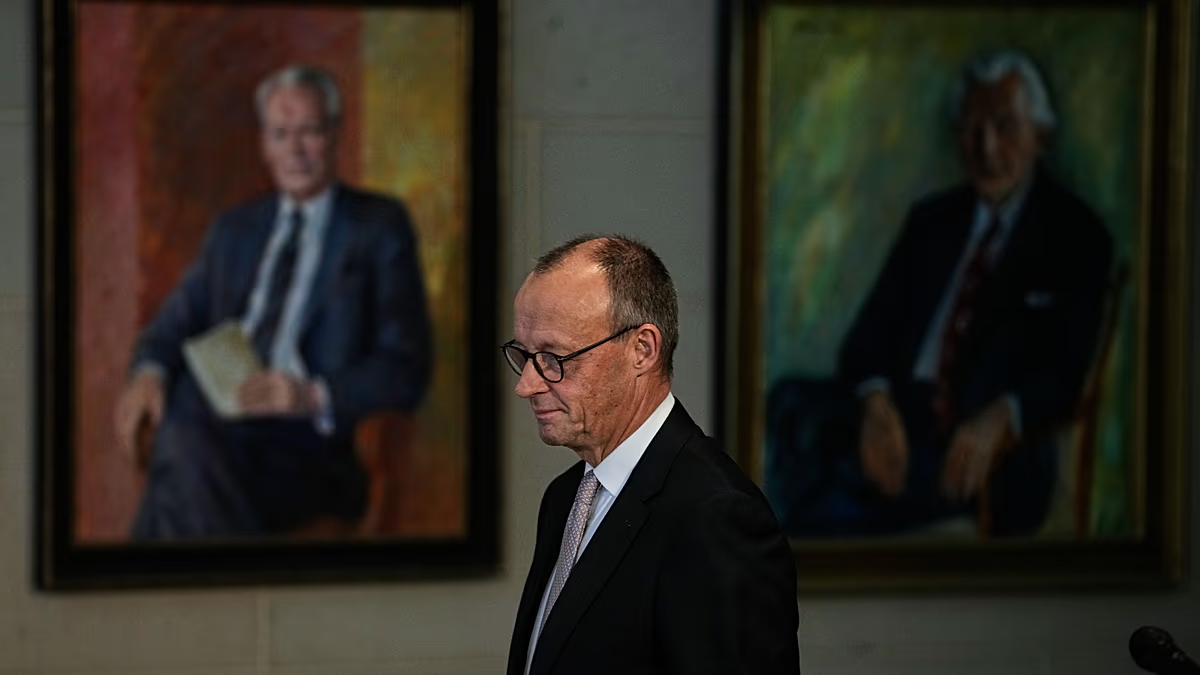

German opposition leader Friedrich Merz embarked on a closely watched visit to Israel and Jordan this weekend, following a phone conversation with Palestinian Authority President Mahmoud Abbas. The trip focuses on regional security and the delicate balance between supporting Israel and fostering a viable path for Palestinians, particularly as a fragile ceasefire holds in Gaza. Merz’s visit is significant as it represents a key moment for German foreign policy regarding the Israel-Palestine conflict and comes after a period of diplomatic delay.
According to government spokesperson Stefan Kornelius, the conversation with Abbas took place in a friendly atmosphere, with Merz reaffirming Germany’s support for a negotiated two-state solution. He also urged necessary reforms within the Palestinian Authority to allow it to constructively contribute to a potential post-war order. The overarching goal remains a lasting security arrangement for both Israelis and Palestinians.
Navigating the Complexities of the Israel-Palestine Conflict
Merz’s journey began in Amman, Jordan, where he met with King Abdullah II. He was then received in Jerusalem by Israeli President Isaac Herzog and will hold talks with Prime Minister Benjamin Netanyahu on Sunday. The meetings are expected to heavily focus on the sustainability of the current ceasefire between Israel and Hamas, a conflict that began with the Hamas attack on October 7, 2023, resulting in approximately 1,200 Israeli deaths and numerous hostages.
However, the ceasefire is reportedly facing challenges, with both Israel and Hamas accusing each other of violations. Recent reports indicate renewed Israeli strikes in late November, causing casualties in Gaza, according to local health authorities. The situation highlights the fragility of the truce and the difficulties in achieving long-term stability.
The visit marks a relatively late inaugural trip to Israel, considering previous chancellors like Angela Merkel and Olaf Scholz traveled there soon after taking office. The delay is attributed to the intensive fighting in Gaza, which rendered diplomatic travel impractical for several months. The Israeli military offensive in the Gaza Strip has resulted in a staggering number of casualties; local authorities report around 70,000, while a recent estimate by the Max Planck Institute suggests the death toll could be as high as 126,000.
Arms Exports and Financial Aid
Discussions are also anticipated on arms policy, following the lifting of a temporary partial embargo on arms exports to Israel a fortnight ago. Israel is eager to resume authorized deliveries from Germany, particularly gearboxes for Merkava tanks. Reuters reported on the lifting of the embargo and the subsequent expectations from Israel.
Financial support for the Palestinian Authority will be a central theme, prompting a complex discussion. Germany and the European Union have long provided aid to the PA to maintain essential government functions in areas like administration, education, and healthcare. This aid is considered crucial for stability and future political progress.
However, concerns persist regarding the PA’s potential continuation of “martyr payments” – financial support for prisoners and families of individuals killed while carrying out attacks. Israel and EU experts believe these payments have not ceased, raising questions about aid effectiveness and compliance with international standards. The EU has pledged 1.6 billion euros for Gaza reconstruction, with Germany contributing an additional 30 million euros, all of which is subject to stringent controls.
The EU recently confirmed a payment under the existing system, a move that has drawn criticism given the PA’s stated desire to discontinue this type of support. Germany is currently hesitant to resume regular payments until these issues are fully resolved, emphasizing the need for transparency and accountability. Secondary keyword: Gaza ceasefire
A Balancing Act for German Diplomacy
For Merz, this trip represents a significant diplomatic challenge. He must navigate the sensitive issues of supporting Israel’s security while also addressing the humanitarian and political needs of the Palestinians. The accusations surrounding aid money potentially funding controversial programs will undoubtedly be raised during discussions in Jerusalem. Deutsche Welle provides further context on the delicate nature of Merz’s visit.
Additionally, the German government faces the question of how to respond to the international arrest warrant issued against Prime Minister Netanyahu. While Merz indicated openness to a visit by Netanyahu to Germany in theory, practical implementation remains unclear. This is a secondary keyword: Palestinian Authority reforms.
Moving forward, the focus will be on whether Merz’s visit can contribute to concrete steps towards stabilizing the ceasefire in Gaza and restarting meaningful negotiations toward a two-state solution. The outcome of the discussions regarding aid transparency and potential reforms within the Palestinian Authority will be particularly critical. Observers will be watching closely to see if this trip marks a turning point in Germany’s approach to the Israel-Palestine conflict and its role in the region.