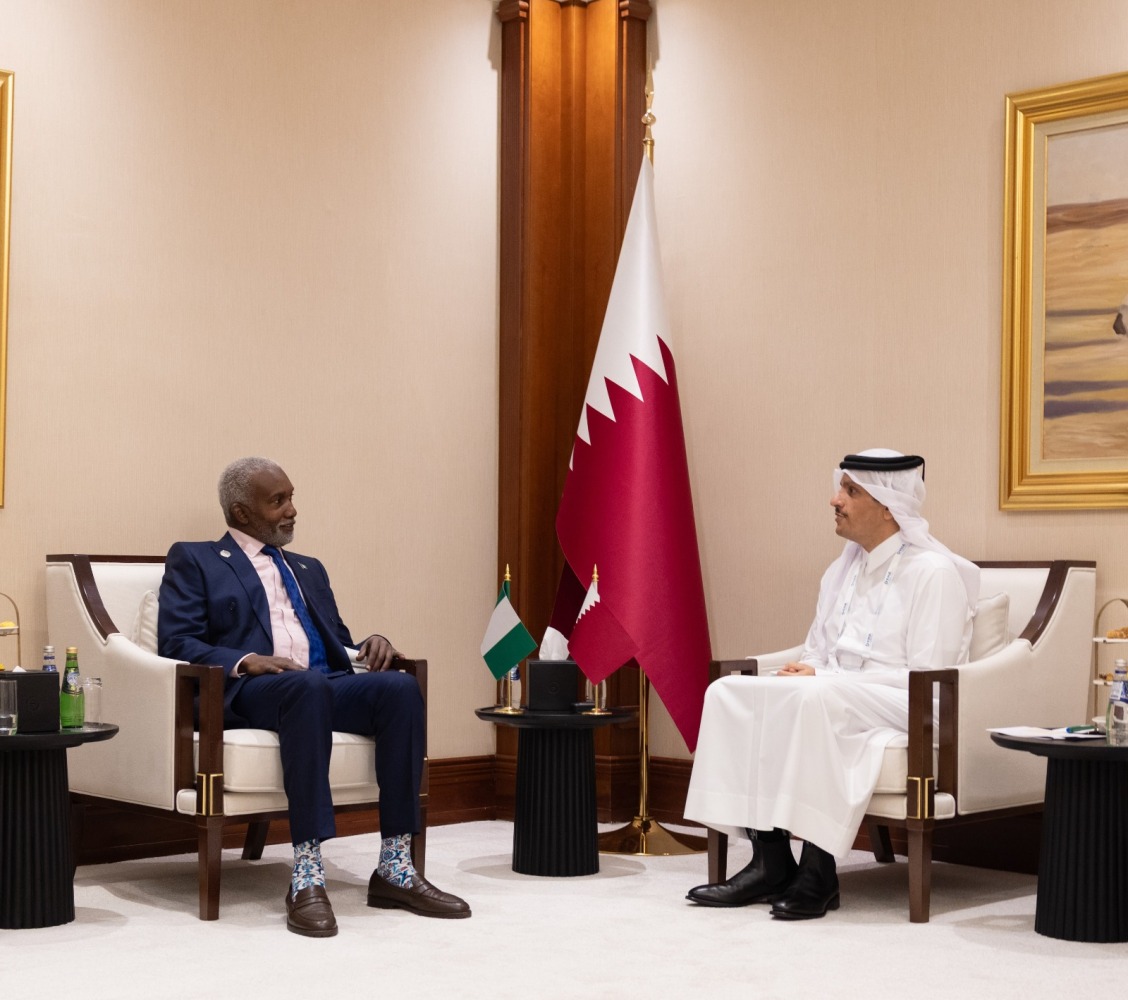

Doha witnessed a flurry of diplomatic activity Saturday as Qatar’s Prime Minister and Minister of Foreign Affairs, Sheikh Mohammed bin Abdulrahman bin Jassim Al-Thani, held separate meetings with his counterparts from Nigeria and Bosnia and Herzegovina. These diplomatic meetings focused on strengthening bilateral ties and discussing key issues relevant to regional and international affairs. The discussions took place as Qatar continues to play a prominent role in mediating global conflicts and fostering international cooperation.
Sheikh Mohammed met first with Nigerian Foreign Minister Yusuf Maitama Tuggar and later with Bosnia and Herzegovina’s Elmedin Konakovic, according to a statement released by the Qatari Ministry of Foreign Affairs. The meetings occurred amidst a backdrop of increasing global instability and Qatar’s ongoing efforts to build strategic partnerships. Details regarding the specific forum where these meetings took place were not immediately available.
Strengthening Qatar’s International Partnerships Through Diplomatic Meetings
Qatar has been actively pursuing a strategy of diversifying its international relationships, moving beyond traditional alliances. This approach is driven by the nation’s economic goals and its desire to be a key player in resolving international disputes. The meetings with Nigeria and Bosnia and Herzegovina represent a continuation of this strategy, focusing on areas of mutual benefit and shared concern.
With Nigeria, discussions reportedly centered on economic cooperation, particularly in the energy sector, as well as collaboration on security matters. Nigeria, as Africa’s largest economy, presents significant opportunities for Qatari investment and trade. Additionally, the two nations likely explored avenues for increased cultural exchange and people-to-people connections.
Meanwhile, the meeting with the Bosnian Foreign Minister addressed the political and economic situation in the Western Balkans. Qatar has historically provided support to Bosnia and Herzegovina, and the talks likely focused on ways to further enhance that assistance. The discussions may have also touched upon regional stability and the importance of continued dialogue among all parties in the Balkans.
Focus on Regional Stability and Economic Diversification
Qatar’s engagement with both Nigeria and Bosnia and Herzegovina highlights its commitment to promoting stability in diverse regions. The country has increasingly positioned itself as a mediator in conflicts, leveraging its financial resources and diplomatic influence. This role is particularly important given the current geopolitical climate, marked by numerous ongoing crises.
The emphasis on economic cooperation in these bilateral relations is also noteworthy. Qatar is actively seeking to diversify its economy away from its reliance on hydrocarbons, and investment in emerging markets like Nigeria is a key component of this plan. This diversification strategy aims to ensure long-term economic sustainability and resilience.
However, the specifics of any agreements reached during these meetings have not been publicly disclosed. The Qatari Ministry of Foreign Affairs typically releases broad statements outlining the general topics discussed, but detailed information is often reserved for subsequent announcements. The lack of immediate specifics is common practice in diplomatic engagements.
The meetings also come at a time when Qatar is preparing to host several major international events, including the upcoming COP28 climate summit. These events provide a platform for Qatar to showcase its diplomatic capabilities and further strengthen its global standing. Successful hosting of these events is seen as crucial for Qatar’s long-term strategic objectives.
Looking ahead, it is expected that follow-up discussions will be held between Qatari officials and their counterparts from Nigeria and Bosnia and Herzegovina to explore specific areas of cooperation in greater detail. The timeline for these follow-ups remains uncertain, but the momentum generated by these initial foreign policy discussions suggests a continued focus on strengthening these partnerships. Observers will be watching for concrete announcements regarding investment projects or agreements on security cooperation in the coming months, as well as any impact on international relations.