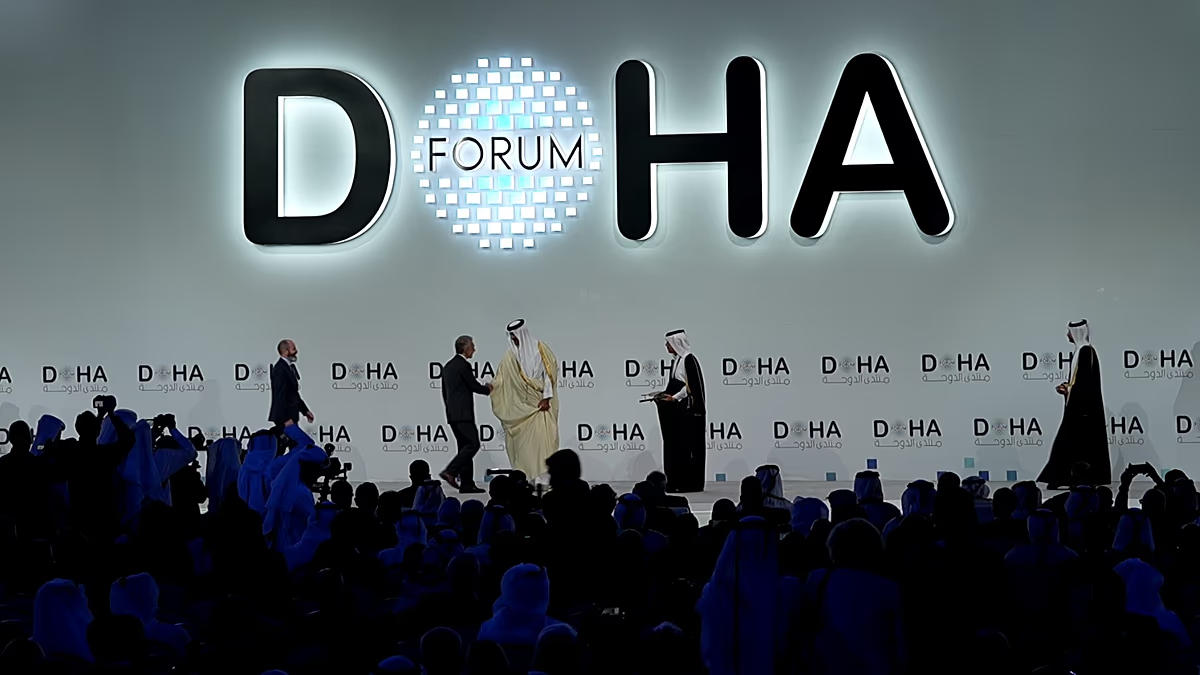

The 23rd annual Doha Forum commenced on Saturday in Qatar, drawing a prominent gathering of world leaders and diplomats. This year’s international conference, focused on global challenges, features discussions on conflict resolution, international cooperation, and sustainable development. The forum’s overarching theme, “Justice in Action: Beyond Promises to Progress,” signals a push for tangible outcomes amid pressing geopolitical issues.
Qatar’s Prime Minister Sheikh Mohammed bin Abdulrahman Al Thani officially opened the two-day event in Doha, highlighting the urgent need for just solutions to prevent further instability and human suffering. Attendees include heads of state, foreign ministers from key nations, and leaders from philanthropic organizations. The forum aims to provide a platform for collaborative problem-solving on issues impacting the Middle East and the world.
Addressing Global Injustice at the Doha Forum
A central focus of the 2025 Doha Forum is the growing disparity between the Global North and the Global South. Forum Executive Director Mubarak Ajlan Al-Kuwari emphasized that current inequalities often stem from historical systems that excluded diverse perspectives during their formation. He stated a commitment to building more inclusive frameworks for international cooperation.
Sheikh Al Thani’s opening remarks specifically addressed the ongoing conflict in Palestine and the humanitarian crisis in Sudan. He underscored that upholding international law and protecting human rights are foundational for regional stability, saying that the suffering in both regions demonstrates the consequences of injustice. According to the United Nations Security Council, these situations remain critical priorities for diplomatic efforts.
Focus on Humanitarian Aid and Development
Bill Gates, Chair of the Gates Foundation, delivered a speech focusing on the potential for eradicating global diseases and addressing poverty. He expressed optimism that advancements in technology and increased collaboration could lead to significant progress in improving global health outcomes. Gates highlighted the possibility of eradicating polio and reducing the incidence of malaria, HIV and AIDS by over 95% within the current generation.
Gates also stressed the importance of providing the right tools to empower individuals to become problem-solvers. He emphasized that this generation has the potential to dramatically reduce childhood mortality and poverty through targeted interventions and sustainable development initiatives. This aligns with the Sustainable Development Goals outlined by the United Nations, aiming to achieve a better and more sustainable future for all.
The presence of leaders like Syrian President Ahmed al-Sharaa and Turkish Foreign Minister Hakan Fidan underscores the forum’s dedication to tackling complex regional conflicts. Spanish Foreign Minister José Manuel Albares is also in attendance, signaling European engagement with the discussions. These diplomatic presences could facilitate potential backchannel negotiations and build consensus on crucial issues.
Discussions at the Doha Forum are expected to cover a wide range of topics, including climate change, economic resilience, and the future of multilateralism. While the forum does not have the authority to impose solutions, it serves as a vital space for dialogue and the exploration of collaborative strategies. The gap between the Global North and South, often referred to as global health disparities, is expected to be a recurring point of debate given current geopolitical dynamics.
As the Doha Forum progresses, participants will likely delve into specific action plans for addressing the challenges presented. The outcomes of these deliberations will be closely watched by international policymakers and observers. The forum’s success hinges on its ability to translate aspirational goals into concrete steps towards a more just and equitable world. Stay updated on the latest developments from the Doha Forum and its potential impact on international affairs.