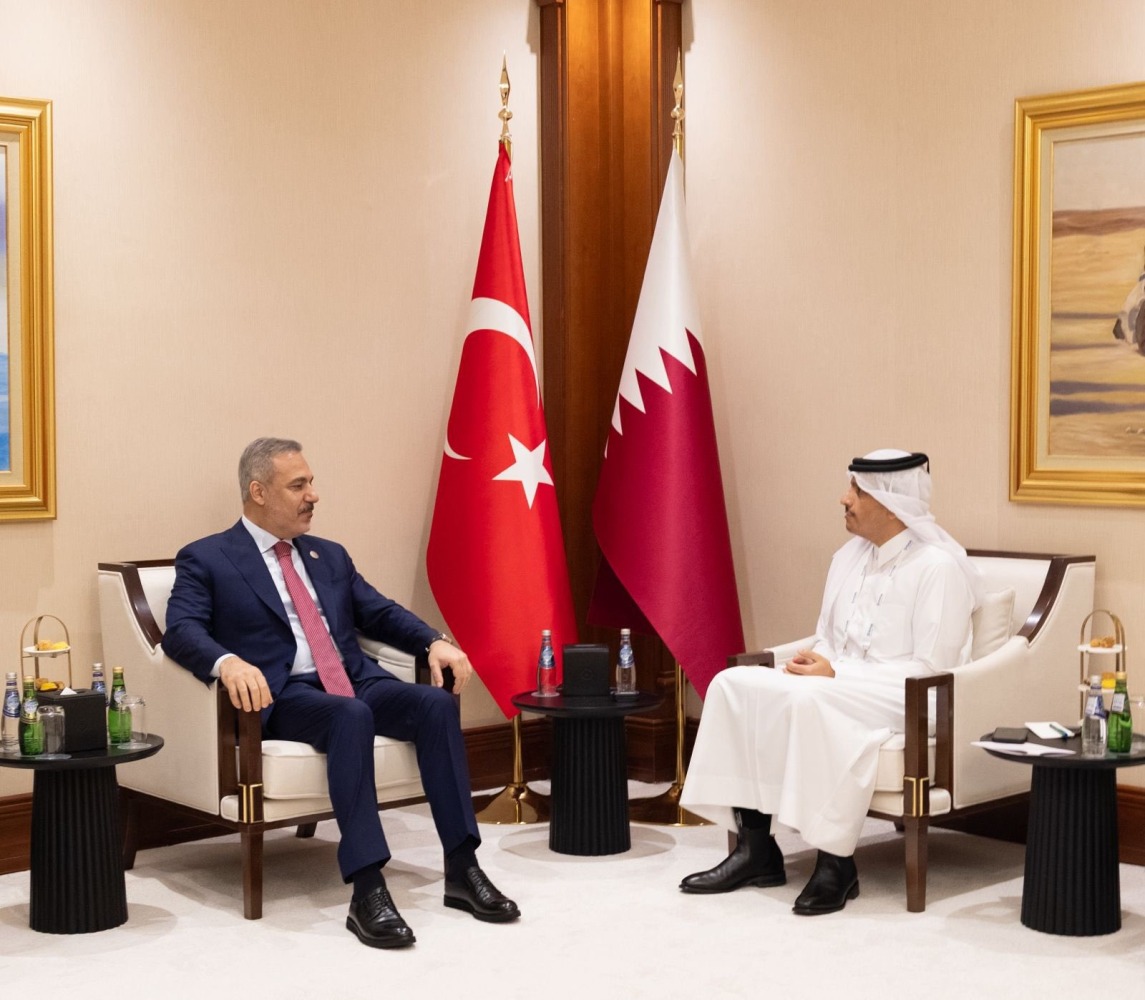

Doha, Qatar – Qatar’s Prime Minister and Minister of Foreign Affairs, Sheikh Mohammed bin Abdulrahman bin Jassim Al-Thani, held a series of bilateral meetings with key international diplomats on Saturday, December 7, 2024, during the 23rd Doha Forum. Discussions focused on strengthening cooperation and addressing pressing global challenges, signaling Qatar’s continued role as a mediator and facilitator of international dialogue. The meetings took place on the sidelines of the forum, a platform for discussing critical issues facing the world today.
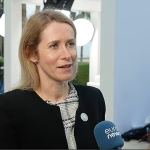
Among those Sheikh Mohammed met with were the Minister of Foreign Affairs of Turkey, Hakan Fidan; the Minister of Foreign Affairs, Immigration and Egyptian Expatriates Affairs of Egypt, Dr. Badr Abdelatty; the Minister of Foreign Affairs, European Union and Cooperation of Spain, Jose Manuel Alvarez; the Minister of Foreign Affairs of Greece, Georgios Gerapetritis; the Minister of Foreign Affairs of Cyprus, Dr. Constantinos Kombos; and the High Representative of the European Union for Foreign Affairs and Security Policy and Vice-President of the European Commission, Kaya Kallas.
The Significance of the Doha Forum for International Relations
The Doha Forum, established in 2000, has become a prominent venue for policymakers, experts, and stakeholders to debate and find solutions to regional and global issues. This year’s forum, expected to continue through December 9th, tackles themes ranging from geopolitical stability and sustainable development to economic resilience and technological innovation. Qatar’s hosting demonstrates its commitment to multilateralism and peaceful conflict resolution, particularly in the Middle East region.
Focus on Bilateral Cooperation
According to the official Qatar News Agency, the discussions centered on enhancing cooperation across various sectors and exploring avenues for further development of these relationships. Specific details of the agreements reached were not immediately disclosed, though the meetings suggest a proactive effort to build bridges and address shared concerns with key partners. These discussions are likely to influence future partnerships and initiatives.
The meeting with Turkish Foreign Minister Fidan is particularly noteworthy, given the close ties between Qatar and Turkey and their shared interests in regional security. Cooperation with Egypt, as highlighted by the meeting with Dr. Abdelatty, underlines Qatar’s engagement in North African affairs and its support for stability in the broader Arab world. The discussions underscored the importance of continued dialogue amid shifting geopolitical landscapes.
European Partnerships and Regional Stability
Sheikh Mohammed’s meetings with European counterparts – from Spain, Greece, and Cyprus – reflect Qatar’s desire to strengthen its ties with the European Union and its member states. These discussions likely covered energy security, trade relations, and collaborative efforts to address regional challenges, including migration and counter-terrorism. The European Union is a significant trading partner for Qatar, and these relationships are crucial for economic diversification.
The presence of High Representative Kallas signals the EU’s commitment to engaging with Qatar on issues of mutual concern. The EU has been increasingly focused on diversifying its energy sources, and Qatar, as a major liquefied natural gas (LNG) producer, is a key player in this strategy. The meetings also likely addressed the ongoing conflict in Ukraine and its implications for global energy markets and security. Qatar has previously played a role in mediation efforts related to the conflict.
Additionally, the discussions touched upon topics on the forum’s agenda, indicating a willingness to align national policies with broader international objectives. The Doha Forum provides a unique opportunity for these high-level exchanges, fostering a deeper understanding of each country’s perspectives and priorities. These conversations are vital for navigating complex international relations.
The outcomes of these meetings are expected to shape Qatar’s foreign policy initiatives in the coming months. Further announcements regarding specific agreements or collaborations are anticipated as the Doha Forum progresses. Observers will be watching for concrete steps taken to implement the discussed areas of cooperation, particularly in the context of ongoing regional and global uncertainties. The long-term impact on regional stability and economic partnerships remains to be seen.
The 23rd Doha Forum is scheduled to conclude on December 9, 2024, with a closing statement that may provide further insights into the key takeaways and commitments made during the event.