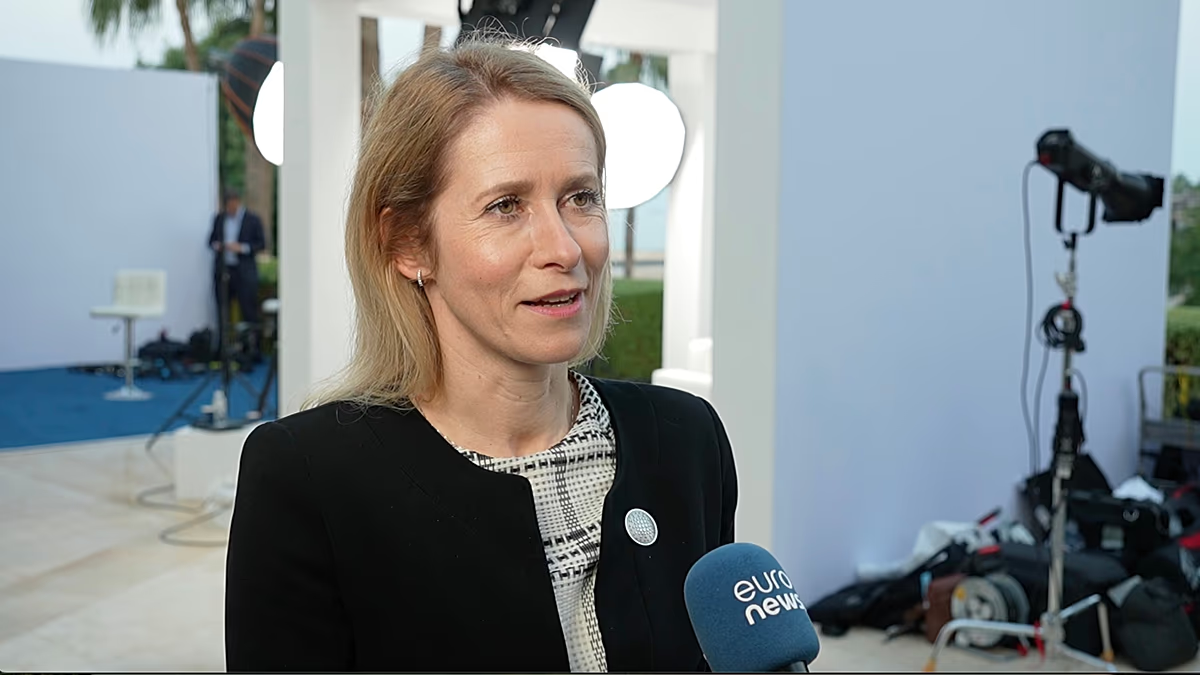

Despite recent critical rhetoric from the United States, the European Union remains a key ally, according to EU foreign policy chief Kaja Kallas. This statement comes amid escalating tensions sparked by a US National Security Strategy report which questioned the long-term viability of the European Union, citing concerns over migration, censorship and supranational policies. The report has raised eyebrows across the continent and prompted a response emphasizing the continued importance of transatlantic cooperation, even with disagreements.
Kallas addressed the controversy at the Doha Forum in Qatar on December 6, 2025, asserting that the US and Europe must “stick together” to address pressing global issues, foremost among them the ongoing war in Ukraine. She acknowledged differing viewpoints but underscored the shared challenges facing both regions, including economic coercion from China and threats posed by Russia and Iran. The situation is further complicated by ongoing negotiations to end the conflict in Ukraine, and a recent fine levied against X (formerly Twitter).
US-Europe Relations and the National Security Strategy
The US National Security Strategy report, released recently, took an unusually direct approach in criticizing European policies. It expressed concern that trends within Europe, specifically related to migration and governance, are contributing to “civilisational erasure”. Additionally, the document suggested the US would engage with “European patriotic parties” to bolster the continent, a move widely interpreted as a potential endorsement of nationalist movements.
This language contrasts sharply with the traditionally diplomatic tone adopted in US foreign policy assessments. While aligning with policy preferences often voiced by the Trump administration, experts note the report’s harshness towards established allies is unprecedented. The implications of this strategy are currently being debated, especially concerning its impact on the stability of the transatlantic alliance.
According to sources familiar with the report, it prioritizes a more bilateral approach to foreign policy, potentially lessening the emphasis on multilateral institutions like the European Union. This shift could reshape the global security landscape and impact cooperative efforts on issues like climate change and trade negotiations.
X Fine and Escalating Tensions
The release of the US National Security Strategy followed a flurry of activity highlighting strains in US-EU relations. On Friday, the European Commission imposed a €120 million fine on Elon Musk’s social media platform, X, for violating EU transparency rules. This involved failures to adequately address the spread of illegal content and comply with regulations established under the Digital Services Act.
Musk responded with strong criticism of the European Union, calling for its dismantling and a return to individual nation-states. This response drew further condemnation, including from US Secretary of State Marco Rubio, who labeled the fine an “abomination.” Such public disagreements showcase the growing friction between Washington and Brussels on issues of regulation and online content moderation.
Ukraine Negotiations and Diplomatic Efforts
The timing of these events is also linked to ongoing diplomatic efforts to resolve the conflict in Ukraine. Initial reports suggested the US engaged in direct talks with Russia without immediately including European partners. This sidelining of European involvement sparked frustration in key capitals, including Berlin and Paris.
European leaders are seeking to reassert their role in the negotiation process. A meeting scheduled for Monday in London, bringing together German Chancellor Merz, French President Macron, UK Prime Minister Starmer, and Ukrainian President Zelenskyy, is intended to coordinate a unified European position. This gathering demonstrates a concerted effort to avoid being excluded from future discussions concerning Ukraine’s future and security architecture.
The situation underscores the complex interplay between national security priorities, economic interests, and diplomatic maneuvering within the transatlantic relationship. While Kallas’s statements emphasize continued alliance, navigating these challenges will require careful diplomacy and a willingness to address diverging viewpoints.
Looking ahead, the evolving geopolitical landscape and domestic political shifts in both the US and Europe will heavily shape the future of this vital partnership. Monitoring the outcomes of the Ukraine negotiations and further developments in the response to the US National Security Strategy will be crucial for understanding the long-term implications for global stability. Stay updated with Euronews for continuous coverage on this developing story.