
European leaders are increasing pressure on Russia following recent US-Russia talks that reportedly yielded no concessions regarding the ongoing conflict in Ukraine. Several NATO foreign ministers expressed skepticism about Moscow’s commitment to peace, advocating for continued support for Ukraine and intensified economic pressure on Russia, particularly targeting its energy revenues. The discussions come amid concerns over a leaked peace plan perceived as heavily favoring Russian interests.
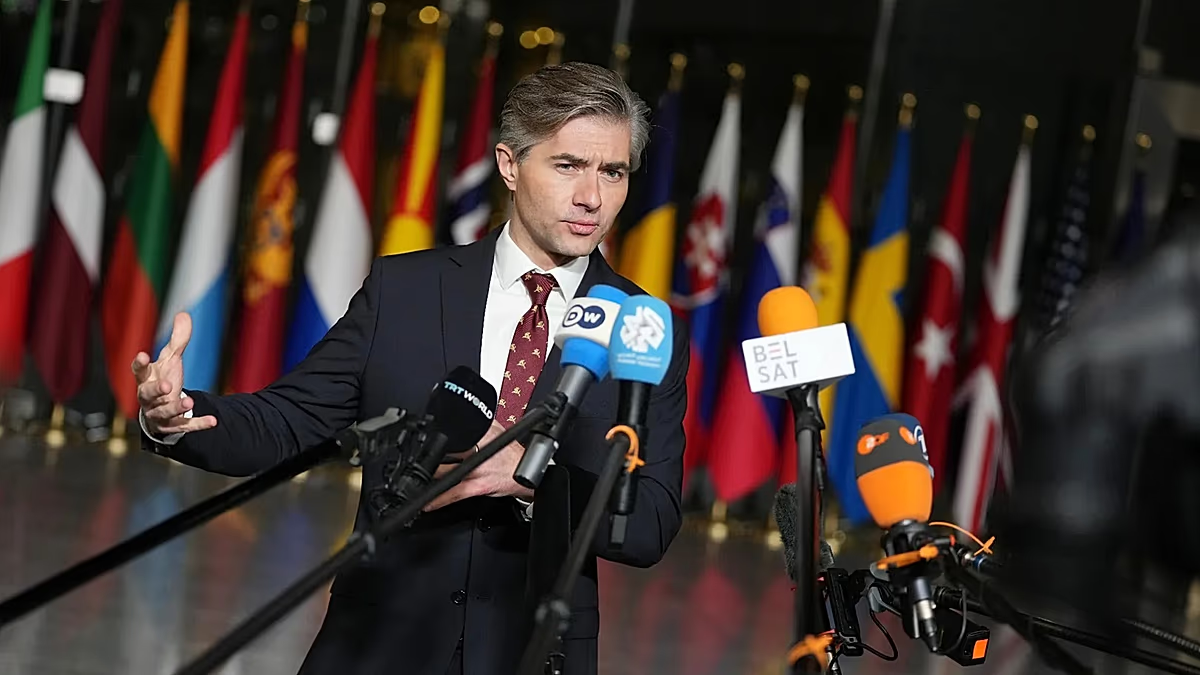
The sentiment was voiced during a NATO ministerial summit in Brussels on Wednesday, December 3rd, 2025, though US Secretary of State Marco Rubio did not attend. European officials stated their disappointment at the lack of progress indicated by the talks between American envoys and Russian President Vladimir Putin, emphasizing the need to maintain a firm stance against further aggression.
The Search for Peace in Ukraine and Increasing Pressure on Russia
The latest round of diplomatic efforts involved discussions between US representatives, including Steve Witkoff and Jared Kushner, and Putin. According to reports, these talks followed a proposal for a peace plan that elicited strong reactions, particularly from Ukraine and its allies, due to its perceived concessions to Russia. Ukrainian negotiators also met with Witkoff to discuss and modify the plan before it was presented to Moscow.
Swedish Foreign Minister Maria Malmer Stenegard forcefully articulated the prevailing view, stating, “Until I see anything different, then I’m going to continue to draw the conclusion that Russia does not want peace.” She stressed the two-pronged approach of bolstering Ukraine’s defense capabilities and maximizing economic pressure on Russia, focusing on disrupting its oil and gas income – a key component of the Russian economy.
Diverging Views on Utilizing Frozen Russian Assets
While there is broad agreement on the need for increased pressure, disagreements remain about the optimal methods. A major point of contention revolves around the proposed use of nearly €200 billion in frozen Russian Central Bank assets to provide financial assistance to Ukraine through a “reparations loan.”
Lithuania’s Kęstutis Budrys underscored the importance of continued financial support for Ukraine, noting that Russia had demonstrated no genuine interest in a ceasefire or peace agreement over the past six months. Finland’s Elina Valtonen echoed this assessment, stating that there had been no concessions from the ‘aggressor’, Russia.
However, the proposal faces significant roadblocks, with Belgium currently blocking the initiative. Belgian Foreign Minister Maxime Prévot argued that the scheme carries substantial economic, financial, and legal risks, adding “We are not seeking to antagonize our partners or Ukraine; we are simply seeking to avoid potentially disastrous consequences.”
Estonian Foreign Minister Margus Tsahkna disagreed, asserting that utilizing these assets is Europe’s “leverage” for future negotiations and pushed back against assumptions that the US should dictate terms. He emphasized that Russia should not be allowed to dictate the outcome and that European nations must be able to chart their own course in seeking a resolution.
The European Commission is expected to release a legal proposal outlining options for financing Ukraine’s needs, including the controversial reparations loan, later on Wednesday. This document will likely ignite further debate and scrutiny among EU member states.
Other ministers like Estonia’s Tsahkna believe more restrictions on Russia are necessary, rather than concessions to Ukraine. This underscores the divisions within the alliance about the optimal strategy for de-escalation and achieving a lasting peace.
The situation remains fluid, with ongoing diplomatic activity and a clear lack of consensus on the path forward. The question of Ukraine’s financial stability and its ability to withstand prolonged conflict remain central to current discussions by international bodies.
Looking ahead, the release of the European Commission’s proposal and the subsequent reactions from member states will be crucial. The ongoing debate regarding the use of frozen Russian assets will likely continue to dominate the agenda, while observers will closely monitor Russia’s response to the increased pressure and whether it signals any genuine shift in its approach to the conflict. Stakeholders should continue following developments from NATO and the EU for future updates on European politics and their impact on the ongoing crisis.