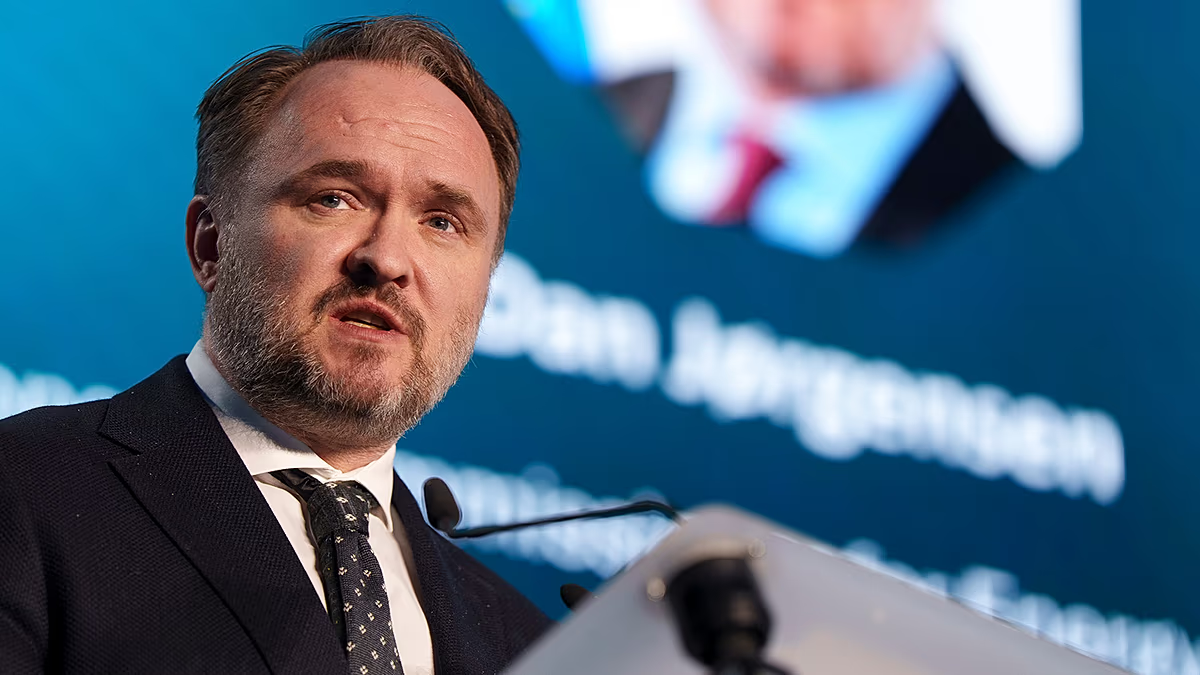

The European Union is moving forward with a complete ban on Russian energy imports, a decisive step taken in response to the ongoing war in Ukraine. Energy Commissioner Dan Jørgensen confirmed on December 5, 2025, that the EU will not resume purchasing Russian gas even after a potential peace agreement. A new law formalizing the ban on Russian oil is expected to be presented shortly, building on existing restrictions on pipeline gas and liquefied natural gas (LNG).
Jørgensen’s statements, made during an interview with Euronews, underscore the EU’s commitment to energy independence from Russia. The move follows a dramatic surge in energy prices in February 2022, triggered by Russia’s full-scale invasion of Ukraine, which exposed the bloc’s vulnerability to Russian energy supplies. This decision represents a significant shift in European energy policy and a long-term strategy to diversify energy sources.
The Future of Russian Energy in Europe
The EU’s ban on Russian pipeline gas and LNG is being described as a “point of no return.” According to Jørgensen, the agreement will remain in effect regardless of future geopolitical developments. This commitment aims to prevent a repeat of the energy crisis experienced in 2022 and to diminish Russia’s economic leverage over European nations. The EU is actively seeking alternative energy suppliers and investing in renewable energy sources to ensure a stable and secure energy supply.
Implementation Timeline and Challenges
The implementation of the ban will be phased, with different timelines for short-term and long-term contracts. LNG imports under short-term contracts concluded before June 17th will be prohibited from April 25, 2026. Pipeline gas under similar contracts will be banned from June 17, 2026. Long-term LNG contracts can continue until January 1, 2027, aligning with the 19th sanctions package.
However, the transition isn’t without its hurdles. Hungary has announced its intention to legally challenge the European Commission’s proposal, citing concerns about its energy security. Jørgensen expressed disappointment with this stance, emphasizing the importance of a united front against Russia and offering support to member states potentially affected by supply disruptions. The legislative file was adopted using a trade procedure due to a lack of unanimous support under the sanctions framework, highlighting the political complexities involved.
Additionally, the ban on energy supplies may impact gas prices in the short term as Europe adjusts to new supply chains. The European Commission is working to mitigate these effects and ensure a smooth transition for all member states. The International Energy Agency (IEA) has been tracking Europe’s progress in reducing reliance on Russian energy and offers analysis on the global energy market. IEA website
Meanwhile, the Commissioner acknowledged the difficult negotiations required to reach the agreement. The phased approach is designed to minimize negative consequences and allow member states time to secure alternative energy sources. Depending on storage levels, the pipeline gas ban could be delayed until November 1, 2027, providing further flexibility.
In contrast to some member states’ concerns, Jørgensen firmly believes that the EU must prioritize solidarity with Ukraine and avoid repeating past mistakes of dependence on Russian energy. He stressed the need for a collective response to Russian aggression and a commitment to long-term energy security for the bloc.
Looking ahead, the EU will continue to focus on diversifying its energy portfolio and accelerating the transition to renewable energy sources. The success of this strategy will depend on continued cooperation among member states and a sustained commitment to reducing reliance on fossil fuels. Monitoring the implementation of the ban and its impact on energy markets will be crucial in the coming months and years.
Stay informed about the evolving energy landscape in Europe and the EU’s efforts to secure a sustainable and independent energy future. For more updates, follow Euronews’ “Europe Today” program and explore resources from the International Energy Agency.