






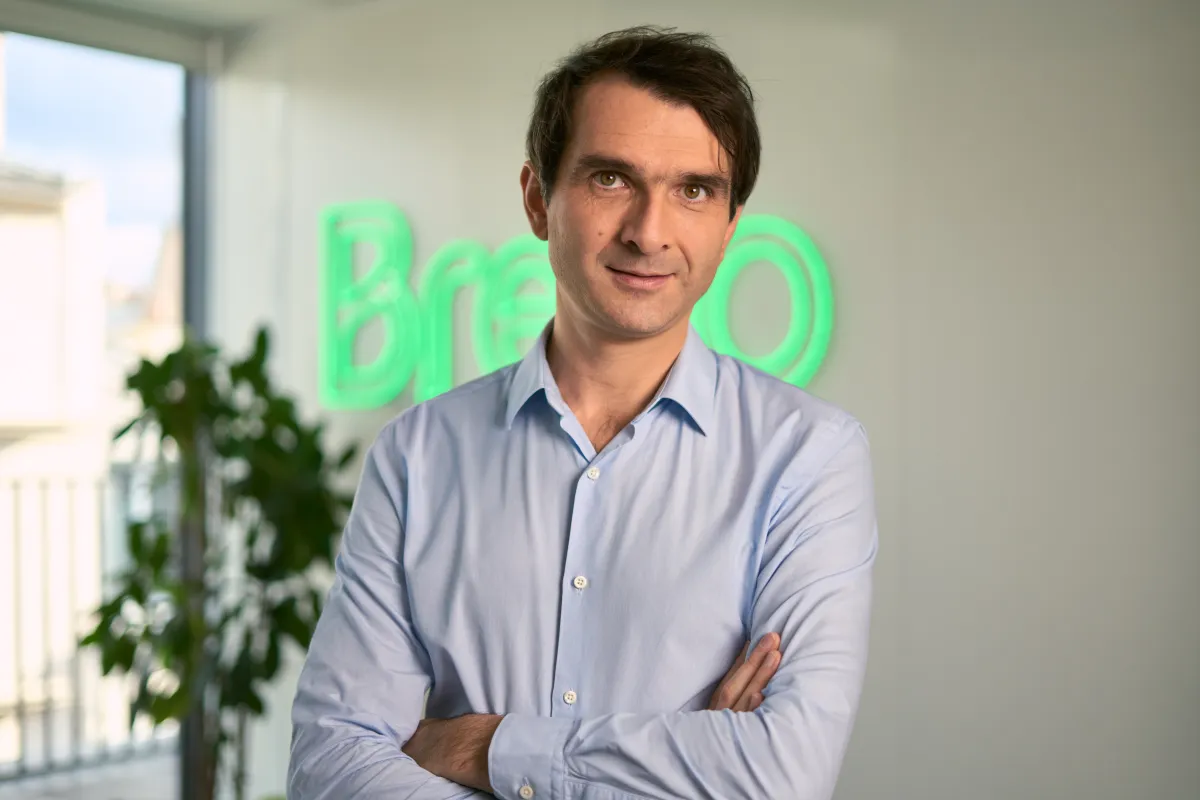

Paris-based customer relationship management (CRM) company Brevo has achieved unicorn status, solidifying its position as a rising competitor in the marketing and sales software space. The company recently raised €500 million ($583 million) in a new equity funding round, fueling ambitions to expand its market share, particularly in the United States, and challenge established players like HubSpot and Salesforce. Brevo aims to become a leading global CRM provider.
Founded in 2012 as Sendinblue, Brevo initially focused on providing email marketing solutions for small businesses. Over time, the company broadened its offerings and rebranded to reflect its comprehensive suite of tools, now encompassing marketing automation, customer data management, and multi-channel communication options. This strategic evolution has proven successful, attracting over 600,000 customers, including major brands such as Carrefour, eBay, and H&M.
Brevo’s Expansion Strategy and the U.S. Market
While currently generating 15% of its revenue from the U.S. market – alongside France and Germany as its largest revenue sources – Brevo CEO Armand Thiberge believes the company should mirror the U.S. market’s proportion of the global sector. “That’s 50% of the global market, so it should be 50% of our revenue,” Thiberge stated in an interview with TechCrunch. The fresh funding will directly support a planned investment of over €100 million in U.S. growth initiatives.
Brevo’s financial trajectory has been consistently upward. The company surpassed €100 million in annual recurring revenue (ARR) in 2023, earning its place in the “centaur” club. It has already exceeded its initial goal of reaching €200 million in ARR by 2025, and now projects to achieve €1 billion in ARR by 2030, according to company disclosures.
Funding and Ownership Structure
The recent funding round was led by General Atlantic and Oakley Capital, each acquiring a 25% stake in the company. Existing investors Bpifrance and Bridgepoint collectively maintain a 24% share, while Partech, an early investor, has exited. Importantly, Brevo’s management and employees remain the largest shareholders, controlling 26% of the company. This ownership distribution signals a commitment to continued independence and a focus on long-term product development.
AI Integration and Acquisitions as Growth Drivers
Beyond U.S. expansion, Brevo intends to leverage its new capital to accelerate investment in artificial intelligence (AI) and continue its strategy of strategic acquisitions. The company has already committed to investing €50 million in AI over the next five years, aiming to enhance its existing functionalities and introduce innovative features. AI is becoming a critical component in CRM platforms.
Acquisitions have been a cornerstone of Brevo’s growth, with 11 completed to date. The company anticipates that these purchases will account for 45% of its projected €1 billion revenue target by 2030. This suggests an aggressive acquisition pipeline focused on bolstering its technology stack and expanding its presence in key markets. Brevo’s growth, however, is partially dependent on successful integration of these acquired companies.
Brevo claims to maintain a “double-digit EBITDA margin,” indicating a healthy level of profitability. While still significantly smaller than industry giant Salesforce, currently targeting $41.55 billion in revenue for 2026, the unicorn status is expected to elevate Brevo’s brand awareness and attract further investment. The company intends to differentiate itself by focusing on both comprehensive features and ease of use, rather than solely relying on geographical or nationalistic advantages. The competitive landscape in this space is fierce.
The company is focusing on providing a unified platform to businesses, offering tools beyond traditional email marketing. These now include marketing automation, comprehensive CRM capabilities, detailed customer data management, and support for various communication channels – encompassing email, SMS, WhatsApp, live chat, push notifications, and integrated sales calls.
Looking ahead, Brevo’s success hinges on its ability to execute its ambitious growth plans in the U.S. market and effectively integrate acquired technologies. The company’s financial performance over the next few years, particularly its ARR growth towards the 2030 target, will be closely watched by investors and industry analysts. Maintaining its profitability while aggressively scaling will also be crucial as it navigates the increasingly competitive CRM software market.