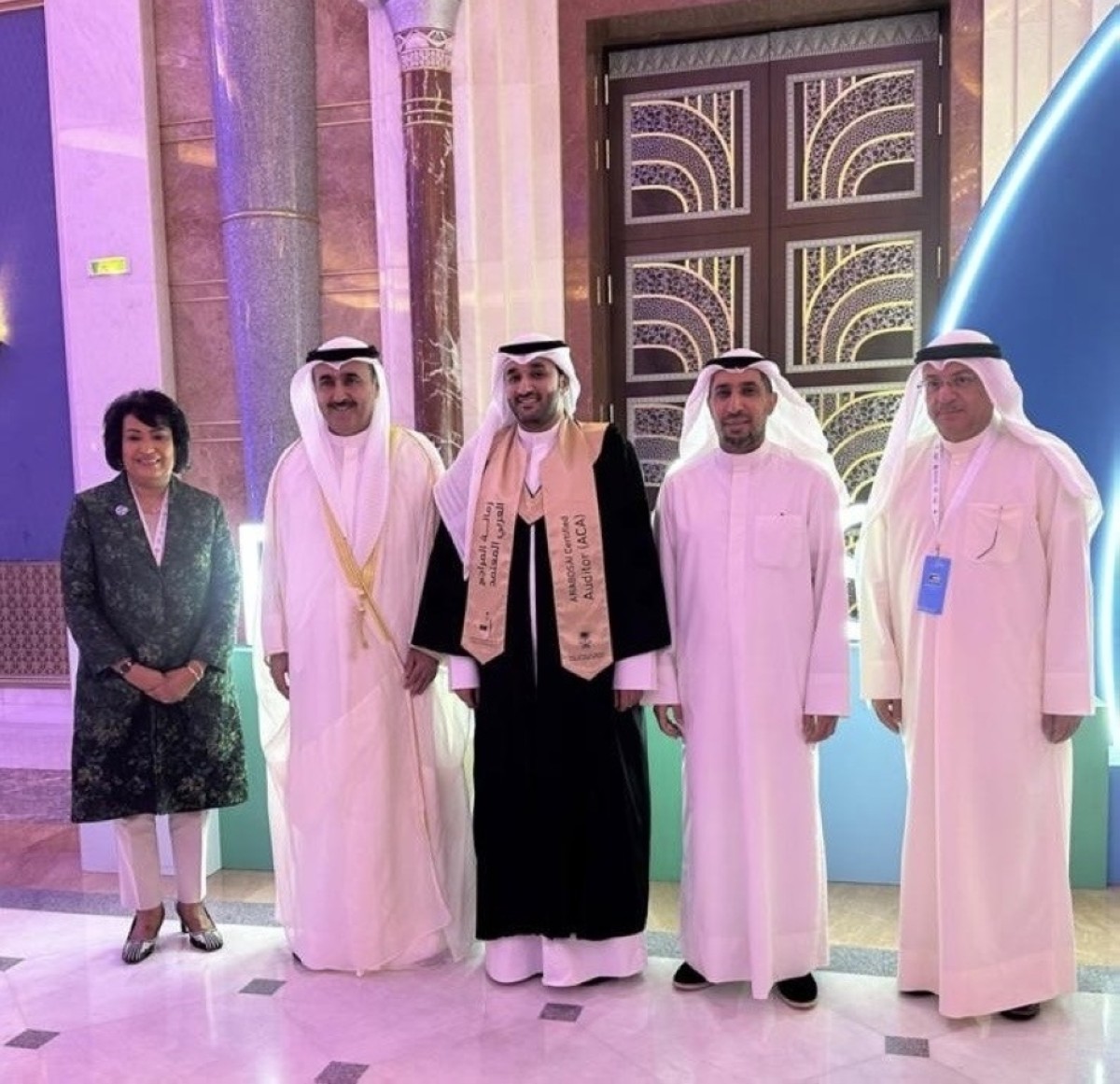

The pursuit of excellence in financial oversight is a continuous journey, and recent recognition of auditors in Jeddah underscores the commitment to raising standards across the Arab world. The Saudi Center for Financial Auditing and Performance Monitoring recently honored graduates of the prestigious Certified Arab Auditor Fellowship Program, a key initiative of the Arab Organization of Supreme Audit Institutions (ARABOSAI). This accomplishment highlights the growing sophistication of auditing practices within the region and the dedication of professionals to upholding financial integrity. Among those celebrated was Abdullah Al-Muzram from Kuwait, a testament to the program’s regional impact and the importance of continuous professional development for auditors.
Strengthening Financial Oversight: The Certified Arab Auditor Program
The Certified Arab Auditor Fellowship Program, the first of its kind in the Arab region, represents a significant stride in enhancing professional capabilities and cultivating robust oversight competencies. Hosted on the sidelines of the 15th General Assembly of ARABOSAI in Jeddah, the graduation ceremony recognized individuals who have successfully navigated a rigorous curriculum designed to align with international standards and best practices. This program isn’t merely about theoretical knowledge; it’s about equipping auditors with the tools to effectively manage risk and improve institutional performance.
A Gateway to Professional Excellence
ARABOSAI’s vision with this fellowship is to create a cadre of highly skilled auditors capable of tackling increasingly complex financial challenges. The program’s structure incorporates leading methodologies ensuring the training meets, and often exceeds, numerous international professional requirements. This ensures auditors can confidently apply their knowledge in diverse and challenging environments. The dedication to quality has positioned the Certified Arab Auditor designation as a mark of distinction within the auditing community.
Kuwaiti Auditor Reflects on Program Success
Abdullah Al-Muzram, an auditor from the Defense, Security, and Public Affairs Audit Department at the Kuwaiti State Audit Bureau, expressed profound pride in his achievement. He acknowledged the program as a major confidence booster and highlighted the responsibility he now carries in representing the State Audit Bureau of Kuwait. Al-Muzram’s participation was part of a larger delegation from the Kuwaiti State Audit Bureau headed by its President, Essam Al-Roumi, demonstrating the country’s strong commitment to participating in regional efforts towards enhanced audit capabilities.
He emphasized that success within the program was fueled by several factors, including a solid grasp of globally approved auditing standards. Collaboration amongst peers, the uninhibited sharing of knowledge, meticulous planning, diligent task follow-up, and a steadfast adherence to ethical professional values all played crucial roles. This resonates with the core principles of effective audit performance and contributes to the overall quality of financial reporting and accountability.
Bridging the Gap Between Theory and Practice in Auditing
A particularly valuable aspect of the Certified Arab Auditor program, according to Al-Muzram, is its ability to seamlessly integrate theoretical concepts with practical application. The program delves into the nuances of financial auditing, alongside equally comprehensive studies of compliance auditing and performance auditing. These are explored systematically, using established standards and encouraging the practical application of learned concepts.
Enhanced Skill Sets for Modern Auditors
The modules within the fellowship weren’t just about learning what to audit, but how to audit effectively in today’s challenging landscape. Al-Muzram explained the program notably improved crucial skill sets. These included:
- Sharpened analytical skills, allowing for a deeper understanding of financial data.
- Enhanced risk identification capabilities, aiding in proactive prevention of financial irregularities.
- Improved ability to formulate clear, impactful observations and recommendations.
- Greater proficiency in audit planning, implementation, and report writing.
Moreover, the course provides a keen understanding of audit reporting, aiding in communicating findings for effective change. This focus on practical skills makes graduates immediately valuable to their organizations and the broader auditing profession. The benefits extend beyond the individual, positively impacting the efficacy of governmental auditing.
The Importance of Continuous Development in Audit
Al-Muzram stressed the absolute necessity of cultivating a culture of continuous professional development within the auditing community. He believes that specialized, high-quality training programs like the Arab Auditor Fellowship are instrumental in this regard. Investing in auditors is not merely an expense; it’s a strategic investment that directly translates into improved skills, higher quality institutional work, and ultimately, greater public trust.
He advocated for ongoing learning opportunities, emphasizing the ever-evolving nature of financial regulations and the emergence of new risks. Staying ahead of the curve through continuous education and rigorous certification processes, like becoming a Certified Arab Auditor, is vital for maintaining the integrity and effectiveness of financial oversight.
In conclusion, the graduation of the Certified Arab Auditor fellows in Jeddah signifies a powerful commitment to strengthening financial accountability across the Arab world. The program’s focus on bridging theory and practice, coupled with its alignment with international standards, equips auditors with the skills they need to excel. As professionals like Abdullah Al-Muzram return to their respective bureaus, they carry with them not only a prestigious certification but also a renewed dedication to upholding the highest standards of financial governance. We encourage further investment in such initiatives to foster a culture of continuous improvement and ensure the long-term integrity of financial systems throughout the region.