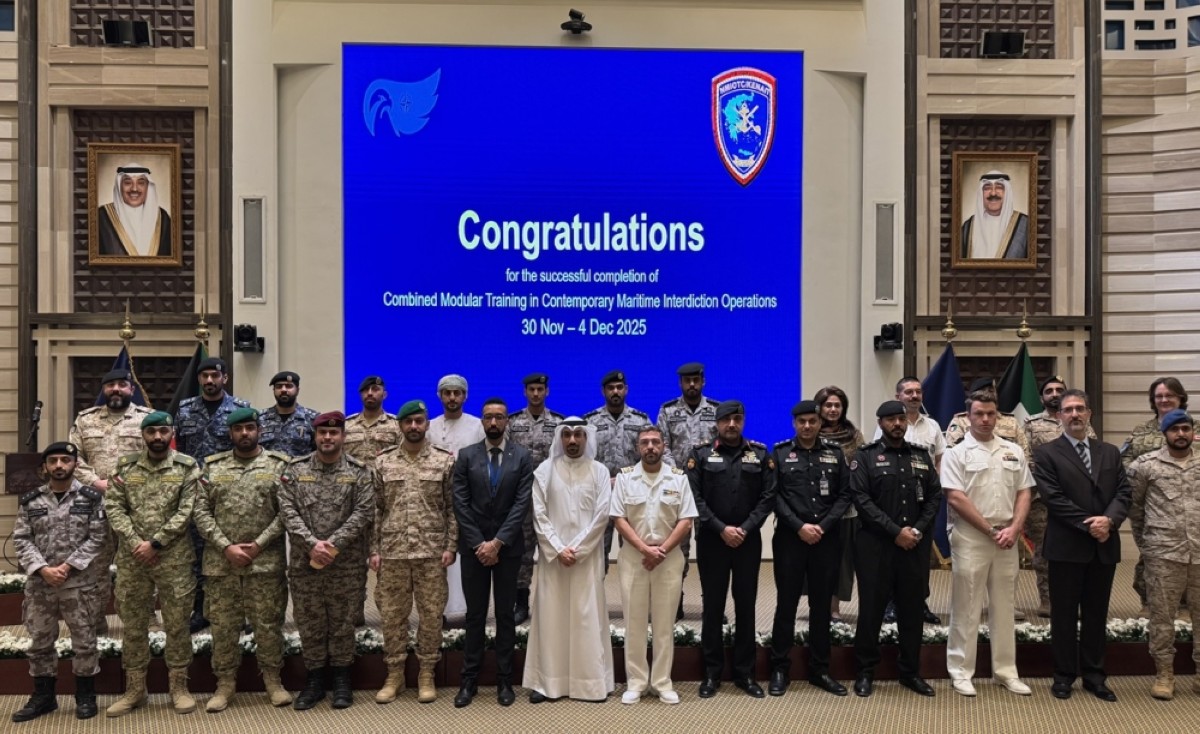

Kuwait continues to solidify its position as a crucial hub for regional security cooperation, recently hosting a significant training course focused on maritime interdiction operations. The five-day program, a joint effort between the NATO Regional Center and the Istanbul Cooperation Initiative, concluded on Thursday with the participation of military personnel from across the Gulf Cooperation Council (GCC). This initiative underscores the growing importance of safeguarding vital sea lanes and addressing evolving maritime threats in the region.
Strengthening Maritime Security Through Joint Training
The training course, delivered by a team of experts from NATO’s Maritime Interdiction Operations Directorate led by Commodore Pericles Pepis, Commander of the NATO Maritime Security Operations Training Center (NMIOTC), aimed to equip GCC forces with the knowledge and skills necessary to effectively counter a range of maritime challenges. Advisor Emad Al-Kandari, Director of the NATO Regional Center, highlighted the program’s focus on establishing maritime interdiction operations as a cornerstone of enhanced maritime security.
This isn’t simply about naval exercises; it’s a comprehensive approach. The curriculum delved into critical areas such as the strategic importance of naval power, robust port protection measures, and securing vital maritime infrastructure. Recognizing the evolving threat landscape, the course also addressed defense strategies against chemical, biological, and radiological weapons and materials, both at sea and on land.
Legal Frameworks in Maritime Operations
A key component of the training was a detailed examination of the legal aspects surrounding maritime interdiction operations. These are complex, requiring a thorough understanding of international law, rules of engagement, and the procedures for handling intercepted vessels and cargo. Providing this legal clarity is paramount for ensuring operations are conducted lawfully and effectively, minimizing potential for misinterpretation and maximizing the success of counter-smuggling and counter-terrorism efforts.
Focus on Contemporary Challenges & Cybersecurity
The course wasn’t limited to theoretical discussions. Participants engaged in a series of workshops and practical virtual exercises designed to simulate real-world scenarios. These simulations allowed them to apply the concepts learned and refine their decision-making processes in a controlled environment, drawing on lessons learned from previous operations.
Additionally, discussions extended to the increasingly critical role of maritime domain awareness in modern security operations. Understanding what’s happening on the seas – tracking vessels, identifying potential threats, and monitoring activity – is fundamental to proactive defense.
A particularly forward-looking aspect of the collaboration involves expanding training capabilities to include specialized courses in cybersecurity. Al-Kandari emphasized the growing importance of protecting maritime systems from cyberattacks, recognizing it as a paramount concern in contemporary interdiction operations. The NATO Regional Center in Kuwait is well-positioned to offer this specialized training, further strengthening regional cooperation in this emerging field.
Enhancing Regional Cooperation & Kuwait’s Role
The successful completion of this training program is a testament to the strong partnership between Kuwait, NATO, and the GCC countries. A bilateral meeting between Al-Kandari and Commodore Pepis focused on ways to enhance cooperation between the two centers, specifically through supporting the programs offered at the Kuwait-based regional center.
This collaboration isn’t a one-way street. The NATO Regional Center aims to leverage its capabilities to provide more specialized training, benefiting not only GCC nations but also contributing to global maritime security efforts. The focus on maritime security training is a direct investment in the ability of regional forces to respond to threats independently and in coordination with international partners.
Kuwait’s hosting of this and other similar programs clearly demonstrates its commitment to the Istanbul Cooperation Initiative and its role as a key partner in fostering regional stability. The country’s strategic location and dedication to security make it an ideal location for such vital training exercises. This initiative reinforces Kuwait’s dedication to developing regional capabilities and strengthening ties with partner nations.
In conclusion, the recent maritime interdiction operations training course in Kuwait represents a significant step forward in bolstering regional maritime security. By combining NATO expertise with the needs and priorities of GCC nations, the program has equipped participants with the skills and knowledge to address contemporary threats, including those in the cyber domain. Kuwait’s continued commitment to hosting and supporting these initiatives solidifies its position as a vital partner in safeguarding the region’s vital sea lanes and promoting overall stability. Further exploration of the Istanbul Cooperation Initiative and its impact on regional security is encouraged.