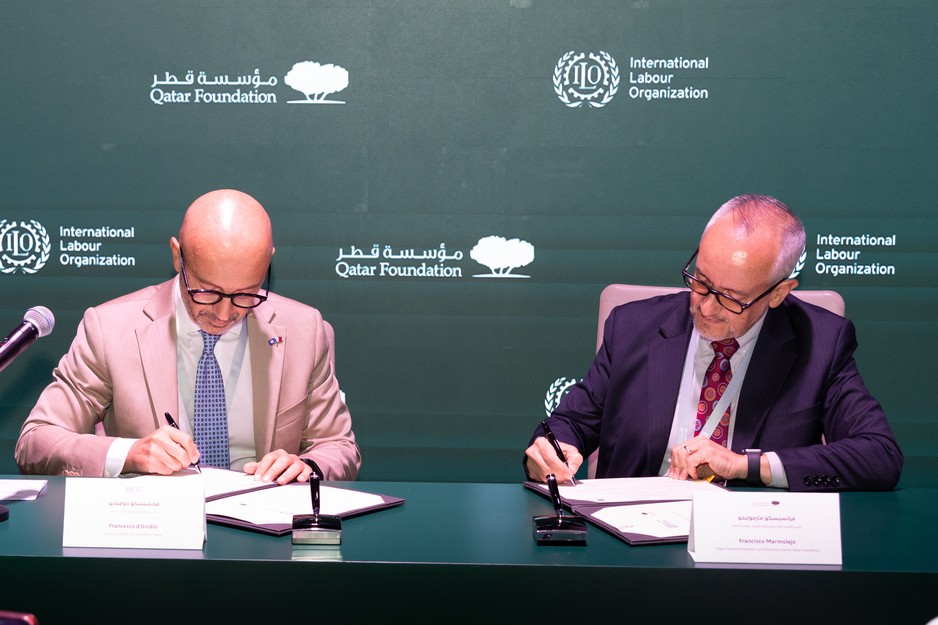

Doha, Qatar – Qatar Foundation (QF) and the International Labour Organization (ILO) have announced a new partnership focused on bolstering workforce development in Qatar through data-driven policy recommendations. The collaboration, formalized at the recent WISE 12 Summit, will leverage QF’s extensive Alumni Impact Study and other labor market research to create five policy briefs aimed at informing national decision-making. This initiative seeks to align Qatar’s educational system with the evolving needs of its economy and promote inclusive employment opportunities.
The partnership was signed by Francesco d’Ovidio, Country Office Director of the ILO Doha, and Francisco Marmolejo, President of Higher Education and Education Advisor at QF. It represents a significant step in strengthening collaboration between the two organizations, building on the foundation established with the ILO Project Office in Qatar since 2018.
Leveraging Data for Qatar’s Workforce Development
A core component of this collaboration is the utilization of QF’s Alumni Impact Study, a comprehensive survey tracking the employment outcomes and career paths of graduates from QF’s universities over the past quarter-century. This rich dataset, combined with the ILO’s global analytical frameworks and expertise in comparative labor markets, will provide a robust basis for evidence-based policy recommendations. The anonymized data will be crucial in identifying trends and challenges within the Qatari labor market.
The five policy briefs will address key areas impacting Qatar’s human capital. These include bridging the gap between the skills possessed by graduates and the requirements of employers, strategies for retaining national talent within the country, and fostering an environment that supports entrepreneurship among higher education students. Additionally, the partnership will examine how to improve alignment between higher education and labor market demands, and how to promote gender equality and inclusive employment practices.
Key Focus Areas of the Partnership
According to QF, the insights generated will directly contribute to Qatar’s National Vision 2030 and the objectives outlined in the Third National Development Strategy. These national strategies prioritize the development of a knowledge-based economy and a future-ready workforce. The partnership aims to provide actionable recommendations to achieve these goals.
The ILO emphasized the importance of grounding labor market policies in the principles of decent work. Francesco d’Ovidio stated the organization hopes this is the first of many collaborations with QF, allowing them to contribute to Qatar’s long-term human capital development. The ILO’s involvement brings a global perspective to the analysis of Qatar’s specific challenges and opportunities.
QF’s President of Higher Education, Francisco Marmolejo, highlighted the organization’s unique position to provide insights into student and alumni outcomes. He noted that the collaboration will facilitate structured dialogue with key national stakeholders, strengthening alignment around critical areas like skills development and graduate pathways. This collaborative approach is intended to ensure the policy recommendations are relevant and effectively implemented.
Qatar has been actively working to diversify its economy and reduce its reliance on the hydrocarbon sector. This economic transformation requires a highly skilled and adaptable workforce. Initiatives like this partnership are vital for ensuring that the education system produces graduates equipped to meet the demands of a changing job market. The focus on skills gaps and talent retention is particularly relevant in this context.
The partnership also comes at a time of increasing global attention on issues of inclusive employment and gender equality. By addressing these topics, the collaboration aims to contribute to a more equitable and sustainable labor market in Qatar. The policy briefs are expected to offer concrete strategies for promoting these values within the workplace.
The next step involves the detailed analysis of the data and the drafting of the five policy briefs. While a specific timeline for publication has not been announced, officials indicate the briefs are expected to be completed and disseminated to relevant stakeholders within the next year. The impact of these briefs will depend on the extent to which they are adopted and implemented by policymakers and employers, making their reception a key area to watch.