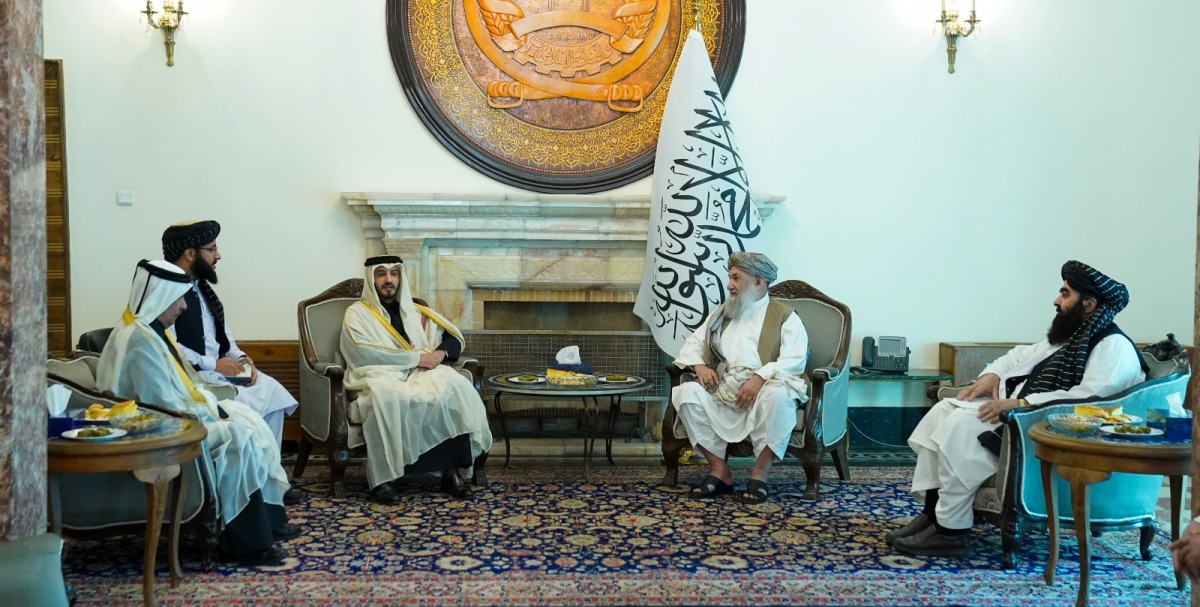

The State of Qatar has officially established a full diplomatic presence in Afghanistan with the presentation of credentials from its new ambassador, Dr. Mirdif bin Ali Al Qashouti, to the Prime Minister in the caretaker government of Afghanistan, Mohammad Hasan Akhund. This move, formalized on December 4, 2023, signals a continued and strengthened engagement between Qatar and Afghanistan despite ongoing international concerns regarding the Taliban’s rule. The appointment of an ambassador to Afghanistan is a significant development in regional diplomacy.
The credential ceremony took place in Kabul, marking one of the first instances of a nation formally accrediting an ambassador to the Taliban-led administration since its takeover in August 2021. This action by Qatar comes amidst a largely cautious approach from many countries, hesitant to offer full recognition to the current Afghan government. The engagement focuses on humanitarian aid and maintaining essential communication channels.
Qatar’s Deepening Diplomatic Ties with Afghanistan
Qatar has maintained a unique position in its dealings with Afghanistan, refusing to sever ties with the Taliban even after the international withdrawal. This consistent engagement stems from Qatar’s role as a key facilitator in the 2020 Doha Agreement, which paved the way for the withdrawal of US troops. According to the Qatari Ministry of Foreign Affairs, the country recognizes the importance of dialogue and stability in the region.
While most nations have settled for maintaining a charge d’affaires level of representation, Qatar’s decision to appoint a full ambassador demonstrates its willingness to move beyond basic communication. This is largely due to Qatar’s focus on de-escalation and its established history of mediating complex political situations, particularly involving Islamic movements. The move is seen by some analysts as an attempt to influence the Taliban from within.
Humanitarian and Economic Considerations
A significant driver of Qatar’s approach is the ongoing humanitarian crisis in Afghanistan. The country faces severe economic hardship, exacerbated by international sanctions and the freezing of Afghan assets abroad. Qatar has provided substantial humanitarian assistance to Afghanistan, and a full ambassadorial presence will likely streamline the delivery of aid and facilitate further assistance programs.
Qatar’s investment interests in Afghanistan also play a role. Before the Taliban takeover, Qatar had begun exploring opportunities in areas such as infrastructure and energy. While those projects are currently on hold, the appointment of an ambassador could signal a renewed interest in future economic collaboration, contingent on the evolving political and security landscape. Discussions regarding reconstruction projects will be an important ongoing conversation.
International Reactions and Implications
The appointment of Dr. Al Qashouti has drawn mixed reactions internationally. Some countries welcome Qatar’s efforts to engage with the Taliban and maintain a dialogue, believing it’s crucial for preventing a further deterioration of the situation in Afghanistan. Others express concern that it may be seen as legitimizing the current regime.
Meanwhile, the United States has not officially commented on the appointment. However, US officials have previously indicated a preference for continued humanitarian engagement without formal recognition of the Taliban government. This position reflects the ongoing concerns about human rights, particularly the rights of women and girls, under Taliban rule.
In contrast, regional powers like Pakistan and Iran, who share borders with Afghanistan, have also maintained pragmatic relationships with the Taliban, prioritizing stability and trade. Qatar’s move aligns with this regional trend. They are eager to see a stable Afghanistan that doesn’t become a haven for terrorist groups.
The move also affects efforts surrounding the release of frozen Afghan assets. Discussions are continuing between international stakeholders about how to provide financial assistance to the Afghan people without directly funding the Taliban government. Having an ambassador to Afghanistan could give Qatar a stronger voice in these negotiations.
Qatar’s decision does not equate to formal recognition of the Taliban government, a point consistently emphasized by Qatari officials. The country continues to call for the Taliban to uphold its commitments to human rights, inclusive governance, and counter-terrorism. The situation remains fluid, and the international community is closely monitoring the Taliban’s actions.
Looking ahead, the next steps will involve the full establishment of the Qatari embassy in Kabul and the commencement of regular diplomatic exchanges. The effectiveness of this diplomatic engagement will depend on the Taliban’s willingness to address international concerns and create a more inclusive and rights-respecting environment. The long-term impact on Afghanistan’s political and economic future remains uncertain, and continued observation of Qatar’s role and the Taliban’s response is crucial.
Further developments regarding diplomatic relations with Afghanistan and the ongoing political situation are expected in the coming months. The focus will be on whether Qatar’s engagement can lead to positive changes within Afghanistan and encourage other nations to consider similar levels of interaction. The crucial element will be maintaining pressure on the Taliban regarding human rights and ensuring regional stability.