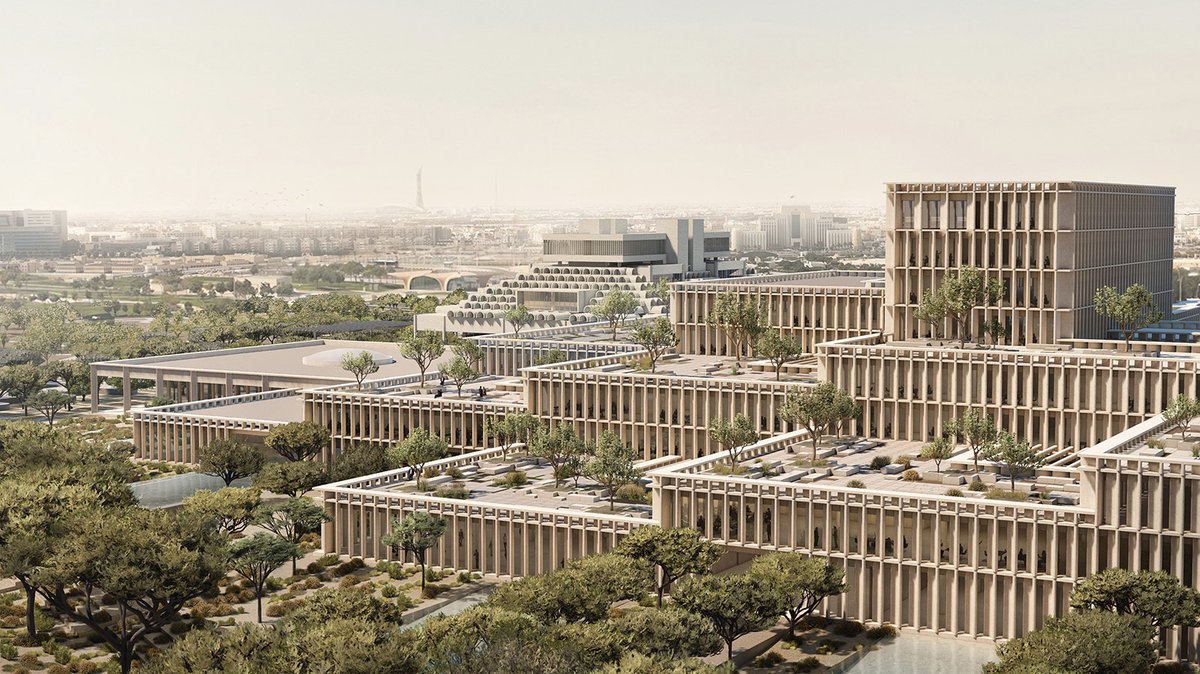

Qatar has announced plans for a new headquarters for its Ministry of Foreign Affairs (MoFA) in Doha, a project that will revitalize a prominent waterfront location and incorporate a historical landmark. The development, revealed Thursday by the Qatar News Agency (QNA), underscores the nation’s ongoing investment in infrastructure and its commitment to cultural preservation through considered Doha real estate development. This initiative is expected to significantly impact the city’s architectural landscape and public spaces.
The new MoFA complex will be situated on a key site along Doha’s Corniche, a popular waterfront promenade. It will prominently feature the existing 1985 General Post Office building, recognized for its distinct modernist “pigeonholes” facade. The agency shared architectural renderings of the project on social media platform X.
A New Landmark for Qatari Diplomacy and Doha Architecture
The decision to build a dedicated headquarters reflects Qatar’s growing international role and the expanding scope of its foreign policy efforts. According to QNA, the overall complex will span 70,000 square meters, integrating new construction with the adaptive reuse of the historically significant General Post Office. This approach balances modern functionality with the preservation of Qatar’s architectural heritage.
The historic General Post Office will not be demolished but rather incorporated into the new development. The ministry stated the building will be partially repurposed to house public programming related to cultural diplomacy. This demonstrates a forward-thinking strategy to integrate national identity with the functions of modern diplomacy.
Architectural Vision and Design
The design of the MoFA headquarters has been entrusted to Frida Escobedo, founder of Frida Escobedo Studio, based in Mexico City and New York. Escobedo is known for her sensitive and innovative approach to architecture, often blending contemporary design with historical context. Her previous work includes the Serpentine Pavilion in London and the Yale Center for British Art in New Haven, Connecticut.
The selection of Escobedo suggests Qatar is prioritizing a design that is both aesthetically striking and culturally relevant. The studio’s portfolio highlights a commitment to creating spaces that are accessible and engaging for the public, aligning with the planned public programming within the repurposed post office. This project is a significant addition to the growing portfolio of Qatar construction projects.
The integration of the General Post Office into the new complex presents unique architectural challenges. Adaptive reuse projects require careful consideration of structural integrity, historical preservation guidelines, and the seamless integration of old and new elements. However, successful adaptive reuse can create vibrant and meaningful spaces that celebrate a city’s past while embracing its future.
This development also aligns with Qatar’s broader urban planning initiatives, which emphasize the creation of sustainable and pedestrian-friendly environments. The Corniche area has undergone significant transformation in recent years, with the addition of new parks, cultural attractions, and public spaces. The MoFA headquarters is expected to further enhance the area’s appeal as a destination for both residents and visitors, boosting Doha tourism.
While the exact timeline for the project remains undisclosed, the announcement signals a commitment to its realization. The next steps will likely involve detailed design development, securing necessary approvals, and initiating the construction process. The completion date will depend on the complexity of the integration between the new construction and the existing historical structure.
The project’s success will be measured not only by its architectural merit but also by its ability to serve the evolving needs of the Ministry of Foreign Affairs and contribute to the cultural vibrancy of Doha. Observers will be watching closely to see how Escobedo’s design team navigates the challenges of adaptive reuse and creates a landmark that reflects Qatar’s aspirations on the global stage.