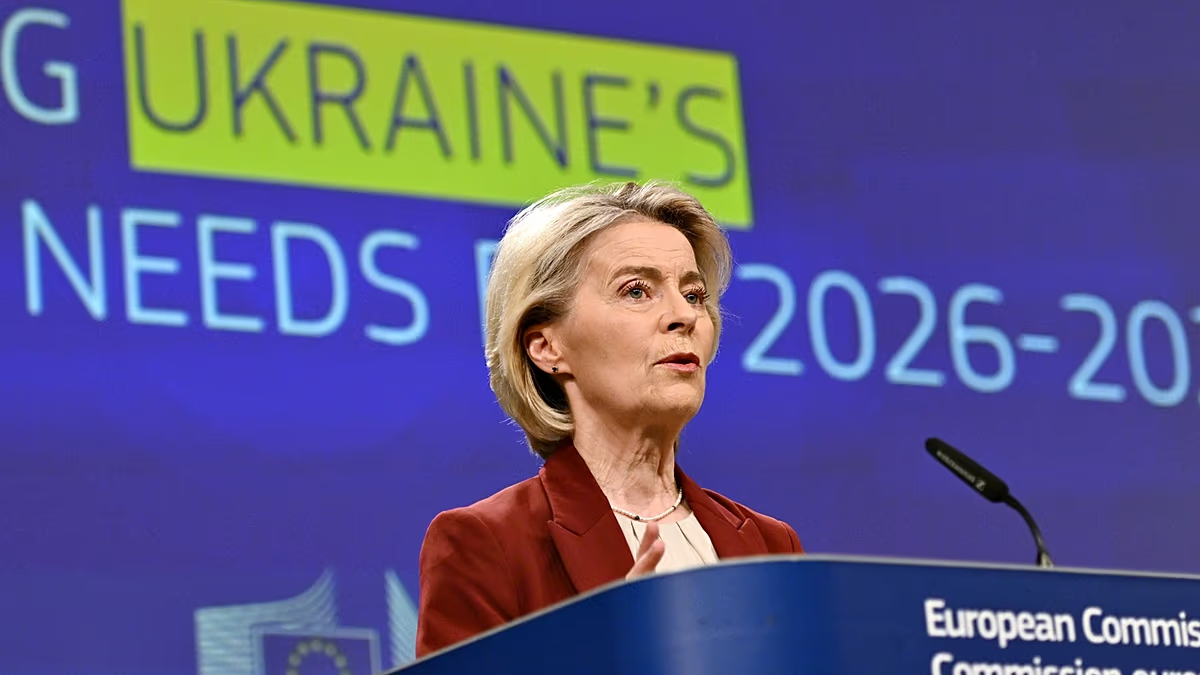

European Commission President Ursula von der Leyen formally unveiled the legal framework for a controversial reparations loan to Ukraine, utilizing approximately €210 billion in immobilized Russian central bank assets. The unprecedented scheme aims to provide financial and military support to Kyiv, with repayment contingent on Russia agreeing to compensate Ukraine for the damages caused by its ongoing invasion – a condition many view as improbable in the near future. The proposal, detailed on Wednesday, seeks a long-term funding solution for Ukraine, amidst growing concerns about sustained military and economic aid.
The plan has been in development for months, discussed in various forums, but faced significant resistance, particularly from Belgium, which holds a substantial portion of the frozen Russian assets via its central securities depository, Euroclear. Von der Leyen’s announcement represents a pivotal step toward potentially unlocking these funds, but hurdles remain in securing unanimous support from all EU member states.
Addressing Belgium’s Concerns: The Core of the Reparations Loan
Belgium’s hesitance stems from the legal risks associated with repurposing sovereign assets, fearing potential retaliation from Russia and subsequent legal challenges. The country has consistently demanded robust guarantees to shield itself and Euroclear from any financial repercussions. According to the European Commission’s proposal, an initial guarantee of €105 billion will cover the first €90 billion intended for Ukraine over the next two years.
A further guarantee of up to another €105 billion could follow. However, the Commission hopes the next long-term EU budget, set to take effect in 2028, will assume responsibility for the loan, reducing reliance on these guarantees. Senior Commission officials stated that a built-in liquidity mechanism will ensure Euroclear can meet its obligations even if sanctions are lifted prematurely before Russia provides compensation.
Guarantee Mechanisms and Risk Mitigation
The guarantee structure is designed to be multi-layered. If any member state fails to meet its financial obligations under the guarantee, the European Commission will step in to provide the necessary funds. Furthermore, the proposal includes provisions to counteract potential Russian expropriation of European assets held in jurisdictions friendly to Moscow.
To this end, the EU intends to establish a new sanctions regime targeting individuals and entities facilitating such expropriation. A novel measure is also being proposed – leveraging Article 122 of the EU treaties – which would prohibit the return of Russian sovereign assets, requiring a qualified majority for approval, thus circumventing the need for unanimous consent to maintain sanctions.
This use of Article 122, traditionally reserved for economic disturbances within the EU, is considered an innovative and potentially contentious approach. Officials argue that Russia’s war has undeniably triggered such disturbances, justifying its application to this situation. More information on Article 122 can be found on the European Parliament website.
Beyond the Euroclear holdings, approximately €25 billion in Russian assets is held in other institutions across several EU member states. Von der Leyen committed to utilizing the entire €210 billion pot, but accessing these additional funds may prove challenging due to banking privacy regulations.
The Commission also highlighted anti-corruption safeguards as vital to the plan. A “no rollback” clause will be included, linking financial assistance to Ukraine’s progress in implementing anti-corruption measures, a key requirement for its EU accession process. This comes in response to recent corruption scandals within Ukraine’s energy sector, which led to several high-profile resignations.
The loan will be divided into financial and military support. Military aid will prioritize procurement from European sources under a “Made in Europe” principle, favoring arms and ammunition from Ukraine, the EU, or associated countries. Purchases from outside these regions will be allowed only in cases of pressing need.
Plan B and Next Steps
Should Belgium continue to oppose the reparations loan despite the proposed guarantees, the European Commission has a backup plan – issuing joint EU debt to raise the €90 billion. However, this alternative would require member states to collectively bear the interest costs, a prospect that is unpopular with some capitals. Additionally, common borrowing for a non-EU country would necessitate amending the EU budget, which faces potential opposition from Hungary.
A combined approach, utilizing both the reparations loan and joint debt issuance, is also being considered. EU leaders will discuss the proposal at a summit on December 14–15. The outcome of these discussions will determine the future of financial assistance to Ukraine, and the extent to which immobilized Russian assets will be used to support its defense and recovery. The debate underlines the complex interplay of legal, financial, and geopolitical considerations as the EU seeks to support Ukraine in its hour of need.