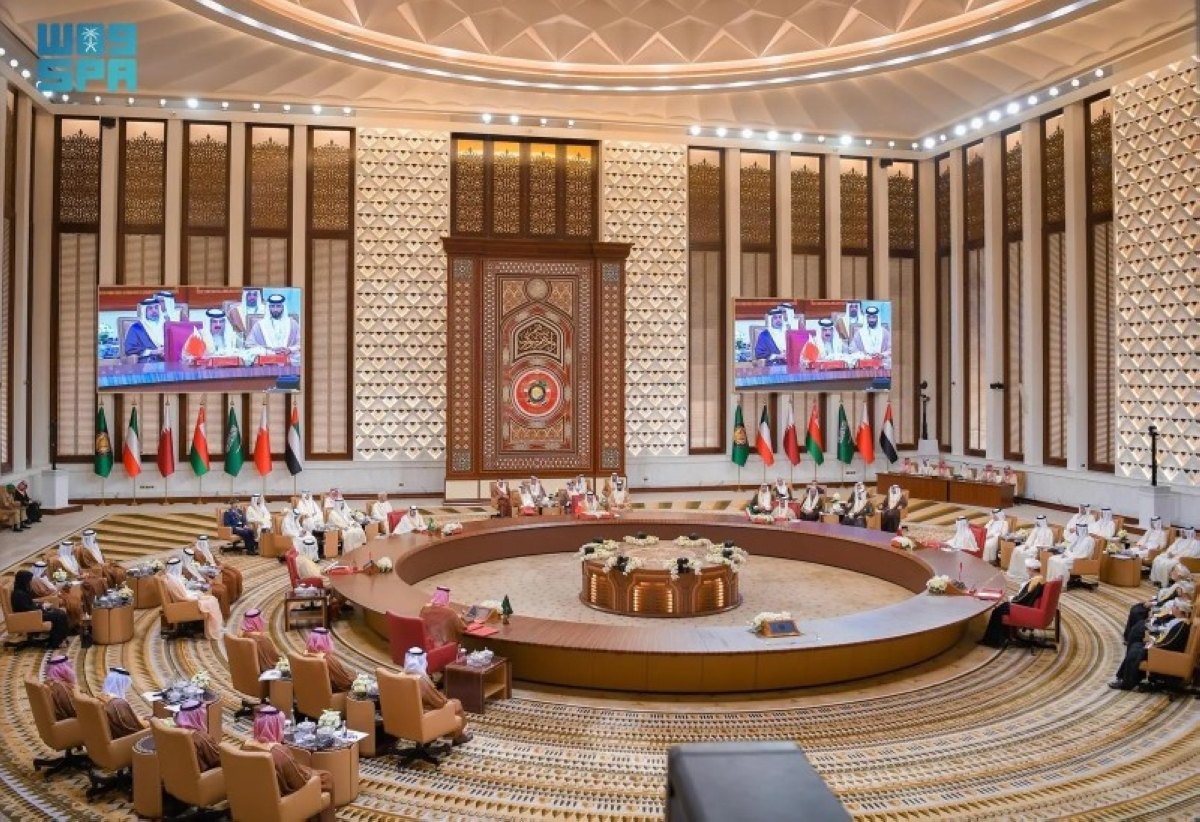

Gulf Cooperation Council (GCC) leaders concluded their 46th summit in Manama, Bahrain, on Wednesday with a strong reaffirmation of collective security and a commitment to deeper regional integration. The leaders, representing Bahrain, Kuwait, Oman, Qatar, Saudi Arabia, and the United Arab Emirates, issued the Sakhir Declaration, emphasizing the indivisibility of GCC security and the need for unified responses to external threats. This comes amid ongoing regional instability, particularly the conflict in Gaza and concerns over maritime security.
The declaration underscored the importance of respecting the sovereignty of all nations in the region and rejecting interference in internal affairs. Leaders warned that any attack on a single member state would be considered a threat to the entire bloc, signaling a unified front against potential aggression. The summit also addressed broader regional and international issues, including the ongoing humanitarian crisis in Gaza and the pursuit of a lasting peace.
Strengthening GCC Cohesion and Regional Stability
The Sakhir Declaration highlights a renewed focus on bolstering cooperation across all sectors within the GCC. According to the statement, this includes political, security, economic, and social fields, with the ultimate goal of achieving greater unity and addressing shared challenges. This drive for increased integration reflects a decades-long effort to foster closer ties among the member states, initially founded on shared political and economic interests.
Economic Integration and Diversification
A key component of the renewed commitment involves accelerating the development of the GCC Common Market and Customs Union. Leaders stressed the need to enhance trade, tourism, and investment, particularly in vital infrastructure projects related to energy, transportation, and technology. Furthermore, the summit emphasized the importance of economic diversification to reduce reliance on oil revenues and build more sustainable economies.
The declaration specifically called for boosting digital infrastructure, facilitating e-commerce, and developing shared digital payment systems. This push towards digital transformation is seen as crucial for creating a more competitive and future-proof economic landscape within the GCC. Leaders also prioritised supporting innovation and sustainable practices to ensure long-term prosperity.
Security Concerns and International Partnerships
The leaders expressed deep concern over regional security challenges, reiterating their commitment to combating terrorism and extremism in all forms. They also emphasized the need to counter hate speech and transnational organized crime. Additionally, the summit highlighted the importance of supporting joint naval forces based in Bahrain to protect maritime navigation and energy security, a critical concern given the region’s strategic waterways.
The GCC is actively seeking to strengthen partnerships with friendly nations and international organizations. The participation of Italian Prime Minister Giorgia Meloni in bilateral discussions, resulting in an agreement to establish a comprehensive strategic partnership, exemplifies this approach. These partnerships are intended to enhance shared interests and contribute to regional stability, according to the declaration.
Addressing the Gaza Conflict and the Palestinian Issue
The summit addressed the ongoing conflict in Gaza, welcoming the outcomes of the Sharm El Sheikh Peace Summit. Leaders affirmed their support for regional and international efforts to ensure full compliance with the ceasefire agreement and facilitate the delivery of humanitarian aid to the affected population. The situation in Gaza has been a consistent point of discussion for the GCC, reflecting the bloc’s long-standing commitment to the Palestinian cause.
The declaration reiterated the GCC’s support for the establishment of an independent, sovereign Palestinian state based on the 1967 borders, with East Jerusalem as its capital, in accordance with the two-state solution and relevant international resolutions. This position aligns with the broader Arab Peace Initiative and underscores the GCC’s commitment to a just and lasting resolution of the Israeli-Palestinian conflict. Discussions on regional conflicts were central to the summit.
The leaders also expressed their backing for Bahrain’s role as a non-permanent member of the United Nations Security Council, voicing confidence in the nation’s ability to represent GCC and Arab interests on the global stage. This support highlights the GCC’s desire to play a more active role in international diplomacy and peacekeeping efforts.
Looking ahead, the GCC states are expected to continue working towards the implementation of the commitments outlined in the Sakhir Declaration. The success of these efforts will depend on sustained political will, effective coordination among member states, and a constructive engagement with regional and international partners. The evolving geopolitical landscape and the ongoing conflicts in the Middle East will likely remain key factors influencing the GCC’s future direction and priorities. Further details on the joint action plan with Italy are expected to be released in the coming months, and the GCC’s actions in the UN Security Council will be closely watched for indications of its evolving foreign policy.