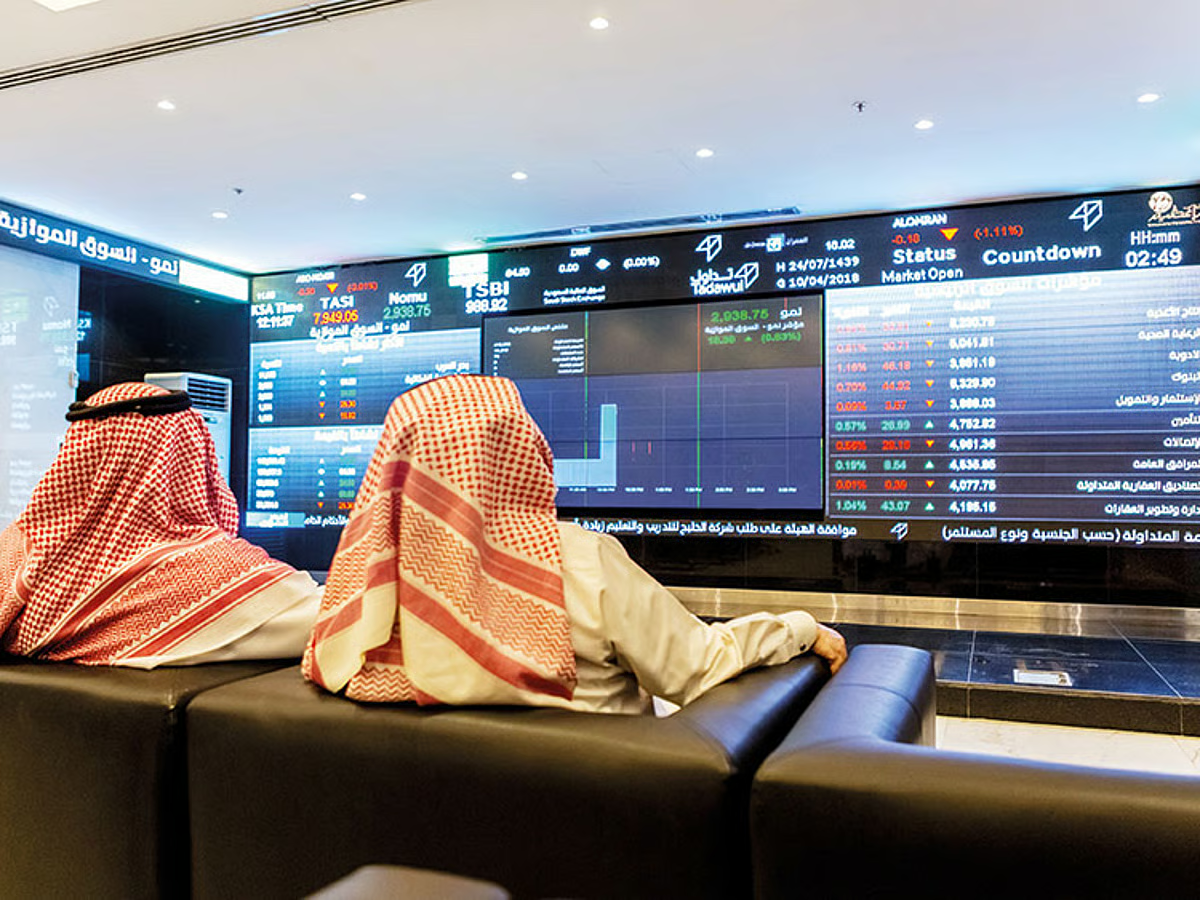

Saudi Arabia’s capital markets are experiencing a resurgence, with initial public offerings (IPOs) reaching nearly $4.5 billion in 2024, marking the strongest year for such activity since 2022. This substantial figure, compiled by Bloomberg, signals increasing investor confidence and a robust economic environment within the Kingdom. Several high-profile listings have contributed to this growth, including both successes and some underperforming ventures.
The influx of capital through IPOs is occurring across both the Tadawul main market and the Nomu parallel market, a platform designed for smaller and faster listings. While the total represents a significant improvement over recent years, the performance of individual offerings has varied considerably. This points to a more nuanced investor appetite, increasingly focused on fundamentals rather than purely on market momentum.
The Rise of IPO Activity in Saudi Arabia
Saudi Arabia has been actively promoting the development of its domestic capital market as part of its “Vision 2030” economic diversification plan. Reducing reliance on oil revenue is a primary goal, and fostering a strong financial sector—including a vibrant IPO market—is considered crucial. The government has implemented several reforms to attract both local and international investors, including easing listing requirements and improving corporate governance standards.
Key IPOs Driving Growth
Two deals have prominently contributed to the year’s strong IPO volume. Flynas Co., a low-cost airline, debuted in June, raising significant capital but subsequently experiencing a share price decline. Conversely, Umm Al Qura for Development & Construction Co., a major developer focused on projects in Mecca, has proven to be one of the best-performing listings in the region in 2024. This contrast illustrates the varying degrees of success within the current IPO landscape.
The success of Umm Al Qura reflects strong investor interest in companies linked to the development of Saudi Arabia’s religious tourism sector, an area prioritized under Vision 2030. The Kingdom aims to dramatically increase the number of pilgrims visiting Mecca and Medina, leading to substantial investment in infrastructure and related services. This sector represents a key area of growth and opportunity for Saudi companies.
Beyond these flagship deals, other companies in sectors such as healthcare, technology, and financial services have also sought public listings. This diversification signals a broader willingness among Saudi businesses to access capital markets for expansion and growth. The trend suggests an evolving economic structure adapting to the long-term goals of Vision 2030.
Factors Influencing IPO Performance
Several global and regional factors have contributed to the upturn in IPO activity. Generally lower interest rate environments during parts of 2024, combined with improving economic forecasts, encouraged investors to explore riskier assets, like newly listed companies. Additionally, strong oil prices – despite the long-term diversification agenda – provided a boost to Saudi government finances and overall economic sentiment.
However, geopolitical risks and fluctuations in global markets have also exerted influence. The performance of Flynas, for example, has been linked to broader concerns about the airline industry and volatile fuel prices. These external pressures highlight the challenges of navigating the global economy even with a strong domestic foundation. The stock market is proving to be highly sensitive to world events.
The composition of investor participation also plays a crucial role. Initial reports indicated strong participation from institutional investors in many of the Saudi IPOs, demonstrating confidence in the long-term prospects of these companies. The level of retail investor involvement, however, seems more variable, depending on the specific offering and market conditions.
Implications for the Saudi Economy
The surge in IPO activity has positive implications for the Saudi economy. It provides Saudi companies with access to crucial capital for expansion, innovation, and job creation. Moreover, it enhances the depth and liquidity of the Tadawul, making it a more attractive destination for both domestic and foreign investment.
A more developed capital market can also facilitate greater private sector participation in the implementation of Vision 2030. This is particularly important as the government seeks to reduce its direct involvement in the economy and empower private enterprise. The successful execution of Vision 2030 depends heavily on attracting private capital.
Meanwhile, the varied performance of recent IPOs serves as a warning. While the overall trend is positive, not every listing will be a success story. Investors are becoming more discerning, focusing on companies with solid fundamentals, sustainable growth prospects, and strong corporate governance. Future issuers will need to prioritize these factors to attract capital and maintain investor confidence.
Looking ahead, the Saudi government and the Tadawul are expected to continue their efforts to further develop the capital markets. Potential reforms could include streamlining listing procedures, enhancing transparency, and expanding the range of investment products available. The next major step will be assessed in the first quarter of 2025 when the final figures for 2024 are assessed against expectations, alongside sector-specific analysis. Monitoring global economic conditions, regional political stability, and the ongoing implementation of Vision 2030 will be key to understanding the future trajectory of Saudi Arabia’s IPO market and investment landscape.