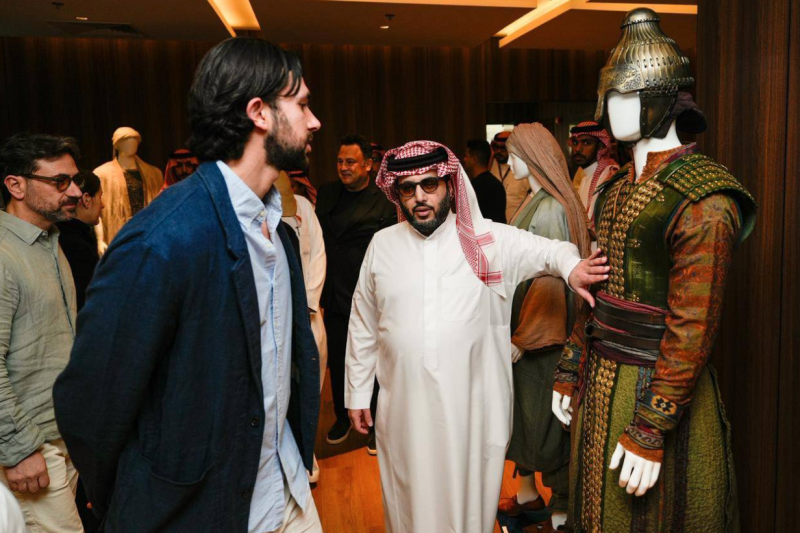

Saudi Arabia is making significant strides in its entertainment industry with the development of “The Battle of Yarmouk… Khalid bin Al-Walid,” a large-scale historical film also known as “Unbroken Sword.” The project, currently in pre-production in Riyadh, represents the largest film undertaking in the Middle East and the region’s most ambitious English-language feature to date. Initial progress was reviewed by Turki Alalshikh, Chairman of the General Entertainment Authority, during a tour of Al-Hosn Big Time and Qiddiya studios on Monday.
The film, backed by the General Entertainment Authority and Riyadh Season and produced by Sela, is slated for a 2027 release. “Unbroken Sword” aims to depict the life and military campaigns of Khalid bin Al-Walid, a pivotal figure in early Islamic history, offering a potentially new perspective on this era to a global audience.
A Landmark Production: “Unbroken Sword” and the Rise of Saudi Cinema
The ambition behind “Unbroken Sword” extends beyond its budget. According to reports, the production is a key component of Saudi Arabia’s broader strategy to diversify its economy and establish a robust domestic film industry. This initiative is supported by substantial investment into infrastructure like the Qiddiya entertainment city, which is designed to attract international productions and foster local talent.
The project has assembled an impressive international crew, led by acclaimed director Alik Sakharov, whose resume includes prominent television series such as Game of Thrones, House of Cards, and Ozark. Veteran Hollywood producer Richard Sharkey, known for his work on House of the Dragon and The Lord of the Rings, is also involved, overseeing the logistical and creative aspects of the film.
Historical Scope and Creative Detail
“Unbroken Sword” is set in 7th-century Arabia and intends to portray Khalid bin Al-Walid as a complex character navigating both military triumph and personal struggles. He will be shown leading a smaller Muslim force against the larger armies of the Roman and Persian empires.
Alalshikh’s recent visit highlighted the meticulous attention to detail being applied to the production. He inspected concept art, architectural designs, and early set construction. A significant focus is being placed on authenticity, with plans to create over 1,000 swords and plant 3,000 trees to accurately recreate the historical environments.
The scale of the outdoor environments under construction is also noteworthy. These spaces, designed to depict battlefields and historical settlements, are meant to provide a visually immersive experience for audiences and underscore the epic nature of the story. These efforts toward film production contribute to the larger goals of the Saudi Vision 2030, which includes developing the Kingdom’s cultural and entertainment sectors.
Sakharov’s initial unfamiliarity with Khalid bin Al-Walid reportedly evolved into a deep engagement with the historical figure, a dedication that led him to relocate to the Kingdom and live on-site for the past six months. This commitment, according to Alalshikh, demonstrates the project’s ability to attract and retain top international talent. The film’s narrative will explore themes of legacy, truth, identity, and the consequences of war.
Impact on the Regional Film Industry
The development of “The Battle of Yarmouk… Khalid bin Al-Walid” is expected to have a ripple effect throughout the Middle Eastern film industry. The project is creating numerous job opportunities for local crew members and actors, fostering skills development and contributing to the growth of a sustainable film ecosystem. Additionally, the film’s international ambitions could open doors for wider distribution of Arabic-language films and increased collaboration between regional and global filmmakers.
The production is also spurring investment in related industries, such as costume design, prop manufacturing, and visual effects. Saudi Arabia’s growing capacity in these areas will likely attract further film projects to locate in the kingdom, strengthening its position as a regional production hub. Increased investment in entertainment has been a key feature of recent Saudi policy impacting tourism, and related industries
The 2027 release date remains the target, but as with any major production, potential delays are possible. Further announcements regarding casting, trailers, and distribution deals are anticipated in the coming months. The success of “Unbroken Sword” will likely serve as a benchmark for future large-scale historical films produced in the region, and industry observers will be watching closely to see if it achieves its ambitious goals regarding international viewership and critical acclaim. The Saudi film industry asserts its potential for growth through this undertaking, hoping this sets the precedent for future projects.
A key aspect to watch will be the balancing of historical accuracy with a compelling narrative for a wide audience.