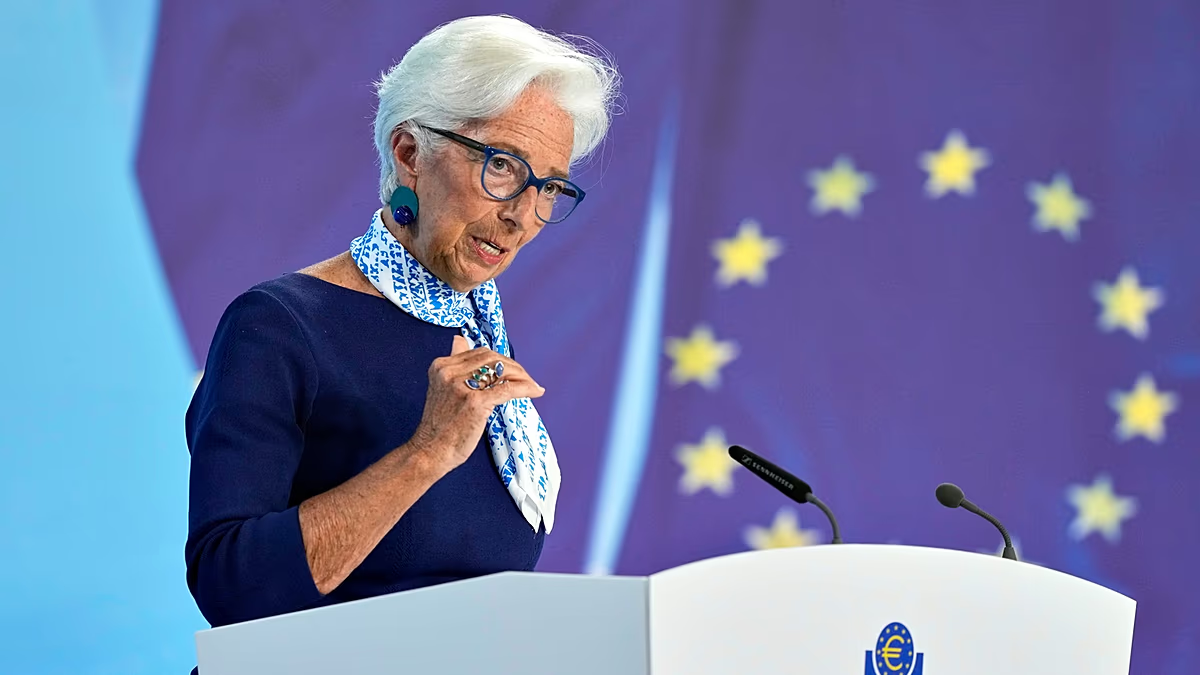

The European Central Bank (ECB) has dealt a significant blow to plans for using seized Russian assets to fund Ukraine’s reconstruction, declining to provide emergency liquidity for a proposed reparations loan. The decision, first reported by the Financial Times, raises serious doubts about the feasibility of the ambitious scheme and represents a new hurdle in securing financial aid for Kyiv.
The ECB’s refusal stems from concerns that providing such a backstop would violate EU treaty law prohibiting monetary financing and compromise the bank’s independence. This development comes as the European Commission prepares to present legal texts outlining the proposed assistance, with EU leaders scheduled to discuss the matter further on December 18th.
ECB Rejects Liquidity for Ukraine Reparations Loan
The proposed reparations loan would leverage approximately €185 billion in immobilized assets of the Russian Central Bank, largely held at Euroclear in Belgium. The European Commission envisioned a zero-interest line of credit to Ukraine, with repayment contingent on Russia providing compensation for war damages – a highly improbable scenario. However, the plan required member states to provide guarantees to Euroclear, ensuring sufficient liquidity even if sanctions were lifted or other unforeseen circumstances arose.
To bolster the proposal, the Commission informally requested the ECB to act as a lender of last resort, injecting liquidity if member state guarantees proved insufficient. According to an ECB spokesperson, such a move would constitute illegal state aid and was therefore not under consideration. This stance aligns with previous statements from ECB President Christine Lagarde, emphasizing the need for any solution to comply with international law and maintain financial stability.
Commission Seeks Alternative Solutions
The European Commission acknowledged the ECB’s position and stated it would explore “alternative solutions” to protect Euroclear. Paula Pinho, the Commission’s chief spokesperson, emphasized the importance of the EU fulfilling its international obligations. The Commission is now considering combining the reparations loan with other options, including bilateral contributions from member states or the issuance of joint EU debt, though both have faced resistance.
Meanwhile, the ECB’s decision is likely to strengthen the position of Belgium, which has consistently expressed reservations about the plan. Last week, Belgian Prime Minister Bart De Wever sent a strongly worded letter to European Commission President Ursula von der Leyen, criticizing the proposal as “fundamentally wrong” and demanding comprehensive, legally binding guarantees covering the full €185 billion in assets and potential associated risks.
De Wever’s letter highlighted concerns about potential retaliatory measures against Euroclear in “Russia-friendly jurisdictions” and the need for coverage of arbitration costs and lost investment opportunities. He argued that the risks were not merely theoretical and demanded the ECB’s explicit approval before proceeding. The Financial Times initially reported on the letter and the ECB’s response.
The broader discussion around utilizing Russian assets also extends beyond the EU. G7 nations are estimated to hold around $300 billion in immobilized Russian funds. While the US has included these assets in peace negotiations with Russia and Ukraine, the UK and Canada have shown interest in replicating the EU’s asset seizure approach.
The future of the reparations loan remains uncertain. The Commission’s upcoming presentation of legal texts will be closely watched, as will the reactions of EU member states. The debate highlights the complex legal and financial challenges of leveraging seized assets to support Ukraine, and the need for a unified and legally sound approach to providing long-term financial assistance.
As negotiations continue, stakeholders will be looking for viable alternatives to ensure Ukraine receives the necessary funding while upholding international law and maintaining financial stability. The outcome will likely shape the future of EU-Ukraine relations and the broader international response to the ongoing conflict.