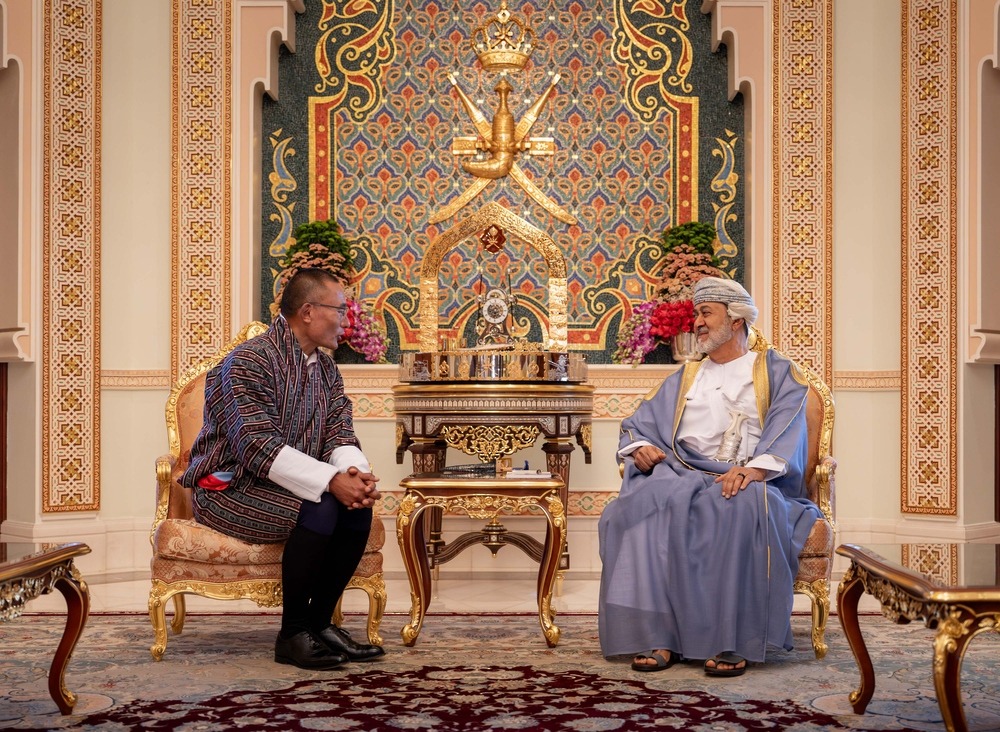

Muscat, Oman – His Majesty Sultan Haitham bin Tariq of Oman held discussions with Bhutan’s Prime Minister Dasho Tshering Tobgay in Muscat on Tuesday, focusing on strengthening Oman-Bhutan relations and expanding economic ties. The meeting centered on identifying opportunities for increased bilateral cooperation and investment, with a particular emphasis on diversifying both nations’ economies and fostering sustainable development. This high-level meeting signals a growing interest in collaboration between the two countries, despite geographical distance.
The talks took place at the Al Alam Palace in Muscat, according to Oman’s state news agency. While specific details of the agreements discussed were not immediately released, both leaders reportedly expressed a commitment to building a more robust partnership. The visit by Prime Minister Tobgay represents a significant diplomatic effort to explore potential synergies between Oman and Bhutan.
Boosting Economic Ties: The Focus of Oman-Bhutan Relations
A key objective of the meeting appears to be the enhancement of investment partnerships across various economic and commercial sectors. Oman, a nation actively diversifying its economy away from oil and gas, sees potential in Bhutan’s growing economy and focus on sustainable practices. Bhutan, meanwhile, could benefit from Oman’s established infrastructure and investment experience.
The Omani government, as detailed in its Vision 2040 plan, is actively seeking new international partnerships to support its diversification goals. Tourism, logistics, and renewable energy have been identified as priority sectors for investment. Bhutan’s unique approach to “Gross National Happiness,” which prioritizes sustainable and inclusive development, may present a complementary framework for Oman’s own ambitions.
Potential Areas for Cooperation
Several sectors are likely to be explored for increased collaboration. These include:
Tourism: Both countries possess unique tourism offerings – Oman with its historical forts and stunning landscapes, and Bhutan with its pristine mountains and Buddhist culture – and could explore joint marketing initiatives and tourism infrastructure development.
Renewable Energy: Bhutan has a significant hydropower potential, while Oman is investing heavily in solar and wind energy. Collaboration in this field could facilitate knowledge transfer and joint projects.
Small and Medium Enterprises (SMEs): Supporting the growth of SMEs is a priority for both nations. Sharing best practices and facilitating access to finance could prove beneficial.
Additionally, discussions likely touched upon regional and international issues of mutual concern. Both countries share an interest in promoting peace and stability in their respective regions, and cooperation on initiatives addressing climate change and global health may also be on the agenda.
Economic cooperation isn’t the only aspect of the growing relationship. Cultural exchange programs and educational opportunities could be developed to foster greater understanding between the two countries. These initiatives reflect a broader effort to diversify diplomatic engagement beyond traditional partners.
This meeting follows a period of increased diplomatic activity between Oman and several Asian nations. The Sultanate has been keen to strengthen ties with countries outside of its immediate region, recognizing the importance of diversifying its foreign policy and economic partnerships. Oman’s strategic location and its policy of non-interference have made it an attractive partner for many countries.
The visit also highlights Bhutan’s efforts to expand its international presence and attract foreign investment. While a small nation, Bhutan has actively engaged in diplomatic efforts to promote its unique development model and its commitment to environmental sustainability. For Bhutan, external investment is crucial for realizing its long-term development goals.
The next step following this meeting is expected to be the formation of joint working groups to explore specific areas of collaboration in more detail. These groups will likely be tasked with developing concrete proposals for investment projects and policy initiatives. While a firm timeline hasn’t been announced, progress reports are anticipated within the next six to nine months. The success of these efforts will depend on overcoming logistical challenges given the distance between the two nations and aligning regulatory frameworks.
Further announcements from both governments outlining specific agreements and initiatives are expected in the coming weeks. The development of these Oman-Bhutan relations and potential economic advancements represents an interesting case study in South-South cooperation.
Learn more about the Kingdom of Bhutan.
Learn more about the Sultanate of Oman.
Bhutan’s Economy – World Bank
Oman’s Economy – World Bank