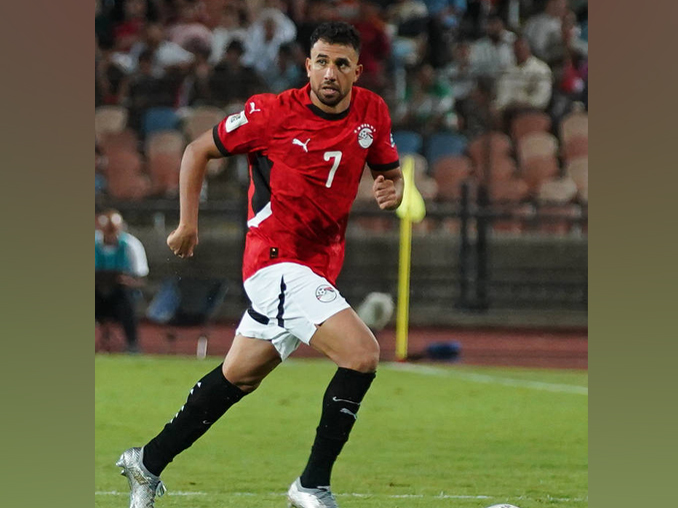

The anticipation is building as the FIFA Arab Cup Qatar 2025 approaches, set to showcase regional football talent from December 1-18. Egyptian national team player Mahmoud ‘Trézéguet’ Hassan expressed his pride in Qatar’s continued role as a prominent sports hub, highlighting the legacy of the 2022 FIFA World Cup. Sixteen teams will compete for the title across six iconic stadiums previously used in the World Cup.
Qatar to Host Highly Anticipated FIFA Arab Cup 2025
The tournament, which begins December 1st, represents a significant opportunity for Arab nations to demonstrate their growing prowess in international football. Egypt is grouped in Group C alongside Jordan, UAE, and Kuwait, with their first match scheduled against Kuwait at the Lusail Stadium on December 2nd at 5:30 PM local time. This competition follows the successful 2022 World Cup, further solidifying Qatar’s position as a key player in global sports.
Egypt’s Preparation and Goals
Egypt will be looking to improve upon their fourth-place finish in the previous FIFA Arab Cup held in 2021, where they were narrowly defeated by Qatar in a penalty shootout. Trézéguet emphasized the honor of representing Egypt in such a prestigious competition and the team’s commitment to making their fans proud. He believes the tournament provides a crucial platform to showcase the strength of Egyptian football.
Trézéguet himself has been a vital component of the Egyptian national team, earning 86 caps and scoring 22 goals. His recent contributions were instrumental in Egypt’s qualification for the 2026 World Cup, where he netted five goals during the campaign. He made his debut for the national team in 2014 and has since played a key role in reaching the African Cup of Nations final in both 2017 and 2023.
Qatar’s Sporting Infrastructure Praised
Beyond the competition itself, Trézéguet lauded Qatar’s world-class sporting infrastructure. He specifically noted the high quality of the stadiums, which were a hallmark of the 2022 World Cup, and believes these facilities contribute significantly to player performance and overall tournament success. This focus on infrastructure is a key element of Qatar’s sports strategy.
The Arab Cup is seen as a valuable stepping stone for developing football within the region. It provides competitive experience for national teams and allows players to gain exposure on an international stage. Additionally, the tournament fosters a sense of unity and camaraderie among Arab nations. The event also serves as a testing ground for operational logistics ahead of future major sporting events.
The Qatar 2025 edition builds on the momentum generated by the 2022 World Cup, aiming to further elevate the profile of football in the Arab world. The tournament is expected to attract significant media attention and a large number of spectators, both locally and internationally. This increased visibility could lead to greater investment in football development programs across the region.
The success of the 2022 World Cup demonstrated Qatar’s ability to host large-scale sporting events efficiently and effectively. The country invested heavily in infrastructure, including stadiums, transportation networks, and accommodation facilities. This investment is now paying dividends as Qatar continues to attract major sporting competitions, like the FIFA tournament. The focus on sustainability and innovation during the World Cup also set a new standard for event organization.
Looking ahead, the focus will be on the on-field performances and the level of competition displayed throughout the FIFA Arab Cup Qatar 2025. Observers will be watching to see which teams emerge as contenders and whether any new stars are discovered. The tournament’s impact on the development of football in the Arab region will also be a key area of interest, as will Qatar’s continued ability to host world-class sporting events.