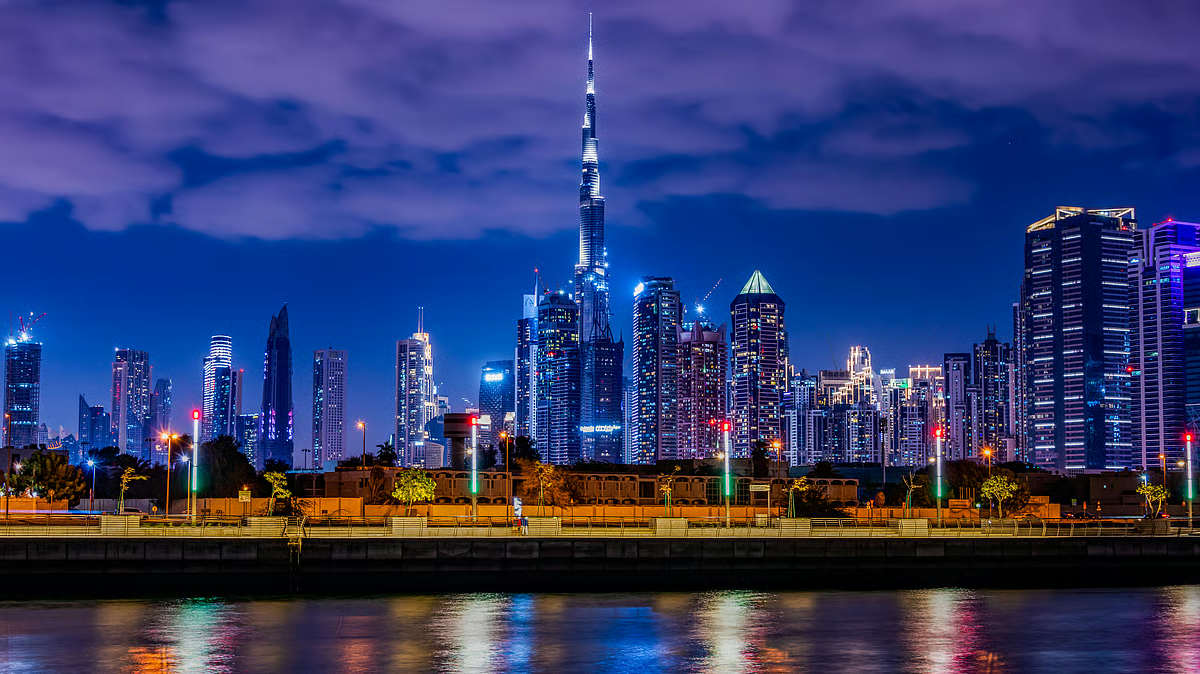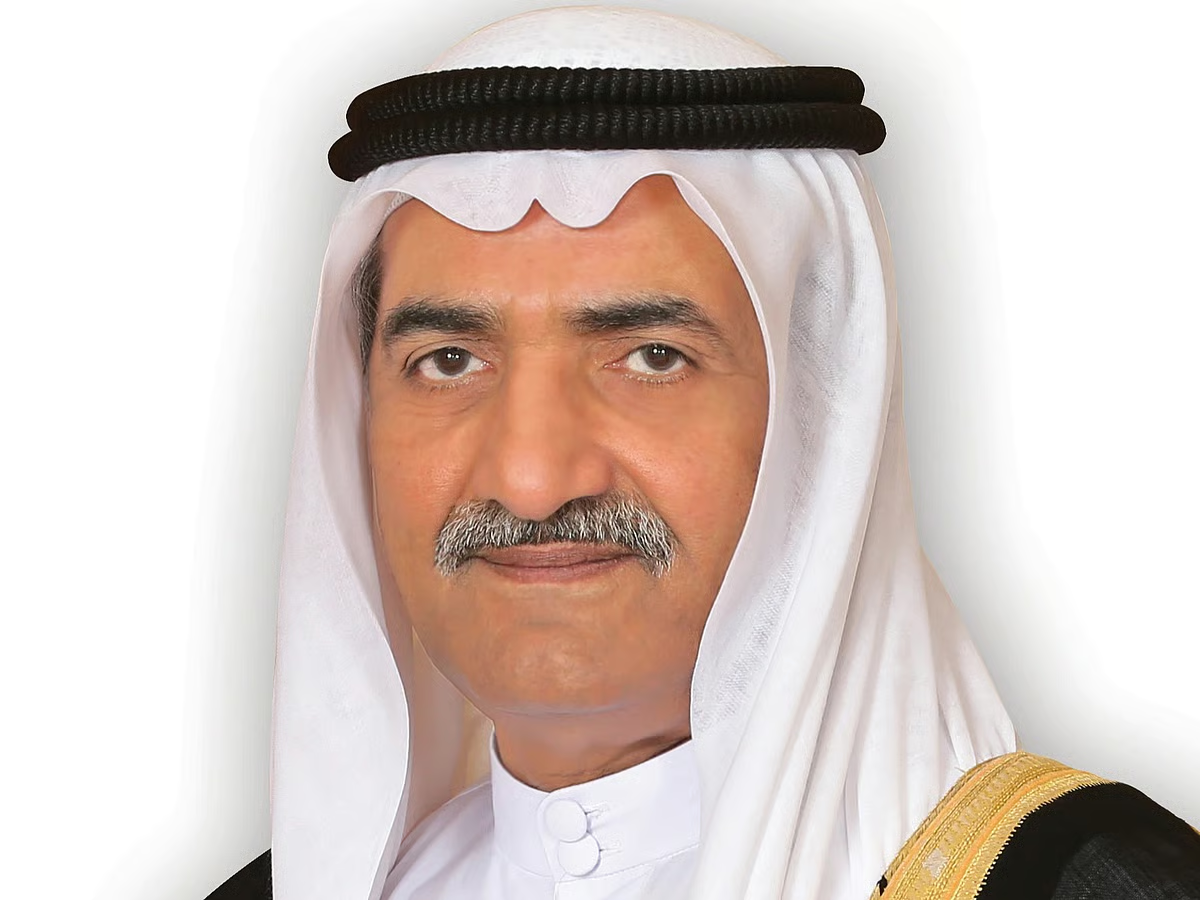

The United Arab Emirates (UAE) recently commemorated its 52nd National Day on December 2nd, 2023, with Sheikh Hamad bin Mohammed Al Sharqi, Supreme Council Member and Ruler of Fujairah, reflecting on the nation’s rapid progress and ambitious spirit. This milestone offers a significant opportunity to examine the UAE’s development trajectory, its evolving global role, and the foundation of its economic and social policies. Celebrations took place across all seven emirates, highlighting unity and future aspirations.
The celebratory period included national parades, cultural events, and economic analyses of the UAE’s performance over the past year. Governmental bodies and private organizations released statements emphasizing achievements in areas like sustainability, technological innovation, and international cooperation. The national holiday is annually observed to remember the formal establishment of the UAE in 1971 following its independence from the United Kingdom.
The UAE’s Remarkable Development: A Half-Century Overview
The UAE’s development is frequently cited as a case study in successful nation-building, particularly given its relatively short history as an independent state. Prior to the discovery of oil in the 1950s, the region was largely characterized by a nomadic Bedouin lifestyle and a pearl diving economy. The subsequent oil boom dramatically altered the economic landscape, providing the resources for substantial investment in infrastructure and social programs.
Early Investments and Diversification
Initial revenues were strategically channeled into essential infrastructure projects, including roads, ports, and airports. This focus on connectivity was crucial for facilitating trade and attracting foreign investment. Recognizing the finite nature of oil reserves, the UAE began a process of economic diversification in the 1980s and 1990s, moving towards sectors like tourism, finance, and real estate.
This diversification strategy has proven remarkably successful. According to the World Bank, the UAE’s GDP has grown significantly, even accounting for fluctuations in oil prices. The country has become a major hub for international business and a popular destination for tourists from around the globe.
Focus on Human Capital
Alongside economic growth, the UAE has prioritized investment in its citizens. A comprehensive education system, including world-class universities, has been established to cultivate a skilled workforce. Healthcare access has also been significantly expanded, resulting in improved health indicators and a higher quality of life. This emphasis on social progress is fundamental to the UAE’s vision.
However, relying on expatriate labor remains a key characteristic of the UAE economy. While the government is working to increase the proportion of Emirati citizens in the workforce through initiatives such as Emiratisation, skilled foreign workers continue to play a vital role in many sectors.
Sheikh Hamad’s Reflection on National Achievements
Sheikh Hamad’s statement underscores the core tenets of the UAE’s national identity: ambition, resilience, and a belief in overcoming challenges. His remarks specifically celebrated the UAE’s advancements in knowledge, infrastructure, and its commitment to peace and tolerance. The emphasis on “the impossible not existing” reflects a national narrative of continuous improvement and exceeding expectations.
The Ruler of Fujairah’s comments align with a broader national message that highlights the UAE’s unique position as a confluence of cultures. The country’s relatively open social policies and its role as a mediator in regional conflicts contribute to this image. This deliberate cultivation of a tolerant and welcoming environment supports its economic goals by attracting international talent and investment.
Sustainability and Future Planning
Recent years have seen the UAE place increasing emphasis on sustainability and renewable energy. The country has invested heavily in solar and nuclear power projects, aiming to reduce its carbon footprint and contribute to global climate action. The hosting of COP28 in Dubai further demonstrated this commitment to environmental issues.
The UAE’s “Vision 2071” outlines a long-term strategy for sustainable economic growth and societal well-being. This plan aims to establish the UAE as a global leader in innovation and a sustainable, prosperous nation for future generations. It acknowledges the need to balance economic interests with environmental considerations.
Geopolitical Implications and Regional Role
The UAE’s foreign policy is increasingly assertive and focused on promoting regional stability and its own national interests. It has adopted a pragmatic approach to alliances, engaging with a diverse range of countries. This position often involves navigating complex geopolitical dynamics in the Middle East.
Alongside economic pursuits, the UAE has recently taken on a prominent role in mediating disputes and supporting humanitarian efforts. Its involvement in initiatives such as the Abraham Accords reflects its desire to foster normalization and cooperation in the region. However, these efforts have also attracted scrutiny and criticism from some quarters, highlighting differing perspectives on regional stability.
The country’s economic strength allows it to project influence beyond the immediate region, particularly through investment in infrastructure and technology in developing nations. This “soft power” approach is increasingly integrated into its overall foreign policy strategy.
Looking ahead, the UAE will likely continue to emphasize its role as a regional and global leader. The success of its diversification plans, its commitment to sustainable development, and its ability to navigate complex geopolitical challenges will be crucial factors. The coming years will see a continued focus on technological innovation, particularly in areas like artificial intelligence and space exploration, positioning the nation for future economic opportunities. Monitoring the long-term impact of the recent COP28 summit and the evolution of Emirati participation in the workforce appear to be key areas to watch.