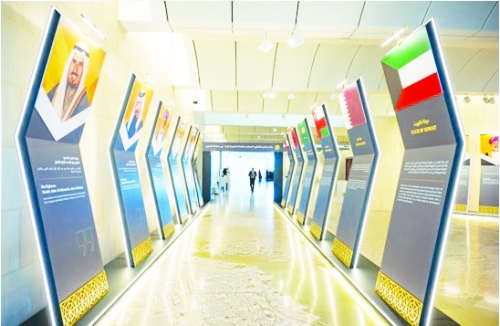

The Bahrain National Museum recently unveiled a dedicated pavilion celebrating the Gulf Cooperation Council (GCC), timed to coincide with the 46th GCC Summit. This new exhibit offers a compelling look at the history and impact of the GCC, highlighting its journey towards stronger regional integration and its crucial role in the ongoing development of the Gulf region. The pavilion aims to educate both citizens and international visitors on the significance of the GCC’s achievements since its inception.
A New Landmark Recognizing GCC History
The pavilion isn’t just a static display of artifacts; it’s designed as an immersive, interactive experience. Utilizing multimedia technology, it guides visitors through the evolution of the GCC, from its foundational principles to its present-day influence. It’s a testament to the collaborative spirit that has defined the organization for decades.
The Vision of the Founding Leaders
The experience begins with a striking entrance displaying the flags of all GCC member states – Bahrain, Kuwait, Oman, Qatar, Saudi Arabia, and the United Arab Emirates. Alongside these symbols of national identity are powerful quotes from the leaders who first envisioned a unified Gulf. These quotes set the stage, emphasizing the initial desire for cooperation and mutual support in a historically complex region.
The exhibit meticulously details the early steps taken towards this collaboration. Before the formal establishment of the Council, there were already nascent efforts to discuss shared challenges and opportunities. These preliminary discussions laid the groundwork for the formalized structure that would soon emerge.
Tracing the Path to Integration: The GCC Charter & Beyond
A central focus of the pavilion is the signing of the GCC Charter in 1981. This pivotal moment legally solidified the Council, outlining its objectives and establishing a framework for cooperation. The display delves into the key articles of the Charter, explaining how it intended to strengthen ties between member states.
Key Pillars of GCC Cooperation
The exhibit clearly articulates the core goals behind the GCC’s formation. These fall broadly into four key areas: political unity, economic integration, developmental progress, and cultural exchange.
- Political Unity: The GCC has consistently worked towards a common foreign policy and coordinated security efforts, providing a united front on regional and international issues.
- Economic Integration: The creation of a common market represents a significant step towards economic unity, fostering trade and investment between member states.
- Developmental Progress: The Council has facilitated collaborative projects in crucial sectors like infrastructure, education, and healthcare, uplifting the living standards across the Gulf.
- Cultural Exchange: Emphasis on shared cultural heritage and promoting artistic collaboration has strengthened the bonds between the people of the GCC.
The pavilion illustrates how the GCC has translated these goals into concrete actions over the years. It presents data and visual representations of the impact of these initiatives, highlighting success stories and illustrating the tangible benefits of regional cooperation.
Showcasing the GCC’s Impact on the Region
Beyond simply documenting the past, the exhibit also looks towards the future. It explores the GCC’s ongoing commitment to scientific and technological advancement, recognizing the vital role innovation plays in sustained development. The Council actively promotes research and development initiatives, seeking to position the Gulf region as a hub for knowledge and innovation.
Furthermore, the pavilion doesn’t shy away from presenting the challenges the GCC has faced and overcome. From navigating geopolitical shifts to addressing economic fluctuations, the Council has demonstrated resilience and adaptability. This acknowledgment of both successes and obstacles lends credibility to the narrative presented.
This focus on forward-thinking projects also highlights the Gulf Cooperation’s role in driving economic diversification away from oil dependency. Initiatives promoting tourism, finance, and renewable energy are showcased, demonstrating the region’s commitment to a sustainable future. These efforts are increasingly crucial in the context of global energy transitions.
The inclusion of interactive elements throughout the pavilion encourages a more engaged learning experience. Visitors can explore timelines, view video interviews with key figures, and delve deeper into specific projects and initiatives. The goal is to make the history and regional integration of the GCC accessible and relatable to a diverse audience.
A Celebration of Unity and Progress
The newly opened GCC pavilion at the Bahrain National Museum is a comprehensive and engaging tribute to the Council’s nearly four decades of existence. It effectively demonstrates the significant GCC’s achievements in fostering political stability, economic growth, and cultural understanding within the Gulf region. The exhibit’s detailed portrayal of the Council’s historical evolution and its present-day ambitions offers valuable insights for anyone interested in the dynamics of the Middle East.
Ultimately, the pavilion is a compelling argument for the power of regional cooperation and a celebration of the shared identity and aspirations of the Gulf nations. Visitors are encouraged to explore this fascinating exhibit and gain a deeper appreciation for the role the GCC plays in shaping the future of the region. For further information on the Bahrain National Museum and its exhibits, please visit their official website.