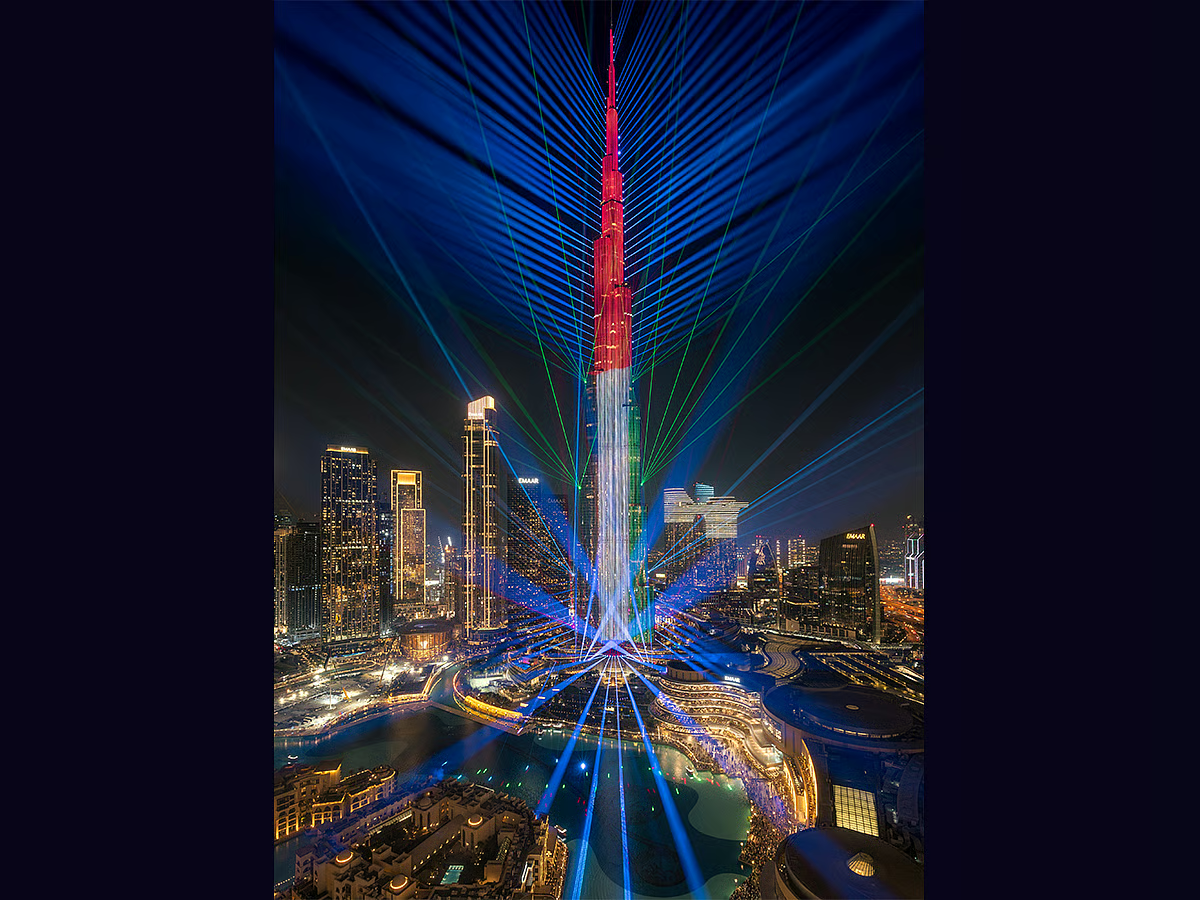

Dubai marked the UAE’s 53rd National Day on December 2nd, 2023, with a spectacular illumination of the Burj Khalifa and a comprehensive program of events across the emirate. The stunning Burj Khalifa National Day illumination served as a central tribute to the nation’s achievements and identity. The display captivated residents and tourists, emphasizing Dubai’s positioning as a prominent center for international celebrations.
The festivities, observed throughout the United Arab Emirates, recognize the historic union of the six emirates – Abu Dhabi, Dubai, Sharjah, Ajman, Umm Al Quwain, and Fujairah – on December 2, 1971. Ras Al Khaimah joined the federation in 1972, completing the seven emirates that constitute the modern UAE. These celebrations showcase unity, cultural heritage, and economic progress.
The Significance of the Burj Khalifa National Day Illumination
The Burj Khalifa, the world’s tallest building, consistently acts as a canvas for significant national and international moments. Its prominent position in Dubai’s skyline and global recognition make it an ideal location for displays that aim to reach a broad audience. This year’s illumination was designed to represent the UAE flag’s colors and incorporate elements symbolic of the nation’s growth, according to statements released by Dubai’s marketing and events authorities.
A Showcase of National Identity
The visual display featured intricate patterns and vibrant colors, intentionally mirroring the UAE flag. This deliberate choice reinforces national identity and evokes feelings of pride among citizens and residents alike. The Ministry of Culture and Youth frequently incorporates visual arts into national celebrations to promote cultural understanding and appreciation.
Dubai’s Role as a Global Event Host
Beyond the national significance, the illumination serves to bolster Dubai’s reputation as a leading global event host. The emirate actively seeks to attract large-scale conferences, exhibitions, and cultural events throughout the year. This commitment to hosting major events contributes to its diversification strategy away from solely relying on oil revenue and enhances its tourism sector.
The National Day celebrations extended far beyond the Burj Khalifa. A wide range of activities were organized across Dubai, including airshows, fireworks displays, traditional performances, and cultural exhibitions. These events catered to diverse interests and ensured broad participation from both the local community and international visitors.
The economic impact of National Day celebrations in Dubai is considerable. Increased tourism, higher retail sales, and greater activity in the hospitality sector all contribute to growth during this period. The Dubai Department of Economy and Tourism estimates that national holidays consistently produce a substantial boost to the emirate’s GDP.
However, organizing large-scale public events presents logistical challenges. Security arrangements, traffic management, and crowd control are crucial aspects of event planning in densely populated areas like Dubai. Authorities prioritize public safety and work diligently to minimize any potential disruptions, as highlighted by the Dubai Police’s detailed operational plan for the holidays.
The UAE’s National Day also provides an opportunity to reflect on the nation’s socio-political development. Since its founding, the UAE has undergone rapid transformation, becoming a globally influential nation with a strong emphasis on innovation and sustainability. The government’s “UAE Vision 2071” outlines ambitious long-term goals centered around these principles and a shift towards a knowledge-based economy.
Meanwhile, neighboring countries within the Gulf Cooperation Council (GCC) also held their own National Day celebrations throughout November and December. These regional displays often involve reciprocal participation, fostering a sense of unity and cooperation among member states. This year witnessed increased cultural exchange programs alongside official celebrations.
In contrast to some larger-scale public events, the Burj Khalifa illumination aims for a visually impactful yet contained celebration. The building’s structure allows for broad visibility without requiring extensive crowd gatherings at a single location. This approach aligns with Dubai’s increasing focus on integrated event strategies utilizing its iconic landmarks.
The digital reach of the Burj Khalifa illumination was enhanced through extensive social media coverage. Images and videos of the display were shared widely, increasing Dubai’s and the UAE’s visibility on a global scale. Hashtags related to National Day and the Burj Khalifa trended internationally, demonstrating the event’s widespread appeal. The use of UAE National Day fireworks as a major social media component boosted engagement further.
Looking ahead, the UAE is expected to continue expanding its National Day celebrations, incorporating new technologies and innovative approaches to showcase its culture and achievements. Discussions are underway regarding potential enhancements to future illuminations, potentially including interactive elements and augmented reality experiences. A comprehensive review of this year’s event logistics will be conducted in early 2024 to inform planning for the 54th National Day, with a preliminary budget expected by March 2024.
The long-term effect of such displays on tourism and the economy is still being assessed. However, the continued investment in large-scale celebrations indicates their perceived value in reinforcing the nation’s image and attracting investment. Further research will need to determine the precise return on investment and the optimal strategies for maximizing the benefits of future events and impressive Dubai events.