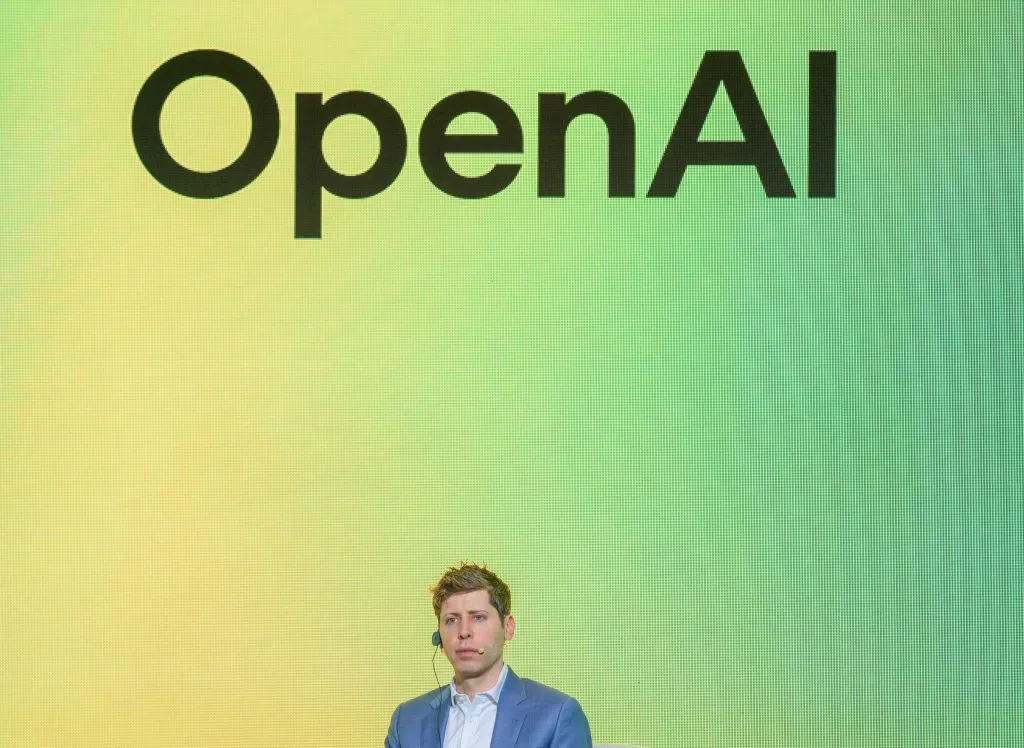

OpenAI is deepening its ties to the private equity world with a new investment in Thrive Holdings, a firm focused on acquiring and scaling companies poised to benefit from artificial intelligence. The deal, announced this week, involves OpenAI taking an ownership stake in Thrive, whose parent company, Thrive Capital, is a significant investor in the AI giant. This move continues a trend of strategic investments by OpenAI in companies critical to its infrastructure and application ecosystem.
The partnership will see OpenAI personnel embedded within Thrive’s portfolio companies, assisting with the implementation of AI technologies and aiming to improve operational efficiency. While the financial terms remain undisclosed, the structure of the deal links OpenAI’s financial gains to the success of these acquired businesses, creating a potentially symbiotic relationship.
OpenAI’s Expanding AI Ecosystem and the Thrive Holdings Deal
Thrive Holdings operates as a unique player in the tech investment landscape, functioning as a private equity firm specifically targeting companies that can leverage artificial intelligence to enhance their services. The firm acquires businesses in sectors like accounting, IT services, and potentially others, then integrates AI solutions to drive growth and profitability. This approach differs from traditional venture capital, focusing on established businesses rather than early-stage startups.
According to a source familiar with the matter, OpenAI will contribute engineers, researchers, and product specialists to Thrive’s portfolio companies. The arrangement is designed to accelerate AI adoption within these businesses. If these companies experience growth as a result of OpenAI’s contributions, OpenAI’s stake in Thrive Holdings will increase, and the company will receive compensation for its services.
A Pattern of Strategic Investments
This investment in Thrive Holdings isn’t an isolated event. OpenAI has recently made similar strategic investments in companies that support its core operations. For example, the company invested $350 million in CoreWeave, a cloud provider specializing in GPU infrastructure, which then used those funds to purchase Nvidia chips – the very chips that power OpenAI’s models. This creates a closed-loop system where OpenAI’s investments directly benefit its own computational needs.
Additionally, OpenAI took an ownership stake in Advanced Micro Devices (AMD), a key manufacturer of semiconductors. These investments demonstrate a clear strategy of securing access to critical resources and fostering a supportive ecosystem around its AI technology.
However, Thrive Holdings has pushed back against the characterization of this as a purely circular arrangement. A spokesperson for the firm emphasized that the deal is driven by a genuine market need and highlighted existing customer success stories within its portfolio, such as accounting firm Crete and IT firm Shield, which reportedly experienced benefits from AI tools prior to the formal partnership.
Concerns About Valuation and Scalability
Despite Thrive’s assertions, some observers express concerns about the potential for inflated valuations. The embedded nature of OpenAI’s involvement, coupled with the overlapping ownership between Thrive Holdings and Thrive Capital, raises questions about whether the success of these portfolio companies is truly organic or reliant on OpenAI’s direct support.
Analysts are carefully watching to determine if Thrive-owned firms can establish sustainable, profitable businesses based on AI implementation, or if their valuations are simply inflated by speculative market enthusiasm. The key question is whether the benefits observed by companies like Crete and Shield can be replicated across a broader range of businesses and without ongoing, direct assistance from OpenAI.
The structure of the deal also introduces complexity in assessing performance. Traditional private equity metrics may be less relevant when a significant portion of a company’s success is tied to the contributions of another entity. This makes it more difficult to determine the true return on investment for both Thrive Holdings and its investors.
The broader trend of AI companies investing in infrastructure providers and application developers is raising scrutiny from regulators. Concerns about potential anti-competitive practices and the concentration of power within a few key players are likely to increase as these types of deals become more common. The impact of these investments on the overall machine learning landscape remains to be seen.
Looking ahead, the next several quarters will be crucial in evaluating the success of this partnership. Investors and analysts will be closely monitoring the financial performance of Thrive’s portfolio companies, paying particular attention to revenue growth, profitability, and the extent to which they can operate independently of OpenAI’s direct support. The long-term implications of this deal, and similar arrangements, will depend on whether these investments translate into genuine innovation and sustainable business models, or simply contribute to a cycle of speculative investment and inflated valuations.