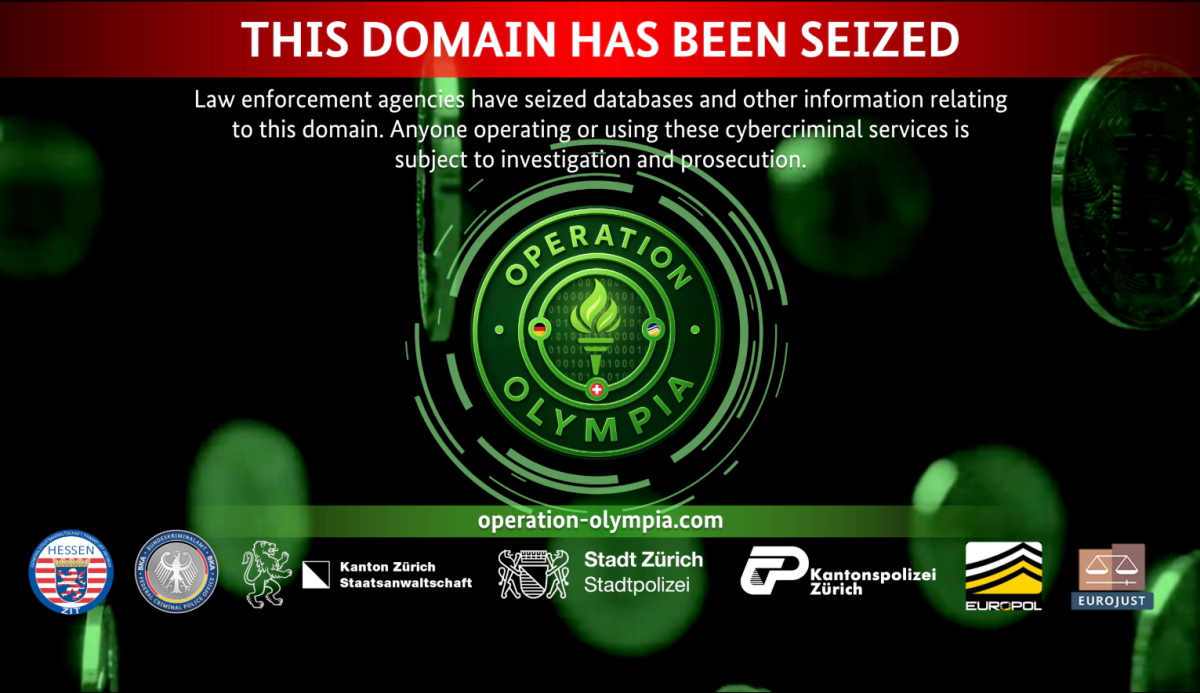

A coordinated law enforcement effort led by Europol has resulted in the shutdown of cryptomixer, a service used to launder cryptocurrencies. Authorities announced Monday the seizure of the platform, which is alleged to have facilitated the laundering of approximately 1.3 billion euros (roughly $1.5 billion USD) in Bitcoin since 2016. The takedown represents a significant blow to cybercriminals relying on anonymity to conceal illicit profits, and a continued push by global authorities to regulate the cryptocurrency space.
The operation, involving multiple international agencies, seized 29 million euros ($32 million USD) in Bitcoin alongside three servers and 12 terabytes of data. The official domain, cryptomixer.io now displays a standard law enforcement seizure notice. This disruption of a key service used for cryptocurrency laundering underscores the growing capabilities of law enforcement to track and intercept illicit digital transactions.
What is a Cryptocurrency Mixer and Why Did Authorities Target It?
Cryptocurrency mixers, also known as tumblers, are digital services designed to obscure the origin of cryptocurrency funds. They achieve this by pooling cryptocurrencies from numerous users before redistributing them to different addresses in a randomized fashion. This process makes it substantially more difficult to trace the flow of funds on a public blockchain, like Bitcoin’s, a feature often exploited by those engaged in illegal activity.
Europol highlighted that Cryptomixer was favored by criminals involved in a wide range of offenses, including drug trafficking, weapons dealing, ransomware attacks, and payment card fraud. These types of illicit activities often rely on cryptocurrency due to the perceived anonymity it offers. However, blockchain analysis firms and law enforcement agencies have increasingly developed tools to de-anonymize transactions and identify the parties involved.
How Cryptocurrency Laundering Works
The core principle behind cryptocurrency laundering services is to break the direct link between a sender and receiver of funds. Users deposit cryptocurrency into the mixer, and after a period of time and several mixing stages, the funds are released to a designated address – often a new wallet controlled by the original depositor. This creates a convoluted transaction history, masking the source of the funds.
According to Europol, once “cleaned” through a service like Cryptomixer, criminal proceeds could be exchanged for alternative cryptocurrencies or, ultimately, converted into traditional fiat currency. This latter step is crucial for realizing the profits from criminal enterprises.
The Broader Crackdown on Cryptocurrency Mixing
The shutdown of Cryptomixer is not an isolated incident. Authorities globally have been actively targeting similar services in recent years. In 2023, the U.S. Treasury Department sanctioned Tornado Cash, a popular Ethereum mixing protocol, alleging its use by North Korean hackers to launder funds from the $600 million Ronin Bridge hack. Similarly, ChipMixer and other platforms have faced scrutiny and legal action.
These actions reflect a growing consensus among regulators that cryptocurrency mixers pose a systemic risk to the financial system and enable criminal behavior. However, shutting down one service doesn’t eliminate the problem. New mixers emerge, and criminals continually seek innovative ways to obfuscate their transactions.
The increasing pressure on these services is also driving the development of more sophisticated decentralized mixers. These operate without a central authority, making them harder to shut down, and present significant challenges for law enforcement. Further innovation in privacy-enhancing technologies remains a key factor in this ongoing cat-and-mouse game.
Impact on Blockchain Analytics
The closure of cryptocurrency mixing services impacts the operations of blockchain analytics firms like Chainalysis and Elliptic. These companies provide services to exchanges, financial institutions, and law enforcement, helping to track and analyze cryptocurrency transactions. While mixers present an obstacle to tracking, the enforcement actions reduce their overall influence on the market.
However, the continued emergence of new and more sophisticated mixing tools means these firms must consistently adapt their analytical capabilities. The ability to trace illicit funds remains essential for maintaining the integrity of the Bitcoin ecosystem and preventing wider financial crime.
What’s Next?
The investigation into users of Cryptomixer is likely to continue, with authorities attempting to identify and prosecute individuals who utilized the service to launder illicit funds. Interpol assisted in the investigation and will likely be involved in tracking down international users.
The effectiveness of this and similar takedowns depends on factors such as the ability to attribute transactions to specific individuals and the cooperation of cryptocurrency exchanges in identifying and freezing suspicious accounts. It remains uncertain whether authorities can fully dismantle the infrastructure supporting cryptocurrency laundering, but the continued and coordinated international efforts signal a strong commitment to combating financial crime in the digital age. Future developments will hinge on the evolution of cryptocurrency privacy technologies and the adaptability of law enforcement strategies.