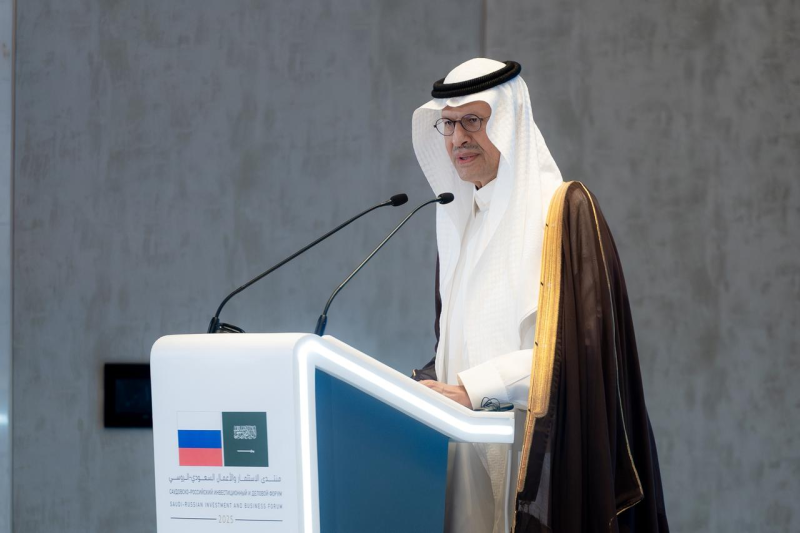

RIYADH — A new output agreement reached Sunday by the Organization of the Petroleum Exporting Countries (OPEC) and its allies, known as OPEC+, is being hailed by Saudi Arabia as a pivotal moment for the global oil market. Saudi Energy Minister Prince Abdulaziz bin Salman stated the deal, centered around a transparent mechanism for setting future oil production levels, represents a significant advancement in the group’s collaborative efforts. This development occurred during the Saudi–Russian Investment and Business Forum 2025 held in Riyadh, highlighting the strengthened energy partnership between the two nations.
The agreement, finalized during the OPEC+ meetings, focuses on utilizing a Maximum Sustainable Production Capacity (MSPC) review to determine 2027 output levels for all participating countries. This move aims to provide greater clarity and predictability in the market, moving away from more discretionary adjustments. Prince Abdulaziz addressed attendees alongside Russian Deputy Prime Minister Alexander Novak and Saudi Foreign Minister Prince Faisal bin Farhan, signaling a unified front on energy policy.
OPEC+ Agrees on New Oil Production Framework
The core of the new agreement is the adoption of the MSPC as the basis for future oil production allocations. According to statements from the Saudi Ministry of Energy, the MSPC considers each nation’s maximum production capacity, factoring in existing infrastructure and investment. This contrasts with previous methods that relied more heavily on individual country quotas and less on verifiable capabilities.
OPEC+ members have collectively reaffirmed their commitment to maintaining market stability, a key objective since the group’s formation in 2016. As part of this commitment, approved crude oil production levels will remain in place through the end of 2026. This continuation of current policy underscores the desire to avoid significant price volatility while global economic conditions remain uncertain.
Cautious Approach to Supply Increases
A subset of eight nations within the OPEC+ coalition, often referred to as the “core group,” decided to extend the suspension of output increases until March 2026. This measured approach reflects concerns about potential oversupply and the need to carefully monitor global demand. The decision suggests a prioritization of price stability over maximizing immediate production volumes.
The move comes amidst ongoing debate about the future of energy and the transition towards renewable sources. Prince Abdulaziz noted that calls for phasing out hydrocarbons are often contradicted by continued high demand. He stated that countries advocating for reduced fossil fuel consumption are, in reality, “consuming every molecule of it and seeking more,” highlighting a perceived disconnect between rhetoric and reality.
The agreement is expected to incentivize investment in the energy sector, particularly within countries possessing substantial production capacity. Prince Abdulaziz emphasized that the new mechanism “will reward those who invest and believe in demand growth, placing us in a leading position among producers.” This could lead to increased exploration and development activities in key oil-producing regions.
Beyond the production agreement, Saudi Arabia and Russia are deepening their bilateral ties. On the sidelines of the forum, Prince Abdulaziz announced the forthcoming signing of a cooperation agreement focused on environmental and climate issues. This collaboration signals a shared interest in addressing climate change while ensuring continued energy security.
Additionally, a reciprocal visa-waiver agreement between the two countries is slated to be signed on Monday. This agreement will allow citizens of Saudi Arabia and Russia to travel between the two nations without visas, further facilitating business and investment opportunities. The easing of travel restrictions is a tangible demonstration of the strengthening relationship between Riyadh and Moscow.
The Saudi-Russian Investment and Business Forum itself provided a platform for showcasing potential collaborations across various sectors. Prince Abdulaziz and Alexander Novak toured the exhibition accompanying the forum, observing displays of technology and investment projects. This engagement underscores the broader economic partnership between the two countries, extending beyond just energy cooperation.
Analysts suggest the new MSPC framework could lead to more equitable distribution of production quotas in the long term, potentially addressing concerns raised by some member states about fairness. However, the implementation of the MSPC review and its impact on individual country allocations remain to be seen. The process of verifying and assessing each nation’s maximum sustainable capacity is expected to be complex and potentially contentious.
Looking ahead, the market will be closely watching for the results of the MSPC review, expected to be completed in the coming months. The review’s findings will be crucial in determining the baseline for 2027 oil production levels and shaping the future trajectory of the OPEC+ alliance. Uncertainties surrounding global economic growth and geopolitical events will continue to influence the group’s decisions and the overall stability of the oil market.
The next key date for OPEC+ is the scheduled review of the extended output suspension in March 2026. At that time, the coalition will reassess market conditions and determine whether to proceed with gradual increases in production. The outcome of this review will be a critical indicator of OPEC+’s long-term strategy and its commitment to balancing supply and demand in a rapidly evolving energy landscape.