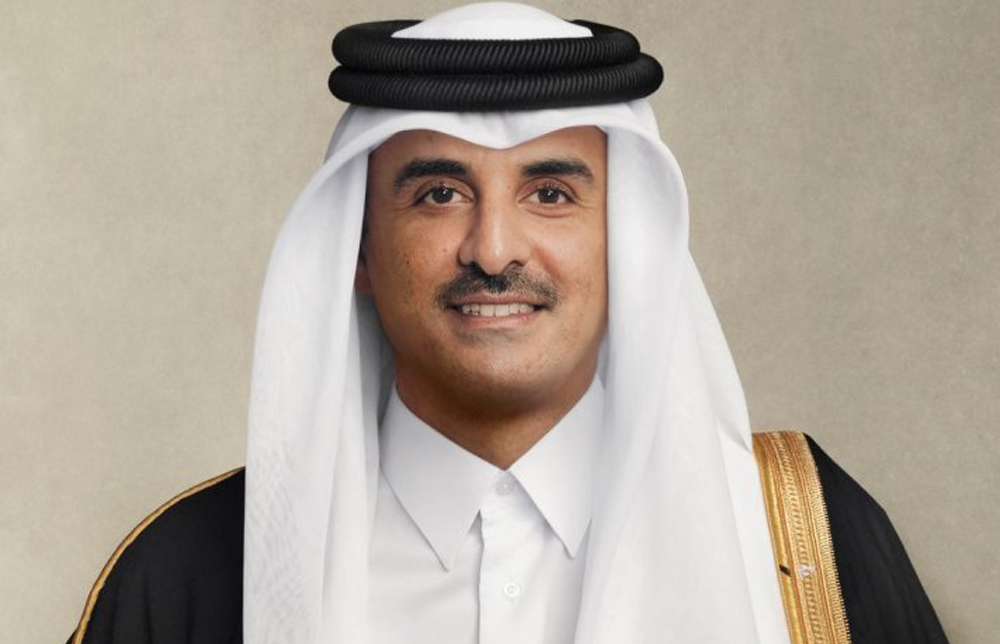

Qatar and Romania maintain diplomatic relations following the establishment of ties in 1990. Recent communications demonstrate continued engagement between the two nations, notably with Qatar’s Amir, Sheikh Tamim bin Hamad Al-Thani, sending a congratulatory message to Romanian President Nicusor Dan on Romania’s National Day. This exchange highlights the ongoing commitment to bilateral ties and reinforces Qatar’s diplomatic efforts in Europe.
The congratulatory cable was dispatched on Monday, December 1st, 2023, according to a statement released by the Amiri Diwan. Romania’s National Day, celebrated annually on December 1st, commemorates the country’s unification in 1918 following the end of World War I. This brief but symbolic act of diplomacy underscores Qatar’s foreign policy of maintaining positive relations with countries around the world.
Qatar-Romania Relations and National Day Congratulations
The consistent exchange of diplomatic courtesies, such as the National Day message, forms a foundational element in fostering stronger bilateral relationships. While trade volumes between the two countries remain relatively modest compared to Qatar’s partnerships with major economies, there is increasing potential for collaboration, especially in sectors like energy and infrastructure. According to data from the Ministry of Commerce and Industry of Qatar, several Qatari investments are currently being explored in Romania.
Romania is a member of the European Union and NATO. This positioning makes it a strategically important partner for Qatar in navigating the complexities of European politics and security. The diplomatic communication also takes place as Qatar continues to foster stronger ties within the EU and seek opportunities for economic diversification.
Historical Context of Diplomatic Ties
Qatar and Romania officially established diplomatic relations in 1990, a period of significant geopolitical shifts following the end of the Cold War. The early years focused on establishing basic diplomatic representation, with both nations opening embassies in their respective capitals. Throughout the 1990s and 2000s, contacts remained primarily at the level of political consultations and cultural exchanges.
However, in recent years, momentum has been building for increased cooperation. The energy sector is a key area of potential collaboration, with Qatar being a leading producer of liquefied natural gas (LNG) and Romania seeking to diversify its energy sources. Furthermore, discussions around Qatari investment in Romanian infrastructure projects have been ongoing.
Significance of National Day Messages
These messages of congratulations are standard diplomatic practice, signifying mutual respect and acknowledgment of national sovereignty. They serve to maintain open channels of communication between leaders, even amidst broader geopolitical challenges. While not legally binding, such gestures are crucial in building trust and goodwill—essential components of effective international relations.
Moreover, the timing of the message is important. Sending it on the specific date of Romania’s National Day demonstrates Qatar’s attentiveness and consideration towards its European counterpart. This is particularly relevant given Qatar’s current efforts to strengthen its position as a reliable and engaged international actor.
The congratulatory message also occurs alongside increased international scrutiny of Qatar, particularly regarding human rights and labor practices. Maintaining positive diplomatic relationships, including with EU member states like Romania, can be seen as a strategy to navigate this scrutiny and demonstrate Qatar’s commitment to international norms. Discussions about labor rights and human rights remain important in Qatar’s foreign policy.
Looking ahead, the next step in the Qatar-Romania relationship will likely involve continued discussions about specific investment opportunities and energy cooperation agreements. It remains to be seen whether these discussions will translate into concrete projects, and broader geopolitical developments, including the ongoing war in Ukraine and shifts in European energy policy, could influence the trajectory of the relationship. The development of potential trade and security partnerships will be key indicators to watch in the coming months.