
Concerns are mounting across Europe regarding a proposed peace plan for Ukraine, with some officials characterizing it as overly favorable to Russia. The plan, reportedly originating from the US administration, has sparked debate over its potential impact on Ukraine’s sovereignty and future security. Discussions are ongoing to amend the proposal, but frustration is growing over the pace of negotiations and the potential for a settlement that could embolden further Russian aggression. The future of Ukraine peace hangs in the balance.
The controversy centers on a 28-point proposal that allegedly includes significant territorial concessions for Russia, limitations on the Ukrainian military, and a potential veto on Ukraine’s future NATO membership. These elements have led to accusations that the plan effectively amounts to Ukrainian capitulation. Negotiations involving US Secretary of State Marco Rubio, Ukrainian officials, and a European delegation took place in Geneva on Sunday, aiming to revise the terms.
Growing European Concerns Over Ukraine Peace Plan
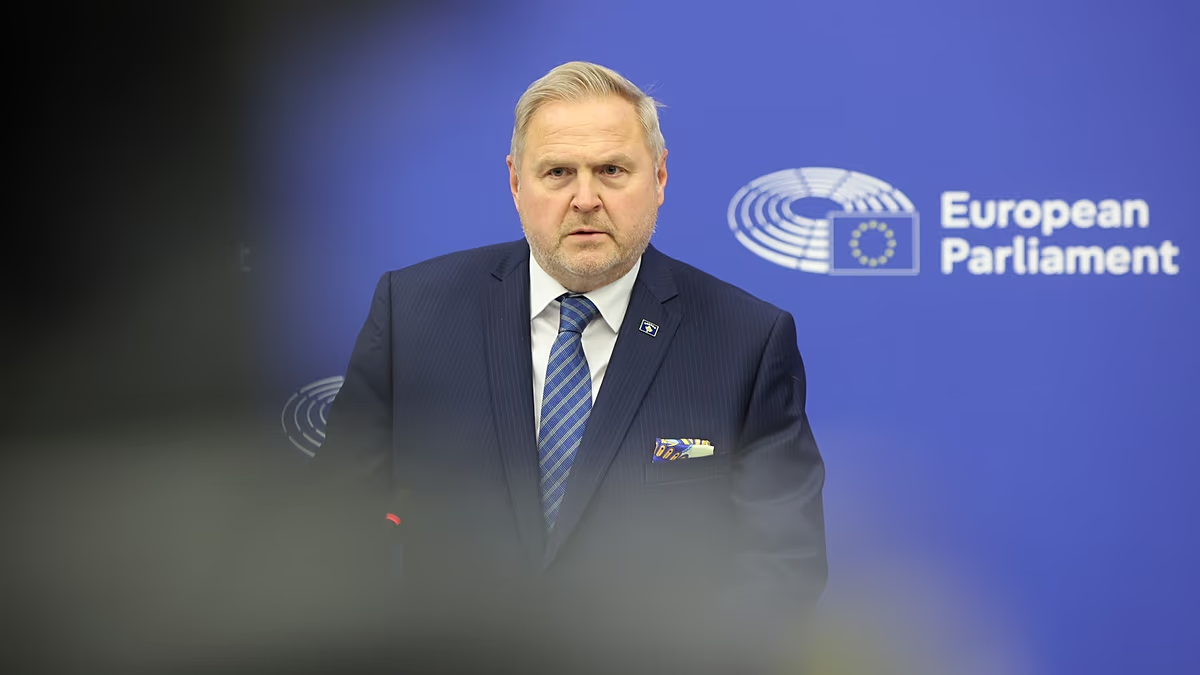
Estonian MEP Riho Terras voiced strong criticism of the plan, stating that it appears to be “a Russian plan” and accusing US President Donald Trump of acting as an “errand boy” for Russian President Vladimir Putin. Terras’s comments reflect a broader anxiety within European political circles about the direction of US policy towards the conflict. He suggested the Americans are too willing to accept assurances from the Kremlin.
The leaked text of the plan, while currently being redrafted, has fueled these concerns. It reportedly calls for substantial reductions in Ukraine’s armed forces, ceding control of territory currently held by Ukraine, and restricting its ability to join international security alliances. These conditions are viewed by many European leaders as detrimental to Ukraine’s long-term security and stability.
Funding Ukraine and Frozen Russian Assets
Meanwhile, the European Union is grappling with the financial implications of continued support for Ukraine. Kyiv will require additional funding in the coming year to sustain its defense efforts and rebuild its infrastructure. To address this, the EU is exploring the possibility of issuing a reparations loan, backed by frozen Russian assets held in Belgium.
The European Commission is reportedly preparing legal documentation to secure approval from Belgian authorities for this proposal. However, progress has been slow, leading to growing frustration among EU member states. MEP Terras emphasized the urgency of the situation, arguing that the EU, with its substantial economic resources, should be able to provide more robust financial assistance to Ukraine. He stated the EU’s GDP of €29 trillion should be sufficient to support Ukraine.
Broader Implications for European Security
European Commission President Ursula von der Leyen warned that Russia’s aggressive tactics are not limited to Ukraine, suggesting that other nations could be at risk. This underscores the broader strategic implications of the conflict and the importance of a strong and unified response from the international community. The situation highlights the need for a comprehensive approach to European security, encompassing both military and economic support for Ukraine.
Additionally, the debate over the Ukraine conflict is raising questions about transatlantic relations and the future of the NATO alliance. Some analysts suggest that diverging views on the appropriate strategy for resolving the conflict could strain ties between the US and Europe. The potential for a weakened Western alliance is a significant concern for many European leaders.
The discussion around Russian aggression and potential resolutions is ongoing. The EU is actively seeking ways to ensure Ukraine receives the support it needs, while also safeguarding its own security interests. The use of frozen Russian assets for Ukrainian reconstruction remains a key point of contention and a potential breakthrough in funding efforts.
Looking ahead, the coming weeks will be crucial in determining the fate of the peace plan and the future of Ukraine. The outcome of negotiations between the US, Ukraine, and Europe will be closely watched. Stay informed about developments in the Ukraine peace process and the evolving geopolitical landscape by following reputable news sources like Euronews.