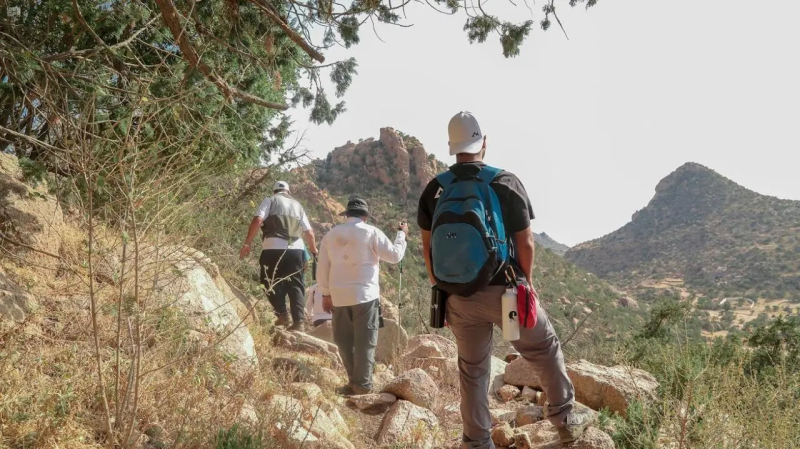

RIYADH — The Communications, Space and Technology Commission (CSTC) and the General Authority of Civil Aviation (GACA) are encouraging outdoor adventurers in Saudi Arabia to utilize the nation’s satellite-based search and rescue service, accessed through Personal Locator Beacons (PLBs). This system provides a critical safety net for individuals and organizations operating in areas lacking cellular or public network coverage. The initiative aims to improve response times to distress calls and enhance overall safety for those exploring the Kingdom’s diverse terrain.
The coordinated effort between the CSTC, GACA and the Saudi Air Navigation Services Company makes this emergency service available nationwide, including remote deserts, mountainous regions, and coastal areas. When a PLB is activated, an alert is immediately transmitted to the Saudi Search and Rescue Center, which then relays the information to the National Security Operations Center at the Ministry of Interior for dispatch of appropriate rescue teams.
The Importance of PLBs in Saudi Arabia’s Landscape
Saudi Arabia’s vast and often unforgiving geography presents unique challenges for search and rescue operations. Large expanses of desert and rugged mountains can quickly become dangerous for travelers who become lost or encounter difficulties. The implementation of accessible satellite search and rescue technology addresses these risks directly.
According to recent data, the need for such technology is substantial. Reports from the Enjad Search and Rescue Association indicate that 131 people were reported missing in Saudi Arabia’s deserts in 2021. Of those, while 100 were successfully rescued, a concerning 20 perished due to exposure, dehydration, or other related causes, and 11 remain missing.
How the System Works
Unlike traditional emergency calls made via mobile phones, PLBs utilize dedicated satellite frequencies to transmit distress signals. This allows for communication even in areas completely devoid of cellular signal, making them essential for remote exploration. The beacons transmit a unique identifier code, allowing authorities to pinpoint the location of the individual in distress with a reasonable degree of accuracy.
The CSTC emphasizes that PLBs can transmit alerts within seconds of activation. Once received by the Saudi Search and Rescue Center, the signal undergoes verification to reduce false alarms before being forwarded to the Ministry of Interior. The authorities then coordinate with relevant security agencies – including Civil Defense, Border Guard, and local police – to initiate a search and rescue response tailored to the situation and terrain.
The service extends beyond individual hikers and travelers. Companies operating in remote areas, such as construction firms, geological survey teams, and tourism operators, are also encouraged to utilize PLBs for their employees’ safety. This proactive measure helps mitigate risks and ensures a swift response in case of emergencies.
Acquiring a PLB and the necessary license is designed to be a straightforward process. Individuals can purchase devices from authorized vendors licensed by the CSTC to sell wireless equipment. A complete and updated directory of these approved agents is readily available on the CSTC’s official website.
In a separate report, data shows that in a similar period, 142 people were reported missing overall, with 100 rescued, 28 confirmed dead, and 14 still unaccounted for. In addition to lost persons, authorities also responded to 13,254 reports of vehicles becoming stuck in desert locations, highlighting the frequency of challenges faced by those venturing into remote areas. These incidents often require substantial resources for successful resolution.
The development of this emergency beacon infrastructure represents a significant investment in public safety in Saudi Arabia. Prior to the expanded availability and coordination of this system, search and rescue operations relied heavily on terrestrial resources and were often hampered by communication difficulties and lengthy response times in remote regions.
However, relying solely on technology isn’t enough. Authorities consistently advise individuals engaging in outdoor activities to practice safe travel habits. This includes informing someone of their planned route, carrying sufficient supplies of water and food, and being aware of weather conditions. Proper preparation significantly increases the likelihood of a positive outcome should an emergency arise.
The CSTC and GACA’s joint initiative also aligns with the Kingdom’s broader strategy to promote tourism and outdoor recreation while ensuring the well-being of residents and visitors. By providing a reliable and readily accessible emergency communication system, the government aims to foster a safer environment for exploration and adventure. The promotion of devices like personal locator beacons is seen as enhancing this safety environment.
Looking ahead, the CSTC and GACA are expected to continue refining and expanding the satellite rescue service. This may include integrating new technologies, improving signal coverage, and streamlining the alert verification process. Ongoing analysis of incident data will be crucial in identifying areas for improvement and ensuring the system remains effective in meeting the evolving needs of the Kingdom’s outdoor community. Further details regarding potential funding allocations or expansion timelines remain to be released by the relevant authorities.
Additionally, the CSTC is gathering feedback from users and vendors to address any practical challenges related to PLB adoption and operation.
Meanwhile, increased public awareness campaigns are planned to educate more people about the availability and benefits of this life-saving technology.