
The United Arab Emirates (UAE) has reaffirmed its unwavering support for a two-state solution to the Israeli-Palestinian conflict, emphasizing the Palestinian right to self-determination and the establishment of a sovereign Palestinian state. This commitment was communicated in a letter from Sheikh Mohamed, President of the UAE, to the Chairman of the United Nations Information System on the Question of Palestine, released this week. The statement underscores the UAE’s long-held position on the issue and comes amid ongoing diplomatic efforts in the region.
The letter, dispatched to the UN body based in Beirut, specifically advocates for an independent Palestinian state with East Jerusalem as its capital, aligning with relevant United Nations resolutions. This reiteration of support arrives following a period of normalized relations between the UAE and Israel, established through the Abraham Accords in 2020, and highlights the UAE’s continued dedication to addressing the core issues of the conflict. The UAE maintains that achieving a comprehensive peace requires a viable path to Palestinian statehood.
UAE’s Stance on the Palestinian Right to Self-Determination
The UAE’s position regarding the Palestinian right to self-determination is rooted in a broader commitment to regional stability and a just resolution of long-standing disputes. The nation has consistently voiced its backing for international consensus on the Israeli-Palestinian situation, primarily the two-state solution. This solution envisions two independent states, Israel and Palestine, coexisting peacefully with secure and recognized borders.
However, the Abraham Accords, brokered by the United States, raised questions about the UAE’s commitment to Palestinian statehood for some observers. These agreements normalized diplomatic and commercial relations between the UAE and Israel, but did not directly address the core political issues of the conflict. The UAE has defended this approach, stating that normalization can create conditions conducive to future peace negotiations, and increased regional cooperation.
Historical Context of UAE-Palestine Relations
The UAE has historically maintained close ties with the Palestinian leadership, offering financial and political support. According to the UAE Ministry of Foreign Affairs, this support continues despite the normalization of relations with Israel. The nation has previously contributed significantly to UNRWA, the United Nations Relief and Works Agency for Palestine Refugees, but like other countries, contributions have fluctuated over time based on funding needs and political developments.
The emphasis on East Jerusalem as the future capital of a Palestinian state is significant. The status of Jerusalem remains one of the most contentious issues in the Israeli-Palestinian conflict, with both sides claiming the city as their capital. International consensus generally holds that East Jerusalem, occupied by Israel in 1967, should be part of a future Palestinian state.
Implications for Regional Diplomacy and Peace Process
This renewed commitment from the UAE is likely to be viewed positively by the Palestinian Authority, which has consistently called for international backing of its state-building efforts. Palestinian officials have welcomed the UAE’s reaffirmation, highlighting the importance of Arab support in international forums. It may also serve to bolster the UAE’s role as a mediator in the broader regional context.
Meanwhile, the move could potentially influence future negotiations between Israel and the Palestinians. The Biden administration in the United States has also expressed support for the two-state solution, and the backing of key regional players like the UAE is seen as crucial for advancing the peace process. While direct talks have been stalled for years, there have been recent, discreet diplomatic engagements.
In contrast, critics argue that this reiteration is largely symbolic given the existing normalization with Israel. They suggest that tangible action, such as increased pressure on Israel to halt settlement expansion in the West Bank, is needed to demonstrate genuine commitment to a viable Palestinian state. Settlement expansion has been a consistent roadblock to any potential two-state solution.
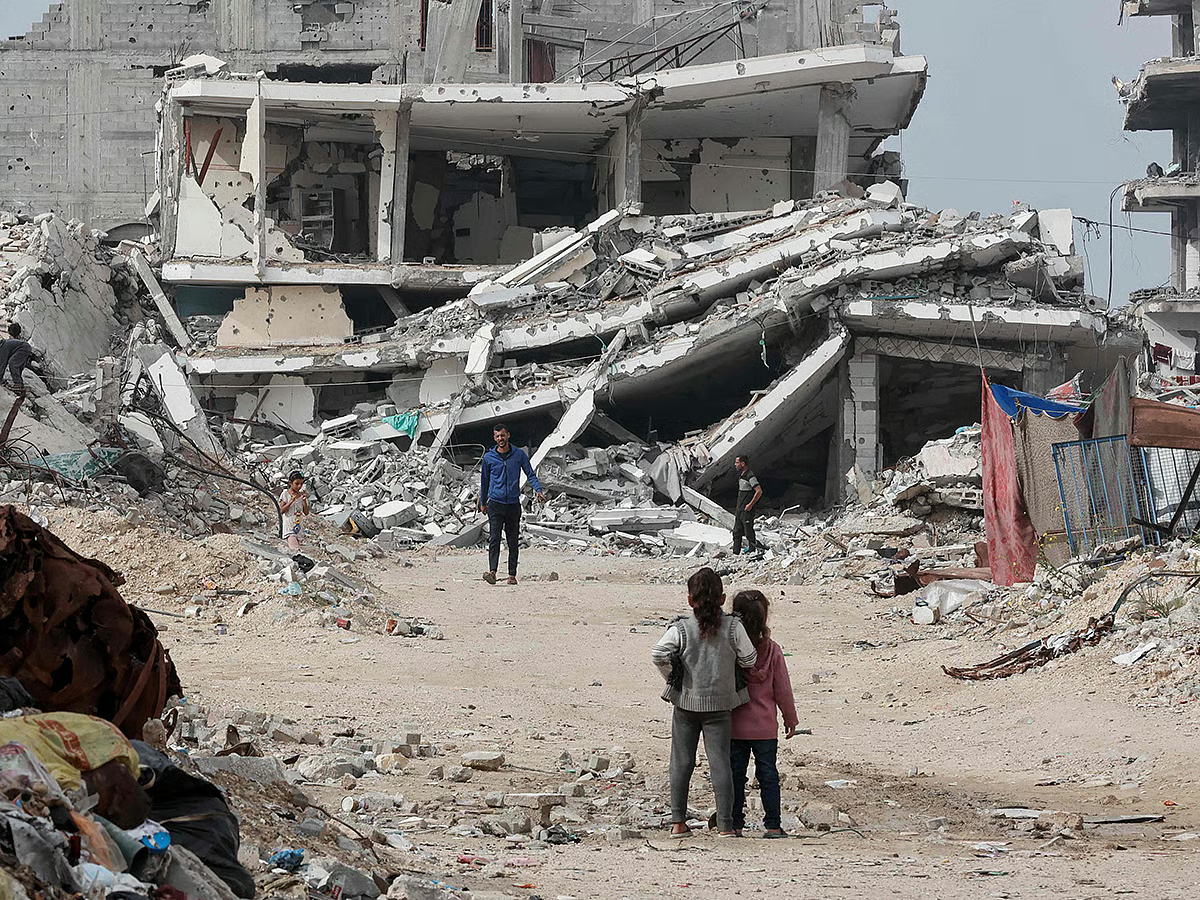
The recent escalation of violence in the West Bank and Gaza also casts a shadow over these diplomatic efforts. The United Nations has reported a significant increase in casualties in recent months, prompting concerns about a further deterioration of the security situation. De-escalation of tensions and protection of civilians are frequently cited as preconditions for meaningful negotiations. The impact of these events on the Palestinian right to self-determination cannot be understated.
The Role of UN Resolutions and International Law
Sheikh Mohamed’s letter specifically references relevant UN resolutions, underlining the importance of international law in resolving the conflict. Key resolutions, such as UN Security Council Resolution 242, call for the withdrawal of Israeli armed forces from territories occupied in the 1967 Six-Day War, and the recognition of the sovereignty, territorial integrity and political independence of every state in the area. These resolutions form the basis of many international efforts to achieve a just and lasting peace.
Additionally, the international community widely considers the Israeli settlements in the West Bank and East Jerusalem to be illegal under international law. This view is supported by numerous UN reports and resolutions, though Israel disputes this claim. The legality of settlements continues to be a major sticking point in negotiations, impacting the feasibility of a two-state solution and the full realization of the Palestinian right to self-determination.
The Palestinian right to self-determination is also enshrined in the International Covenant on Civil and Political Rights and the International Covenant on Economic, Social and Cultural Rights, both of which the UAE is a party to. These covenants affirm the right of all peoples to freely determine their political status and pursue their economic, social and cultural development.
Looking ahead, the international community will be watching for concrete actions to follow this reaffirmation of support. The next critical step involves renewed diplomatic initiatives aimed at restarting meaningful negotiations between Israel and the Palestinians. The success of these efforts remains uncertain, dependent on a complex interplay of political will, regional dynamics, and the evolving security landscape. It’s crucial to monitor the response from all parties involved and whether this statement leads to any noticeable shift in policy or negotiations regarding the future of Palestine and the Palestinian right to self-determination.