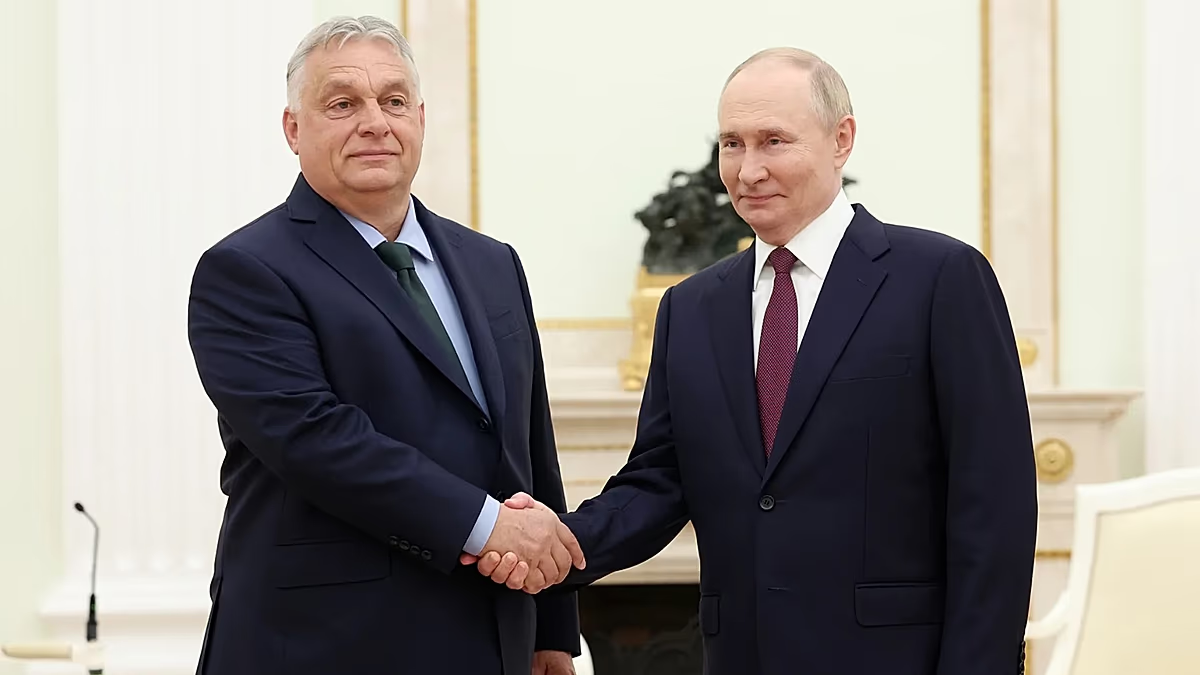

Hungarian Prime Minister Viktor Orbán’s upcoming visit to Moscow to meet with Russian President Vladimir Putin has sparked controversy, representing a significant divergence from the unified European stance on Russia amid the ongoing war in Ukraine. The meeting, scheduled for Friday, takes place as European nations attempt to influence the incoming Trump administration towards a negotiated peace settlement. This situation highlights the internal divisions within the European Union regarding strategy towards Ukraine and Russia, and the potential impact of shifting geopolitical alignments.
Orbán, one of the few EU leaders still engaging in direct diplomacy with Moscow, maintains that a military victory for Ukraine is unattainable. He has repeatedly criticized European leaders for what he perceives as a needless escalation of the conflict and has disregarded calls from the EU to curtail bilateral meetings with Russian officials. The primary focus of Orbán’s visit, as he stated from Serbia following a meeting with President Aleksandar Vučić, will be securing energy supplies.
Orbán’s Russia Visit Fuels Debate Over Ukraine Strategy
The timing of the visit is particularly sensitive given the recent leak of a draft peace plan reportedly shaped by Russian and US diplomats. The leaked proposal suggested substantial concessions from Ukraine regarding territory and military capabilities, and crucially, excluded Kyiv and other European leaders from direct negotiations. While the plan has undergone revisions following Ukrainian input, it remains a contentious issue.
Hungary recently obtained an exemption from US sanctions affecting Russian oil companies, a move facilitated during the Trump administration. Orbán is now seeking to solidify long-term contracts for oil and gas supplies with Russia, despite the EU’s broader push for energy diversification away from Moscow. He stated his need to “ensure that we get oil and gas, not just paper and a permit.”
This pursuit of energy security is linked to domestic political considerations. Hungary is preparing for parliamentary elections in April, and maintaining affordable energy prices is a key priority for Orbán’s government. However, this approach continues to draw criticism, particularly as opposition parties, led by Péter Magyar, centre their campaigns on economic issues and the cost of living.
Nuclear Energy and Potential Complications
During his visit, Putin has indicated a willingness to discuss the Paks 2 nuclear plant project, a major Hungarian initiative to construct new nuclear reactors utilizing Russian technology. A key aspect of this project is Hungary’s commitment to procuring nuclear fuel from the United States, a pledge Orbán reiterated during a recent trip to Washington.
Putin acknowledged that this arrangement presents complexities. “There are issues that require further discussion,” he stated, suggesting that finalizing the details of the Paks 2 project will require further negotiation. This reliance on both Russian technology and American fuel adds a layer of geopolitical intricacy to the energy project.
Beyond energy, the Ukraine war will undoubtedly be a central topic of discussion. Since the full-scale invasion in 2022, Hungary has consistently refrained from providing military or financial aid to Ukraine, instead prioritizing diplomatic engagement and economic ties with Russia. Orbán argues that sanctions against Russia are ineffective and detrimental to the European economy, and he has also obstructed Ukraine’s path towards EU membership, citing concerns about escalating the conflict.
This position sharply contrasts with the prevailing view amongst most European leaders, who advocate for continued sanctions and demand a complete cessation of hostilities from Russia as a precondition for meaningful negotiations. Marc Loustau, an affiliated fellow at the Central European University in Budapest, expressed concern that Orbán’s visit could undermine EU unity at a critical juncture, as the bloc works to secure a favourable and sovereign peace deal for Ukraine with US support. Euronews has more on the developing situation.
Orbán further fueled the controversy by sending a letter to European Commission President Ursula von der Leyen urging unconditional EU support for peace talks led by Donald Trump and advocating for direct dialogue with Russia. During his visit to the US, he reportedly told Trump that the “problem is the Europeans and Brussels,” claiming they are more inclined towards prolonging the war.
The European Union remains committed to a just and lasting peace in Ukraine, consistently calling for an end to hostilities. However, Orbán’s independent course of action threatens to further fragment the EU’s approach to the crisis. What remains to be seen is how this visit will impact the dynamic between Hungary, Russia, Ukraine, and the broader European community and the implications for the ongoing conflict.
Stay informed about the evolving situation in Ukraine and European responses by following reputable news sources and analyzing key diplomatic developments. Understanding the nuances of this complex geopolitical landscape is crucial for assessing the future of European security.