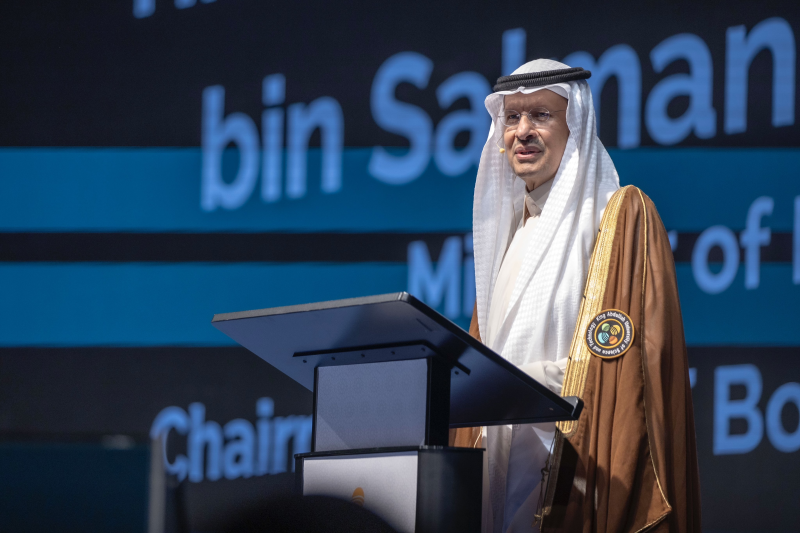

THUWAL — Minister of Energy and Chairman of the KAUST Board of Trustees, Prince Abdulaziz bin Salman, underscored the Kingdom’s commitment to meritocracy and inclusivity during the King Abdullah University of Science and Technology (KAUST) Commencement ceremony on Thursday. The Minister’s address focused on the evolving landscape of Saudi Arabia and its dedication to recognizing talent and contribution regardless of origin, signaling a significant shift in national priorities. The ceremony, held at the KAUST campus, celebrated the achievements of graduating students and highlighted the university’s role in Vision 2030.
Speaking before graduates, faculty, and their families, Prince Abdulaziz illustrated his vision of a “new Saudi Arabia” through the story of the Dabbousi family. He emphasized that the nation’s future success hinges on embracing individuals who demonstrate ambition and a commitment to progress, fostering a more diverse and skilled workforce. This message comes as Saudi Arabia continues to diversify its economy and invest heavily in education and research.
The Rise of Meritocracy in Saudi Arabia
Prince Abdulaziz’s speech centered on the idea that modern Saudi Arabia is increasingly defined by meritocracy, moving away from traditional hierarchies. He highlighted the story of Professor Osama Dabbousi, a non-Saudi national who dedicated decades to educating Saudi engineers at King Fahd University of Petroleum and Minerals (KFUPM), ultimately earning Saudi citizenship through his contributions. Additionally, he showcased the achievements of Osama Dabbousi’s grandson, a recent KAUST graduate who has been awarded a prestigious Rhodes Scholarship to study at Oxford University.
The Minister personally invited Bashir Dabbousi, Professor Dabbousi’s son and an Aramco employee, and his grandson, Osama, to join him on stage. This symbolic gesture powerfully illustrated how successive generations of the Dabbousi family have thrived in the Kingdom through education and dedication. The inclusion of the family’s story was deliberate, according to Prince Abdulaziz, serving as a clear example of the opportunities available in the evolving nation.
Vision 2030 and National Transformation
The Minister’s address directly linked the concept of meritocracy to the broader goals of Saudi Vision 2030, a strategic framework aimed at diversifying the Saudi economy and reducing its reliance on oil. The initiative prioritizes investment in human capital and the development of a knowledge-based economy. According to the Vision 2030 plan, education and innovation are key pillars for achieving long-term sustainable growth.
Prince Abdulaziz urged the graduating class to embrace values of ambition, civility, and global engagement as they contribute to the Kingdom’s transformation. He stressed the importance of maintaining high ethical standards and fostering a culture of respect and collaboration. He also emphasized the need for Saudi Arabia to continue building relationships with leading institutions and individuals worldwide.
Openness and Opportunity
The Minister repeatedly emphasized the Kingdom’s welcoming stance towards individuals from all backgrounds who seek to contribute to its progress. He stated that anyone wishing to live, work, or pursue their dreams in Saudi Arabia is welcome, reinforcing a message of inclusivity and openness. This sentiment aligns with recent social and economic reforms aimed at attracting foreign investment and talent. The government has been actively working to streamline visa processes and create a more attractive environment for expatriates.
He further stated that the “new Saudi Arabia” values talent above all else, creating a level playing field for individuals seeking to succeed. This shift represents a significant departure from previous norms and signals a commitment to fostering a more dynamic and competitive economy. The focus on talent acquisition is expected to drive innovation and accelerate the pace of development.
The Rhodes Scholarship awarded to the KAUST graduate, Osama Dabbousi, serves as a tangible example of the opportunities available to Saudi students and researchers. The scholarship, renowned for its selectivity, will enable him to pursue advanced studies at one of the world’s leading universities. This achievement underscores the quality of education provided at KAUST and the potential of Saudi Arabia’s future leaders.
Looking ahead, the implementation of Vision 2030 will continue to shape the Kingdom’s trajectory. Further details regarding specific initiatives and timelines are expected to be announced in the coming months. Observers will be watching closely to see how the principles of meritocracy are translated into concrete policies and practices across various sectors of the Saudi economy. The success of these efforts will be crucial in determining the Kingdom’s long-term economic and social development.