


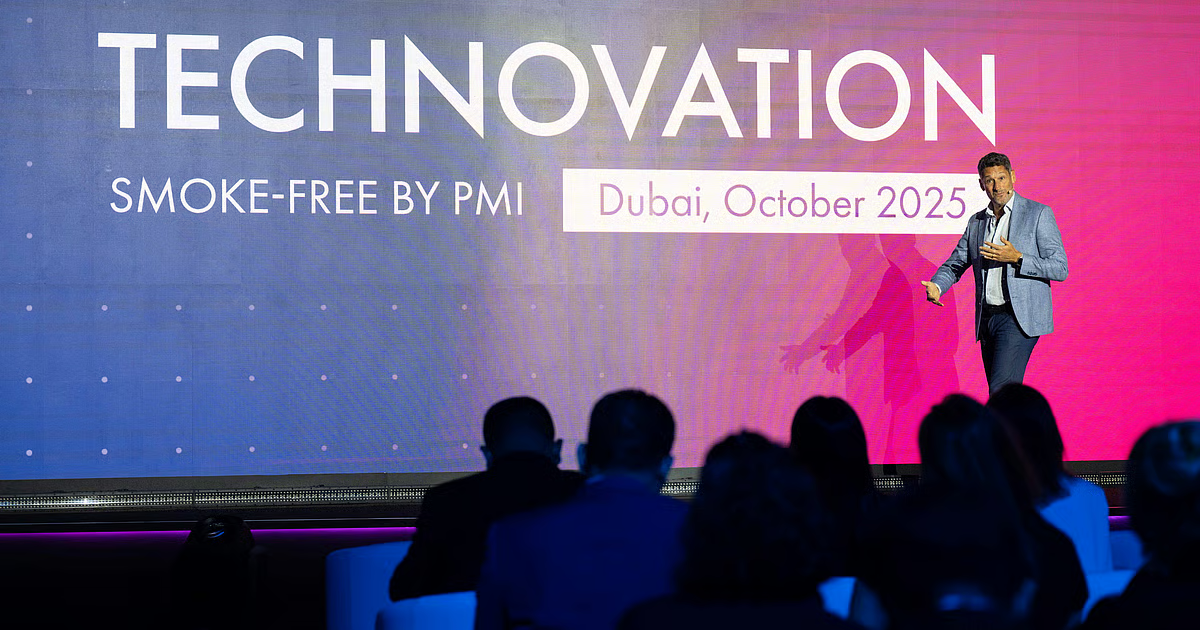

Dubai recently hosted Technovation, Philip Morris International’s (PMI) annual conference focused on accelerating the transition to a smoke-free future. The event brought together industry leaders, scientists, and public health advocates to discuss the role of technology, education, and regulation in reducing harm from tobacco use globally. A key theme was expanding access to and understanding of alternative products in emerging economies, where the vast majority of the world’s smokers reside.
The day-long conference, held at W Dubai – The Palm, highlighted PMI’s commitment to innovative solutions and the challenges of implementing them across diverse markets. Discussions centered on the scientific basis for reduced-risk products and the need for informed policy decisions to support public health goals. PMI executives emphasized the importance of collaboration with governments and stakeholders to overcome barriers to adoption.
The Path to a Smoke-Free Future
PMI asserts that achieving a smoke-free world requires more than simply encouraging people to quit smoking. According to Frederic de Wide, President SSEA, MEA & CIS Region, PMI, 1.2 billion people smoke worldwide, with 80% concentrated in developing nations. The company argues that providing access to less harmful alternatives is crucial for those who continue to use tobacco.
The United Arab Emirates (UAE) was presented as a model for progressive regulation and a growing understanding of the potential benefits of smoke-free products. Richa Rustagi, Managing Director, Lower Gulf & Iraq, PMI, stated the UAE has positioned itself as a strategic innovation hub, not only for the MENA region but globally. This proactive approach, she believes, can serve as a blueprint for other countries in the region.
Technological Innovation and Harm Reduction
PMI has significantly invested in research and development of smoke-free alternatives, allocating over $14 billion to the effort – representing 99.5% of its R&D and 80% of its commercial budget. This investment has resulted in products like heat-not-burn tobacco devices and nicotine pouches, designed to deliver nicotine without the combustion that causes most smoking-related diseases.
A central point of discussion was the role of nicotine and the misconceptions surrounding its harm. Tomoko Iida, Director Scientific Engagement, SSEA CIS & MEA, PMI, explained that nicotine itself is not the primary cause of smoking-related illnesses; rather, it’s the harmful chemicals produced by burning tobacco. This distinction is critical for promoting informed choices about harm reduction.
Evidence from countries like Japan and Sweden, where these alternative products have gained popularity, was presented. Japan has seen a 50% reduction in cigarette sales over the past decade, while Sweden now has a smoking rate of just 5%, both coinciding with increased adoption of these alternatives. However, replicating this success globally presents significant hurdles.
Overcoming Challenges and Changing Perceptions
Despite the technological advancements, widespread adoption of smoke-free alternatives is hindered by misinformation and skepticism. Tommaso Di Giovanni, Vice President Communications & Engagement, PMI, acknowledged that innovation inevitably faces resistance, but ultimately, better choices tend to prevail. He sees the key challenge as accelerating the pace of change.
The conference emphasized that successful implementation requires collaboration with regulators and opinion leaders, particularly in emerging markets. A regulatory environment that supports research, allows for accurate product information, and avoids overly restrictive measures is essential. The success of reducing harm through alternative nicotine products largely rests on policies that permit their availability and accessibility.
Rustagi highlighted the potential impact within the Gulf Cooperation Council (GCC) region, stating that 2.5 million people in the UAE alone smoke currently. Her hope is to halve the smoking rate in the UAE within the coming years, marking a tangible step towards a smoke-free future.
Looking ahead, the effectiveness of PMI’s strategy will depend on the evolving regulatory landscape and the ability to address public concerns. The industry’s continued investment in scientific research, coupled with transparent communication about the risks and benefits of different products, will be crucial. Monitoring smoking rates and adoption of alternatives in key markets like the GCC will provide insights into the impact of these efforts and inform future policy decisions. Further research into tobacco harm reduction strategies is expected to be a focal point for PMI and the broader industry.