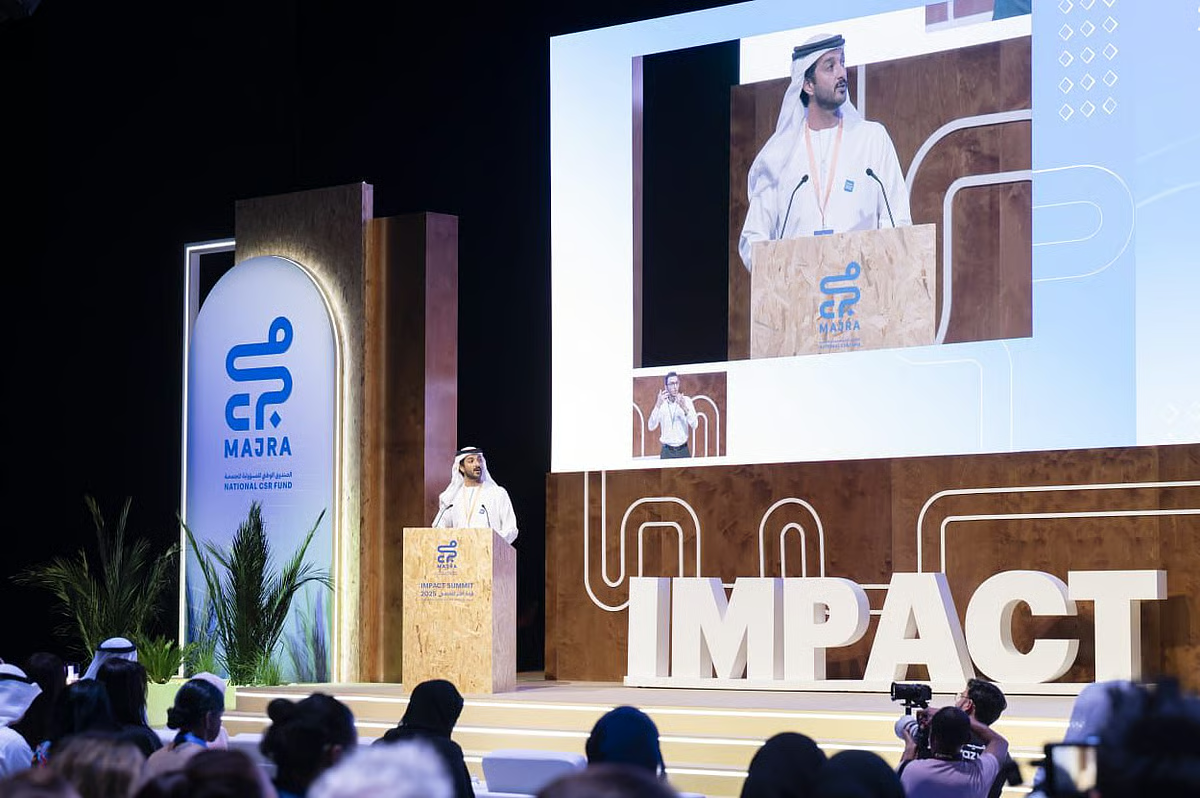

The United Arab Emirates has launched a comprehensive national strategy, “UAE Companies for Good 2031,” aiming to significantly increase private sector involvement in corporate social responsibility (CSR) and sustainability initiatives. Announced during the opening session of a recent summit, the strategy establishes a framework for governance, measurement, and reporting of CSR activities, potentially linking these to commercial license renewals. This initiative underscores the UAE’s commitment to achieving its sustainable development goals through public-private collaboration.
The strategy, unveiled by Abdulla bin Touq, Minister of Economy, intends to create a unified national approach to CSR. It emphasizes verifiable impact rather than simply stated intentions. Key to implementation will be the Impact Digital Platform, where businesses can document their efforts and submit an “Impact Declaration” based on federally defined criteria. The details were discussed at a recent summit focused on CSR, measurement, and forging national partnerships.
The ‘UAE Companies for Good 2031’ Strategy and its Impact on Businesses
The launch of the “UAE Companies for Good 2031” strategy represents a major step in formalizing and encouraging corporate social responsibility within the UAE’s business landscape. Previously, CSR efforts were largely voluntary and varied in scope and reporting standards. According to officials, the new framework aims to standardize these practices, fostering greater accountability and transparency across all sectors. This move responds to increasing global pressure for businesses to address their environmental and social impacts, aligning the UAE with international best practices.
A Strategic Compass Approach
At the heart of the strategy lies what’s being described as a “Strategic Compass Approach.” This outlines standardized governance structures for companies undertaking CSR initiatives. It’s designed to ensure activities genuinely contribute to social and environmental well-being and are not merely public relations exercises. A crucial component is the move towards rigorous measurement and reporting, built around the new Impact Digital Platform.
The Impact Digital Platform will serve as a central repository for CSR data. Businesses will be required to submit the standardized Impact Declaration, allowing the government to track progress and identify areas for improvement. The ministry indicated that evaluating a link between these declarations and future commercial license renewals is underway, suggesting a potential incentive structure for participation. The phased implementation of this linkage is anticipated to begin in the coming years.
Summit Focus: Collaboration and Measurable Results
The summit accompanying the strategy launch highlighted core themes of collaboration and impact verification. The first session centered on establishing a national CSR framework, featuring organizations like Majra, AVPN, Emirates Nature–WWF, and ADNOC. Discussions focused on building robust governance, ensuring transparency, and developing effective methods for measuring the impact of CSR investments.
Another key discussion explored the concept of building an impact economy. Experts from government, the private sector, and non-profit organizations addressed partnership models, the integration of Environmental, Social, and Governance (ESG) factors into business operations, and the role of technology in scaling effective initiatives. The importance of engaging youth in CSR activities and focusing on projects aligned with national priorities was also emphasized.
The summit underscored a notable shift from simply intending to be socially responsible to demonstrably achieving positive outcomes. Participants examined various impact-measurement methodologies, drawing on expertise from both local and international sources. This signifies a growing demand for evidence-based CSR, moving away from anecdotal reporting toward quantifiable results. Stakeholders also explored the future of CSR, with panels focusing on responsible investment trends and the development of social entrepreneurship.
Inclusion and Accessibility at the Summit
The summit also prioritized inclusivity. Several programs were designed for and included People of Determination, reflecting the UAE’s broader commitment to social integration. These included a café operated in partnership with the Emirates Down Syndrome Association, providing real-world work experience and fostering economic empowerment. Sign-language interpretation services were available throughout the event, and interactive spaces offering agricultural activities and sensory engagement were designed to be accessible to a wide range of participants. This demonstrated a commitment to embodying the principles of sustainability and social responsibility at the event itself.
Additionally, the organizers have been coordinating with entities like Abu Dhabi’s Ma’an Authority for Social Contribution and Dubai’s Jood Foundation to ensure alignment and avoid duplication of effort. This collaborative approach is seen as vital for maximizing the impact of the strategy and achieving the overarching national agenda for sustainable development.
Looking ahead, the next crucial step will be the detailed implementation plan for linking Impact Declarations to commercial license renewals. While the timeline for this phase remains flexible, the authorities are expected to announce specific dates and requirements within the next year. The success of the “UAE Companies for Good 2031” strategy will depend on effective enforcement of reporting requirements, the availability of accessible and reliable impact measurement tools, and continued collaboration between all stakeholders. It remains to be seen how readily companies embrace these new obligations and whether the strategy will achieve its ambitious goals.