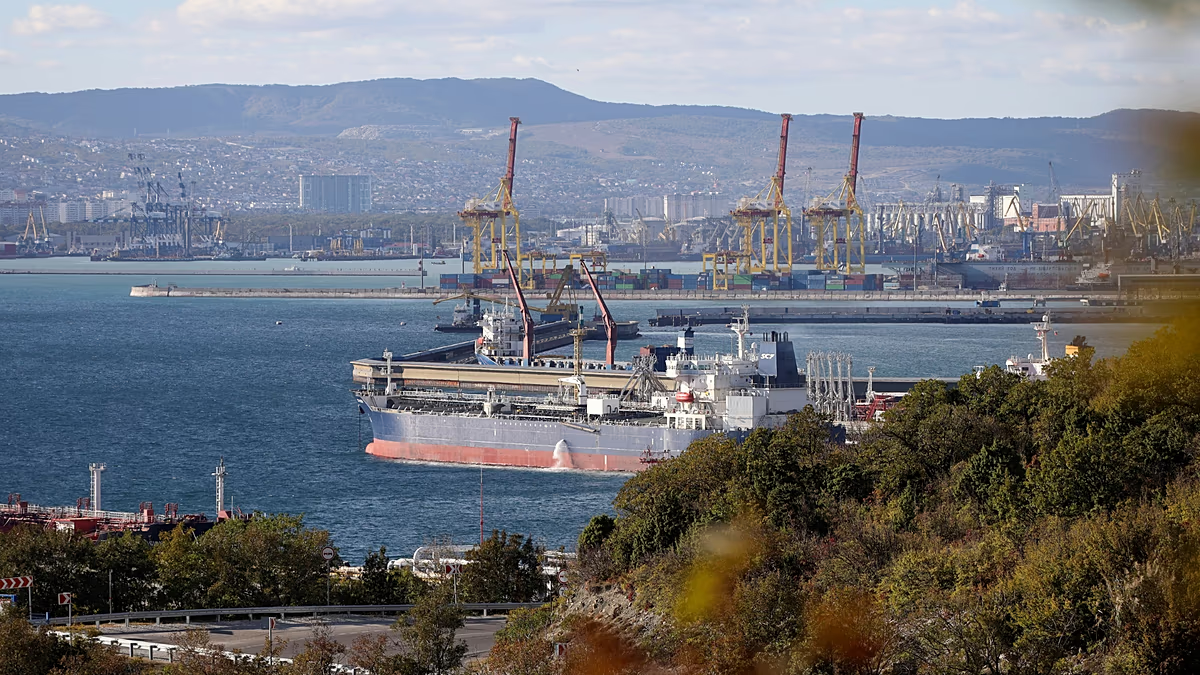

Two oil tankers linked to Russia’s “shadow fleet” and subject to international sanctions caught fire in the Black Sea on Friday, prompting a large-scale rescue operation by Turkish authorities. The incidents occurred near the Bosporus Strait, a critical waterway for global trade, raising concerns about maritime safety and potential environmental damage. The Turkish Transport Ministry reported the fires and the subsequent rescue of all crew members.
The first vessel, the Gambia-flagged Kairos, experienced an explosion approximately 28 nautical miles off the Turkish coast of Kocaeli province while en route from Egypt to Novorossiysk, Russia, without cargo. Shortly after, the Virat reported being “struck” in a separate location roughly 35 nautical miles from the Turkish coast. The cause of the incidents remains under investigation.
Understanding the Sanctions and the Shadow Fleet
Both the Kairos and the Virat are identified as part of a network of older tankers utilized by Russia to circumvent restrictions imposed on its crude oil exports following the 2022 invasion of Ukraine. These vessels, often operating with obscured ownership and registered under flags of convenience, have become known as the “shadow fleet.” According to OpenSanctions, a platform tracking sanctions data, the Virat was first sanctioned by the US in January, with the EU, Switzerland, the UK, and Canada following suit. The Kairos received sanctions from the EU, UK, and Switzerland in July.
The purpose of these sanctions is to limit Russia’s revenue streams and hinder its ability to finance the war in Ukraine. However, the existence of the shadow fleet demonstrates the ongoing efforts to bypass these measures. This fleet continues to generate significant income for the Kremlin, estimated to be in the billions of dollars.
Incident Details and Investigation
Turkish maritime authorities initially stated the Kairos incident was likely caused by an “external impact,” but have not yet determined the source of that impact. The possibility of a naval mine detonation or a deliberate attack is being considered, as the Black Sea has seen increased military activity and the presence of unexploded ordnance from past conflicts.
The 20-person crew of the Virat and the 25-person crew of the Kairos were successfully rescued by Turkish Coast Guard and other rescue units. There were no immediate reports of injuries. However, the fires themselves pose a substantial risk, and the potential for oil spills remains a significant concern.
Broader Implications for Black Sea Shipping
These incidents underscore the heightened risks associated with shipping in the Black Sea. The region is already considered a high-risk area due to the ongoing conflict and the presence of mines. The fires could lead to increased insurance rates for vessels transiting the area and potentially disrupt trade routes.
The Kairos and Virat have both changed flags multiple times in recent years, a common practice amongst vessels attempting to obscure their ownership and operations. The Virat, built in 2018, has sailed under the flags of Barbados, Comoros, Liberia, and Panama. The Kairos, constructed in 2002, has previously flown the flags of Panama, Greece, and Liberia. This practice complicates efforts to enforce international maritime law and track vessels involved in sanctions evasion.
The environmental impact of the fires and any potential oil leaks is also a major concern. The Black Sea ecosystem is already vulnerable, and a significant spill could have devastating consequences for marine life and coastal communities. Monitoring efforts are underway to assess the situation.
Authorities are maintaining a high level of alert and closely monitoring the situation to prevent further incidents and ensure the safety of maritime traffic in the Bosporus region. The investigation into the cause of the fires is ongoing, and further details are expected to emerge in the coming days. Stakeholders in the shipping industry should closely follow developments in the Black Sea and assess the potential risks to their operations.