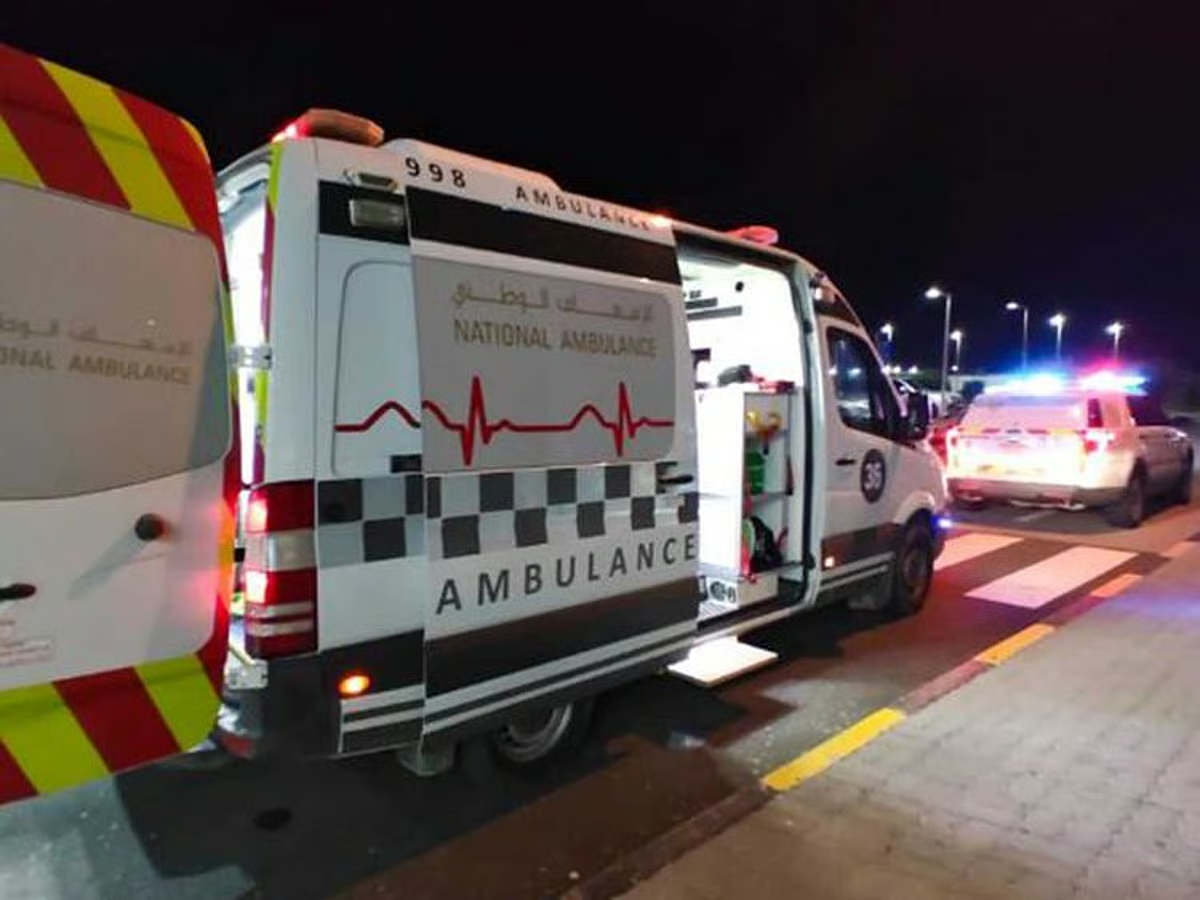

National Ambulance, the primary provider of pre-hospital emergency care in the United Arab Emirates, secured first place at the recent EMS Challenge, a globally recognized competition testing emergency medical skills. The team’s performance at the event, held in Dubai from November 14-17, 2023, highlights the growing sophistication of ambulance services and emergency response capabilities within the region. This victory underscores the dedication to continuous improvement in pre-hospital care.
The EMS Challenge brought together teams from over 20 countries, including the United States, Canada, and several European nations. Participants were evaluated on their ability to manage a range of simulated emergency scenarios, from trauma and cardiac arrest to medical emergencies and hazardous materials incidents. National Ambulance’s success is seen as a significant achievement for the UAE’s healthcare sector.
National Ambulance’s Winning Performance in the EMS Challenge
The competition involved a series of practical assessments designed to replicate real-world emergency situations. Teams were judged on speed, accuracy, teamwork, and adherence to international protocols for ambulance operations. National Ambulance consistently scored highly across all scenarios, demonstrating a comprehensive understanding of advanced life support techniques.
Key Areas of Excellence
According to event organizers, National Ambulance excelled in several key areas. These included rapid scene assessment, efficient triage of patients, and the skillful administration of advanced medical interventions. The team’s ability to maintain composure and communicate effectively under pressure was also noted as a significant strength.
The UAE has invested heavily in its emergency medical services in recent years, focusing on training, technology, and infrastructure. This commitment is reflected in the high standards of care provided by National Ambulance and other emergency response providers. The Ministry of Health and Prevention has prioritized improving response times and outcomes for critical patients.
However, challenges remain in ensuring equitable access to high-quality emergency care across all areas of the UAE. Rural and remote communities may face longer response times due to geographical limitations. Addressing these disparities is a continuing focus for healthcare authorities.
Meanwhile, the EMS Challenge also served as a platform for sharing best practices and fostering collaboration among emergency medical professionals worldwide. Participants had the opportunity to learn from each other’s experiences and explore innovative approaches to pre-hospital care. This exchange of knowledge is crucial for advancing the field of emergency medicine.
The National Ambulance team’s preparation for the EMS Challenge was extensive, involving months of rigorous training and simulation exercises. This included specialized training in areas such as trauma management, pediatric advanced life support, and disaster response. The team benefited from the expertise of experienced paramedics, physicians, and other healthcare professionals.
In contrast to some other participating nations, the UAE’s ambulance service benefits from a relatively young and modern fleet of vehicles equipped with state-of-the-art medical equipment. This allows paramedics to provide advanced care at the scene of an emergency and during transport to hospital. The integration of technology, such as telemedicine and real-time data transmission, is also enhancing the effectiveness of emergency response.
Additionally, the UAE’s commitment to international accreditation standards plays a role in maintaining high levels of quality and safety. National Ambulance is accredited by several leading organizations, demonstrating its adherence to best practices in emergency medical services. This accreditation process involves regular audits and assessments to ensure ongoing compliance.
The success of National Ambulance at the EMS Challenge is expected to further boost morale within the organization and inspire continued dedication to excellence. It also serves as a positive example for other emergency medical services in the region, encouraging them to strive for higher standards of care. The event highlighted the importance of emergency medical technicians and paramedics.
The competition also showcased advancements in pre-hospital care, including the use of drones for delivering medical supplies and the implementation of artificial intelligence-powered diagnostic tools. These technologies have the potential to significantly improve the speed and accuracy of emergency response, particularly in challenging environments.
The report indicates that the UAE is actively exploring opportunities to adopt these innovative technologies and integrate them into its emergency medical system. This includes pilot projects to test the feasibility of drone delivery and the development of AI-based algorithms to assist paramedics in making critical decisions.
Looking ahead, National Ambulance plans to share its learnings from the EMS Challenge with other healthcare providers in the UAE and the wider region. This will involve conducting workshops, training sessions, and knowledge-sharing events. The organization is also committed to continuing its investment in training, technology, and infrastructure to further enhance its emergency medical capabilities.
The Ministry of Health and Prevention is expected to review the outcomes of the EMS Challenge and assess their implications for national healthcare policy. This review may lead to adjustments in training curricula, equipment standards, and emergency response protocols. A formal report outlining these recommendations is anticipated by the end of the first quarter of 2024, though the timeline remains subject to change based on ongoing evaluations and resource allocation.