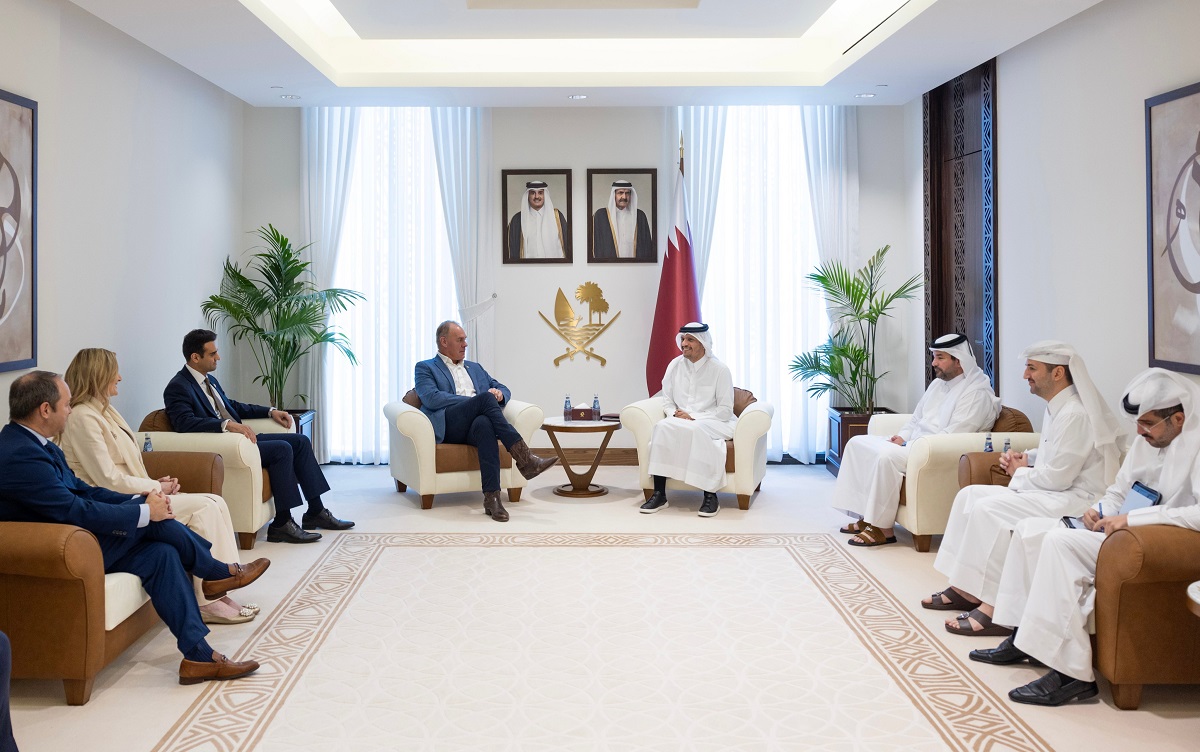

Doha, Qatar – Prime Minister and Minister of Foreign Affairs of Qatar, Sheikh Mohammed bin Abdulrahman bin Jassim Al-Thani, held a meeting with a bipartisan delegation from the United States Congress on Thursday. The discussions centered on bolstering the Qatar-US relations and addressing pressing regional issues. The meeting, which took place in Doha, signals continued high-level engagement between the two nations amidst evolving geopolitical dynamics.
The delegation included Representatives Laurel Lee, Marlin Stutzman, Abraham Hamadeh, Ryan Zinke, and Lance Gooden. According to the official Qatar News Agency, the talks covered a range of topics, including mutual strategic interests and current events impacting the Middle East. This visit underscores the importance both countries place on maintaining a strong partnership.
Strengthening Qatar-US Relations: A Key Focus
The Qatar-US relations have been steadily growing in recent years, particularly in areas of defense, security cooperation, and energy. Qatar is a major non-NATO ally of the United States, a designation reflecting the close and enduring security partnership. The meeting likely addressed ongoing collaborations in counterterrorism efforts and regional stability initiatives.
Additionally, Qatar has become a significant investor in the US economy. These investments span various sectors, including real estate, infrastructure, and technology, contributing to economic growth and job creation in the United States. The discussions may have touched upon expanding these economic ties and identifying new opportunities for investment.
Regional Stability and Mediation
The meeting also addressed critical regional developments. Qatar has played a prominent role in mediation efforts in several conflicts, including those in Afghanistan and Sudan. The US likely sought Qatar’s insights on these and other regional challenges, such as the ongoing situation in Gaza and the broader implications for Middle East peace.
Qatar’s position as a neutral mediator is highly valued by the international community. The country has consistently advocated for diplomatic solutions and de-escalation of tensions. The US and Qatar share a common interest in promoting stability and preventing further escalation in the region, a point likely emphasized during the discussions.
Energy Cooperation and Global Markets
Energy cooperation represents another crucial pillar of the Qatar-US relations. Qatar is one of the world’s leading exporters of liquefied natural gas (LNG), a vital energy source for many countries, including the US. With global energy markets facing volatility, securing reliable energy supplies is a top priority for both nations.
The US has been encouraging Qatar to increase its LNG production to help stabilize global energy prices and reduce dependence on other suppliers. The meeting could have explored ways to enhance energy collaboration and ensure a consistent flow of LNG to international markets. Discussions on international diplomacy and energy security were likely prominent.
However, the relationship isn’t without complexities. Concerns regarding human rights and labor practices in Qatar have been raised by US lawmakers and advocacy groups. While not explicitly mentioned in reports of the meeting, these issues likely form a part of the broader dialogue between the two countries. The US continues to advocate for improvements in these areas.
Meanwhile, the visit comes at a time of heightened geopolitical tension, particularly in the wake of the October 7th attacks and the subsequent conflict in Gaza. Qatar has maintained communication channels with various actors in the region, including Hamas, and its role in facilitating hostage negotiations has been closely watched by the US. This delicate balancing act was likely a key topic of conversation.
Looking ahead, further discussions between Qatari and US officials are expected in the coming months. The implementation of any agreements reached during the meeting will be a key indicator of the strength of the bilateral ties. The evolving situation in the Middle East and global energy markets will continue to shape the dynamics of this important partnership, and observers will be watching for continued collaboration on issues of mutual concern, including regional security.