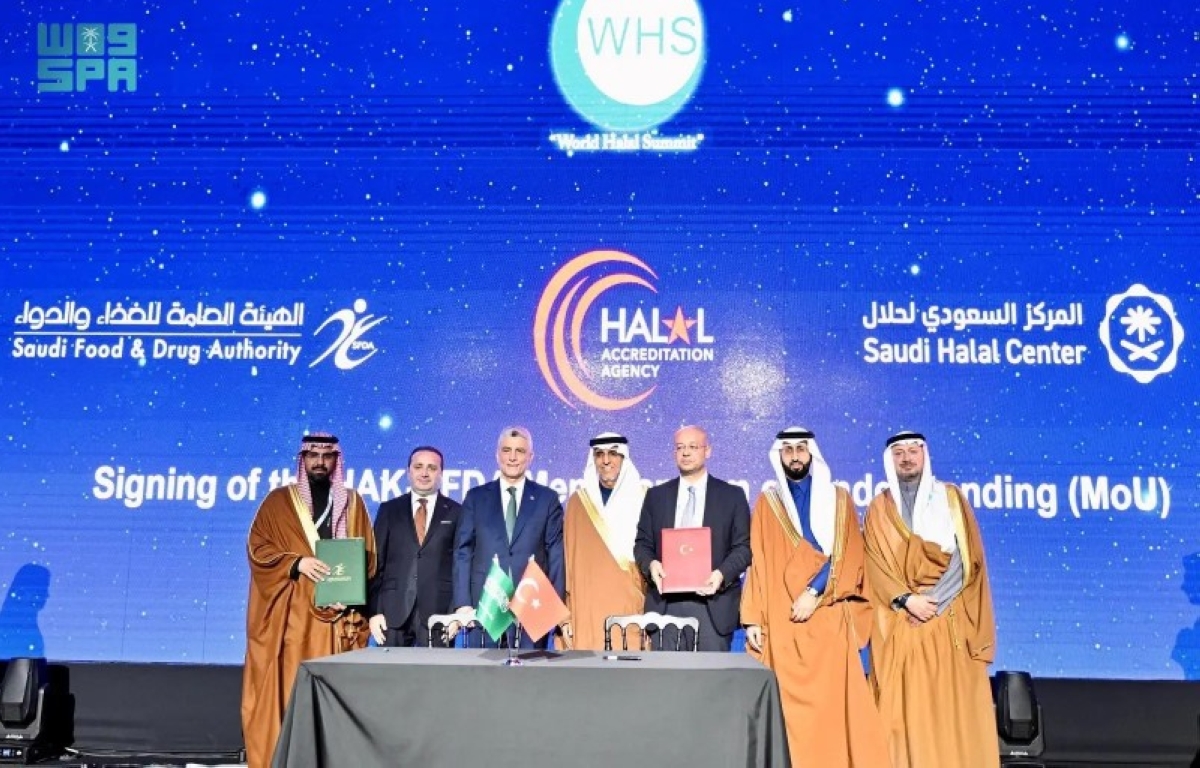

ISTANBUL — The Saudi Food and Drug Authority (SFDA) and the Turkish Halal Accreditation Agency (HAK) formalized their commitment to collaboration this week, signing a memorandum of understanding (MoU) to bolster cooperation within the growing halal sector. The agreement, signed on Wednesday during the 11th World Halal Summit in Istanbul, Türkiye, aims to facilitate knowledge sharing and strengthen both nations’ positions in the global halal market. This partnership underscores the increasing importance of standardized halal certification and trade.
The signing ceremony took place with key officials present, including Dr. Saad Alkasabi, Governor of the Saudi Standards, Metrology and Quality Organization (SASO), and Dr. Hisham Aljadhey, CEO of SFDA. Eng. Abdulaziz AlRushodi, CEO of the Saudi Halal Center, and Zafer Soylu, Chairman of the Board of Directors of HAK, officially signed the MoU, outlining a framework for future joint initiatives. The World Halal Summit, running from Wednesday to Saturday, serves as a key platform for international discussion on halal standards and trade.
Strengthening Global Halal Cooperation
The MoU focuses on several key areas of collaboration. These include the exchange of expertise and research related to halal standards, the organization of joint training programs, seminars, and workshops for industry professionals, and coordinated participation in international forums dedicated to the halal industry. This collaborative approach is expected to streamline processes and promote greater consistency in halal certification across both countries.
Key Areas of Collaboration
Specifically, the agreement will address:
- Mutual recognition of halal certificates, potentially reducing barriers to trade.
- Joint research initiatives to improve halal testing methodologies.
- Capacity building programs for auditors and inspectors.
According to the SFDA, this strategic agreement is a direct result of its ongoing efforts to expand its international partnerships. The agency views this collaboration as crucial for solidifying Saudi Arabia’s role as a global leader in the halal industry. This leadership position is seen as vital for enhancing the competitiveness of Saudi products in international markets.
The global halal market is experiencing significant growth, driven by a rising Muslim population and increasing consumer demand for ethically sourced and certified products. Estimates vary, but industry reports indicate the market could reach over $3 trillion by 2028. This expansion presents substantial opportunities for both Saudi Arabia and Türkiye, both of which are strategically positioned to serve key markets.
Meanwhile, Türkiye has established itself as a prominent player in the halal certification landscape, particularly within Europe. HAK plays a central role in accrediting certification bodies and ensuring compliance with Turkish halal standards. The partnership with Saudi Arabia is expected to further enhance HAK’s international recognition and influence.
Additionally, the agreement aligns with Saudi Vision 2030, the Kingdom’s ambitious economic diversification plan. Supporting the growth of the halal industry is identified as a key component of this plan, contributing to non-oil revenue streams and job creation. The SFDA anticipates that increased trade and investment in the halal sector will contribute significantly to these goals.
In contrast to some fragmented approaches to halal certification globally, this MoU represents a move towards greater harmonization. Differing standards and certification processes can create complexities for businesses seeking to export halal products to multiple countries. Standardization efforts, like this one, aim to reduce these complexities and facilitate smoother international trade.
The agreement also extends to the realm of Islamic finance, a related sector experiencing parallel growth. While the MoU primarily focuses on food and pharmaceuticals, the principles of halal compliance are increasingly relevant to financial products and services. Further collaboration in this area could be explored in the future.
Looking ahead, the SFDA and HAK will establish a joint working group to develop a detailed implementation plan for the MoU. This plan will outline specific timelines and deliverables for each area of cooperation. The initial phase of implementation is expected to focus on establishing a framework for mutual recognition of halal certificates, with a target completion date of late 2024. However, the success of this initiative will depend on ongoing dialogue and commitment from both sides, as well as navigating potential regulatory hurdles. The long-term impact on trade flows and industry standards remains to be seen.