
Dubai is poised to drastically reduce commute times with the planned introduction of air taxis, potentially shrinking journeys from 45 minutes to just 10 minutes. The Roads and Transport Authority (RTA) of Dubai announced the service is set to launch in 2026, initially with a limited network of vertiports. This move signifies a major push towards integrating advanced air mobility into the city’s transportation infrastructure.
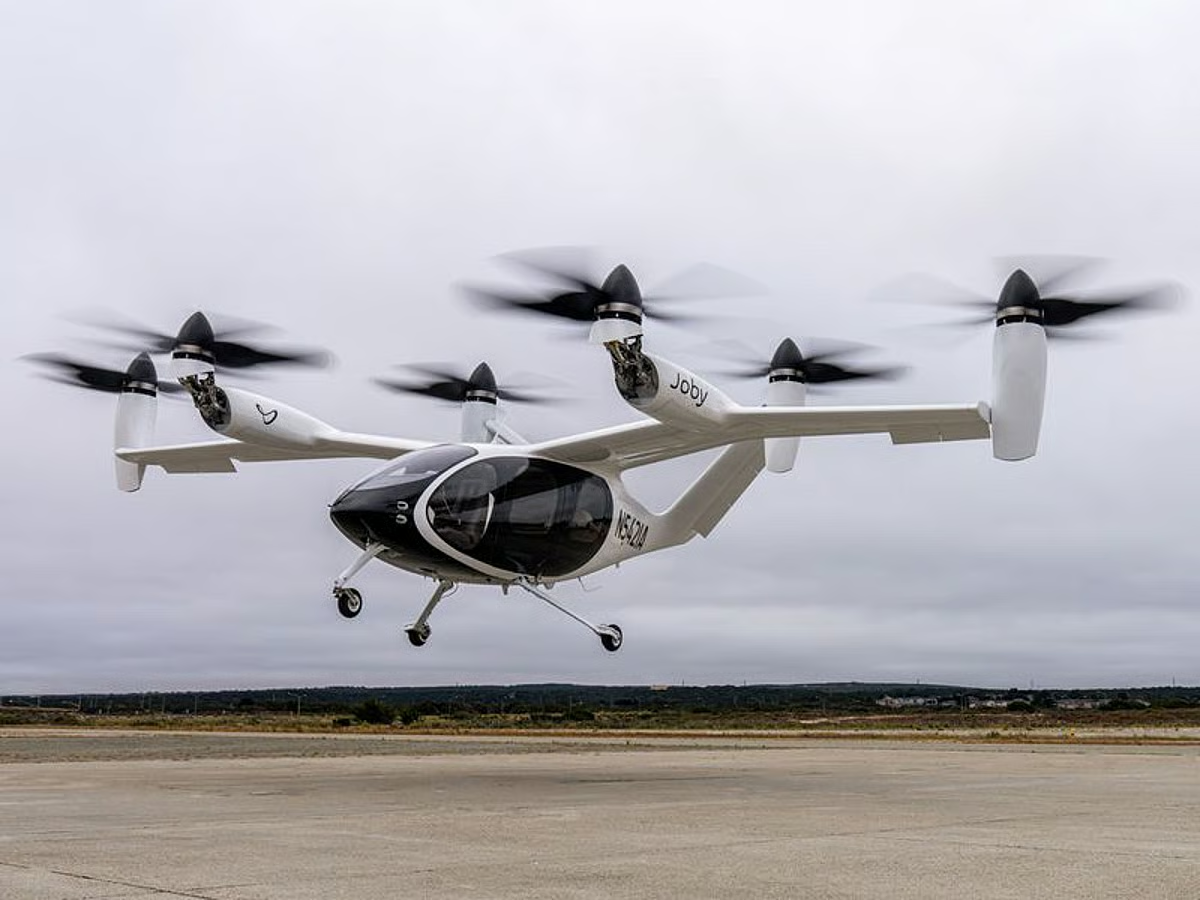
The initiative focuses on electric vertical takeoff and landing (eVTOL) aircraft to provide point-to-point transportation within the urban area. These vehicles will operate from dedicated facilities – vertiports – connected to existing public transport options. The pilot phase will involve select routes and a gradual expansion of the network depending on operational success and public acceptance.
The Vision for Dubai’s Air Taxi Network
Dubai’s embrace of air taxis aligns with its broader strategy to become a global leader in innovative transportation solutions. The government has consistently invested in futuristic technologies and infrastructure projects, viewing them as key to economic diversification and enhancing quality of life. This latest venture seeks to alleviate road congestion and offer a premium, efficient travel option.
According to the RTA, the project is not intended to replace existing transport systems but rather to supplement them, catering to specific needs and routes. The initial focus will be on routes connecting key business and tourist destinations, such as Dubai International Airport, Downtown Dubai, and the Palm Jumeirah. This targeted approach will allow the RTA to gather data and refine operations before a wider rollout.
Infrastructure Development and Vertiport Locations
Crucially, the success of air taxi services hinges on the development of a robust vertiport infrastructure. The RTA has already begun construction on vertiports in key locations, with plans to integrate these seamlessly with metro stations and bus terminals. This allows for multi-modal journeys, potentially offering a “park and fly” experience for commuters.
Several locations have been identified as potential vertiport sites, including the Dubai Air Navigation Centre and areas near major hotels and shopping malls. The vertiports are being designed to accommodate the unique requirements of eVTOL aircraft, including charging facilities, maintenance areas, and passenger terminals. Safety and security are paramount concerns in this design process.
The Technology Behind Electric Flight
The air taxi project utilizes eVTOL technology, representing a significant shift in aircraft design. These aircraft employ electric propulsion systems and vertical takeoff and landing capabilities, making them quieter and more environmentally friendly than traditional helicopters. Furthermore, they possess enhanced safety features.
Multiple manufacturers are vying to supply the aircraft for Dubai’s network. Joby Aviation and Lilium are among the prominent companies whose designs are under consideration. The RTA emphasizes that rigorous testing and certification processes will be followed to ensure the airworthiness and reliability of the chosen fleet. The selection process will also consider factors like passenger capacity, range, and operational costs.
However, the technology is still evolving. Battery technology remains a key constraint, dictating the range and payload capacity of eVTOL aircraft. Ongoing advancements in battery chemistry and energy density are expected to address these limitations over time, leading to more efficient and versatile air taxis.
Another challenge lies in air traffic management. Integrating a large number of autonomous or remotely piloted aircraft into the existing airspace requires a sophisticated and coordinated system. Dubai’s aviation authorities are actively working on developing such a system, leveraging advanced technologies like artificial intelligence and machine learning. This will ensure the safe and efficient operation of the air taxi network alongside conventional air traffic.
The economic impact of this project extends beyond reduced travel times. The introduction of air taxis is anticipated to stimulate investment in related industries, such as battery manufacturing, aircraft maintenance, and software development. Additionally, it is expected to create new job opportunities in the fields of piloting, engineering, and air traffic control.
The regulatory framework for urban air mobility is also under development. The UAE General Civil Aviation Authority (GCAA) is working on establishing comprehensive regulations covering aircraft certification, pilot licensing, and airspace management. These regulations will be aligned with international standards but tailored to the specific needs and characteristics of the UAE aviation environment.
In terms of pricing, the RTA has not yet finalized the fare structure for air taxi services. Initial indications suggest that fares will be significantly higher than those of traditional taxis or public transport, reflecting the premium nature of the service and the associated operating costs. However, the RTA aims to make the service more accessible over time as the technology matures and economies of scale are achieved.
Meanwhile, Dubai is not alone in exploring the potential of urban air mobility. Cities around the world, including Los Angeles, Paris, and Singapore, are actively developing and testing similar air taxi services. Competition in the industry is fierce, and Dubai is positioning itself to be at the forefront of this emerging transportation revolution. Successful implementation could serve as a model for other urban centers.
In contrast to early concepts of personal flying vehicles, this initiative focuses on a structured, commercially operated service. Centralized control and standardized routes will be the hallmarks of the Dubai air taxi network, differentiating it from more experimental approaches to individual flight. This focused strategy is intended to accelerate adoption and address safety concerns.
The next critical step involves finalizing the selection of the aircraft manufacturer by late 2024, following extensive evaluations of various eVTOL designs. The RTA will also continue constructing vertiports and refining the air traffic management system in preparation for the launch in 2026. Key factors to watch include progress on regulatory approvals, public acceptance of the service, and the performance of the eVTOL technology in real-world conditions. Uncertainty remains regarding potential noise pollution and the long-term sustainability of the network.
Related areas like drone delivery services are also being explored simultaneously in Dubai, further demonstrating its commitment to advanced air mobility technologies. The growing focus on smart city initiatives and sustainable transportation options provides a supportive environment for the development of these innovative solutions. Furthermore, the continued growth of tourism and business travel in Dubai is expected to drive demand for faster and more convenient transportation options like air taxis.