
The United Arab Emirates (UAE) Ministry of Interior has launched the ‘Wreiga’ service, a program designed to expedite emergency response times for select doctors. This initiative allows medical professionals in critical specialties to utilize traffic exemptions during urgent hospital calls, ensuring faster and safer arrival to treat patients. The program aims to balance the need for rapid medical intervention with road safety for all users.
Currently available to doctors responding to high-priority cases, ‘Wreiga’ is focused on optimizing travel within existing infrastructure. The service is not a blanket authorization for all physicians, but a targeted approach addressing documented delays experienced by specialists rushing to emergencies. This implementation reflects a wider focus on smart city solutions and improved public safety within the UAE.
Understanding the ‘Wreiga’ Service and its Benefits
The impetus for ‘Wreiga’ stemmed from observations that doctors responding to emergency summons frequently encountered traffic congestion, hindering their ability to reach hospitals promptly. According to Colonel Dr. Saeed Mohammed Al Dhahouri, Director of Service Development at the Ministry of Interior, the service mitigates these delays without compromising safety. The primary goal is to save lives by minimizing the time between a critical call and a doctor’s arrival at the hospital.
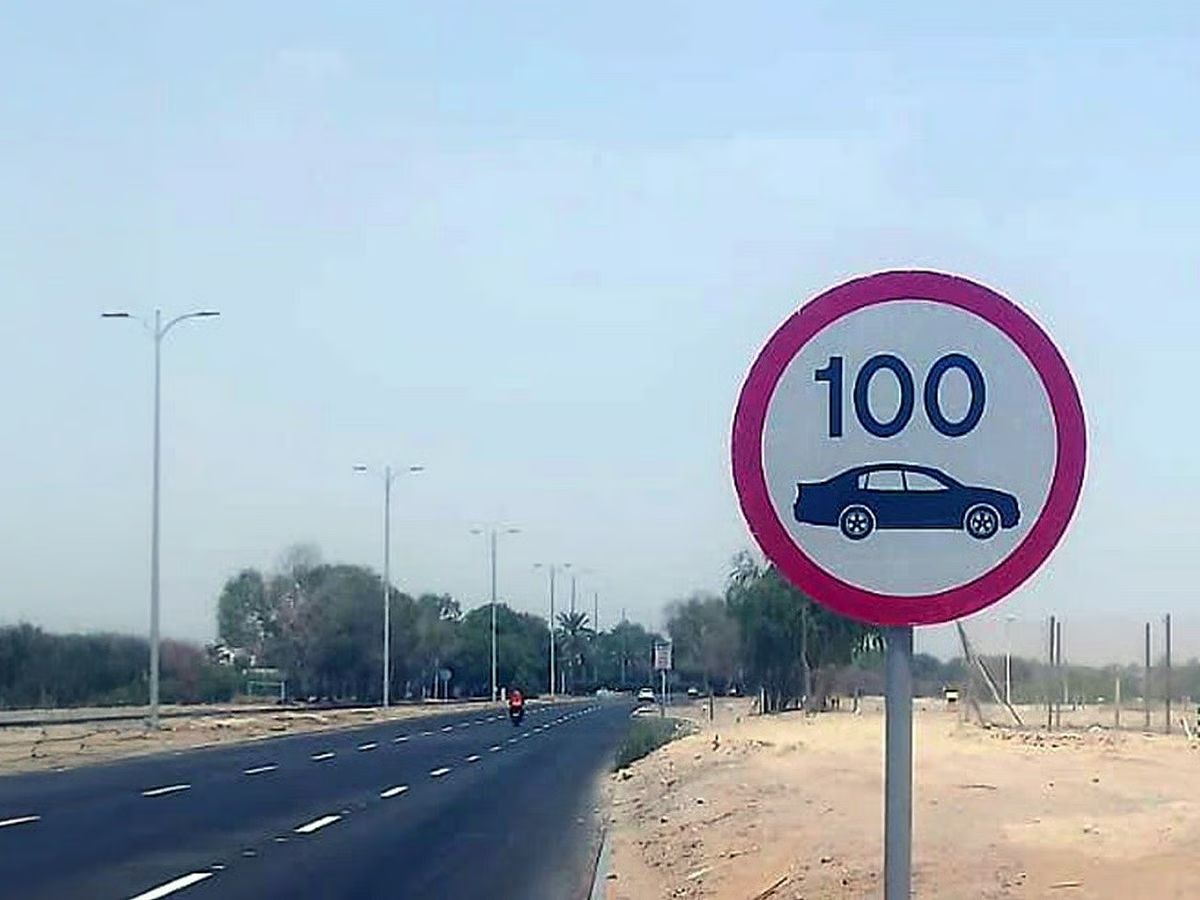
The service operates by verifying the doctor’s credentials and the urgency of the situation through the Ministry of Interior’s smart app. Once a request is approved, the operations room tracks the doctor’s route and coordinates with traffic patrols to clear obstacles and facilitate passage. This includes allowing access to the hard shoulder, bus lanes, and a limited speed increase of up to 40km/h, all regulated under Ministerial Resolution No. 248 of 2020.
Eligibility and Registration
Access to ‘Wreiga’ is limited to doctors specializing in one of 13 designated critical medical fields. Potential participants must meet several strict criteria, including possessing a valid medical license and completing a mandatory training course on safe driving practices during emergency situations. This training component is crucial, the ministry states, to ensure responsible use of the granted exemptions.
To activate the service, doctors must log into the smart app when called to a hospital and register the emergency. A clearly visible triangular green ‘lowah’ sign must be displayed on the vehicle to alert other drivers to the nature of the journey and request their cooperation in yielding the right-of-way. This visual cue is a key element in maintaining road safety while utilizing the expedited travel option.
The initial rollout has seen a high adoption rate, with approximately 97% of eligible doctors already registered to use the ‘Wreiga’ service. The program highlights the ongoing collaboration between the Ministry of Interior and governmental health organizations to improve emergency medical response capabilities. This cooperation is a vital component of the UAE’s overall healthcare strategy.
Impact on Emergency Response Times
Preliminary data indicates a significant improvement in response times since the introduction of ‘Wreiga’. The ministry reports a 30% reduction in the average time it takes for participating doctors to reach the hospital during emergencies. This reduction is attributed to the coordinated traffic management and the ability to bypass congestion, potentially leading to better patient outcomes.
Beyond the UAE, the initiative has garnered attention from other Gulf Cooperation Council (GCC) countries, with several expressing interest in exploring similar systems. This regional interest underscores the potential for ‘Wreiga’ to serve as a model for improving emergency medical services across the Gulf region. The focus on technology and collaborative partnerships is seen as particularly valuable.
However, like any new program, ‘Wreiga’ faced initial challenges. The Ministry of Interior acknowledges these hurdles, emphasizing that continuous improvements are being implemented based on user feedback and operational analysis. Ongoing monitoring and refinement will be crucial for maximizing the service’s effectiveness and minimizing any unintended consequences. Consideration of ambulance services and their integration with this new program will also be important.
Looking ahead, the Ministry of Interior intends to expand the scope of the ‘Wreiga’ service to include a wider range of medical professionals. The feasibility of this expansion is currently being evaluated, with considerations given to potential impacts on traffic flow and overall road safety. Further details regarding the expansion criteria and timeline are expected to be announced in the coming months. The long-term success of ‘Wreiga’ will depend on careful management and adaptation to evolving needs within the healthcare system.