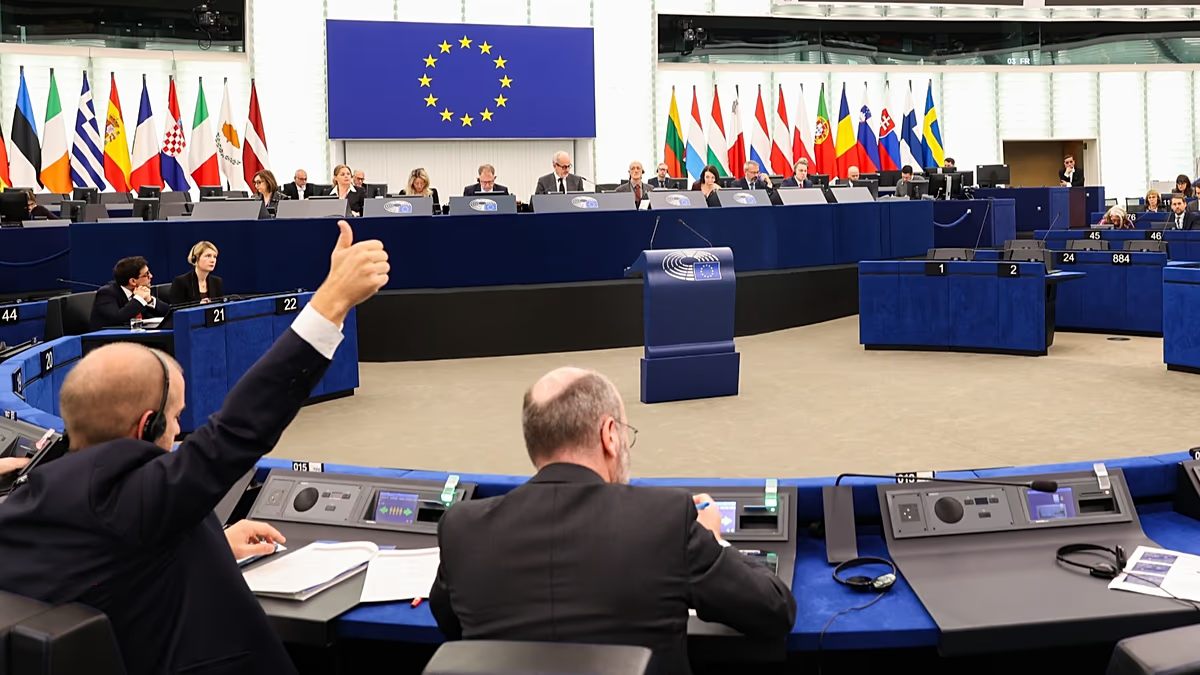

European lawmakers are considering significant restrictions on social media access for minors, potentially banning platforms for users under 16. A recent report approved by a large majority in the European Parliament calls for increased protection of children and teenagers online, citing concerns about mental health and addictive behaviors. The vote, held in Strasbourg on November 26, 2025, is non-binding but signals strong momentum for stricter digital regulations across the EU.
The proposal follows growing anxieties about the impact of online platforms on young people, and comes on the heels of strong criticism from French President Emmanuel Macron regarding the practices of major tech companies. The debate is unfolding against a backdrop of transatlantic tension, with US officials urging the EU to reconsider its approach to digital regulation.
The Push to Protect Youth on Social Media
The European Parliament report highlights research indicating that one in four minors exhibits problematic smartphone use, resembling addiction. Lawmakers specifically point to manipulative design features common on platforms – such as infinite scrolling, autoplay videos, and personalized recommendation algorithms – as undermining children’s wellbeing, concentration, and sleep patterns. These features are seen as contributing to a potentially harmful online environment.
According to the report, these platforms aren’t simply neutral spaces for expression. Instead, they can foster a “Wild West” environment, as described by President Macron, lacking adequate oversight and contributing to issues like harassment and the spread of extremist content. This concern is driving the call for more robust safeguards.
Concerns Over Mental Health
A central argument for the proposed restrictions centers on the negative impact of social media on adolescent mental health. Studies have linked excessive social media use to increased rates of anxiety, depression, and body image issues in young people. The report emphasizes the need to prioritize the psychological wellbeing of minors in the digital sphere.
The proposed measures are also intended to address the issue of data privacy. Children and teenagers may be less aware of the implications of sharing personal information online, making them particularly vulnerable to exploitation. Stricter age verification processes are seen as a key component of protecting their data.
Meanwhile, the European Commission is actively exploring potential solutions, including the development of an EU-wide age-verification app and the rollout of the European Digital Identity Wallet. Commission President Ursula von der Leyen has indicated she is closely monitoring Australia’s approach to banning social media for teens, and plans to commission a panel of experts to advise on the best course of action for Europe.
However, the proposals are not without opposition. Advocates for “radical free speech,” such as Elon Musk, argue that increased regulation could stifle alternative voices and limit online expression. This viewpoint underscores the complex balancing act between protecting children and upholding fundamental freedoms.
Additionally, the EU faces pressure from the United States to reconsider its digital rules. Recent talks saw a US official urging the Commission to revise its implementation of the Digital Markets Act and the Digital Services Act in exchange for potential trade benefits. This pushback highlights the varying approaches to digital regulation on either side of the Atlantic.
The EU has thus far firmly rejected calls to alter its regulatory framework, citing principles of digital sovereignty. The European Commission’s Digital Strategy emphasizes the need for Europe to control its own digital destiny and set its own standards. This stance suggests a continued commitment to strong digital protection, even in the face of external pressure. The Digital Services Act (DSA) and Digital Markets Act (DMA) are expected to play a strong role in these new developments.
Further complicating the issue is the challenge of effective age verification. Current methods are often easily circumvented, and concerns have been raised about the potential for data breaches and privacy violations associated with collecting and storing age-related information. A reliable and privacy-preserving verification system will be crucial for the success of any new regulations regarding social media and minors.
Looking ahead, the Commission’s expert panel will be pivotal in shaping the future of digital regulation in Europe. Their recommendations, expected by the end of the year, will inform whether the EU moves toward a full ban on social media for those under 16, or adopts a more nuanced approach. Businesses operating in the EU should closely monitor these developments to prepare for potential changes. Consumers can stay informed about the ongoing debate through official EU channels and reputable tech news sources.
The move has sparked extensive discussion around teenagers and mental health, and the role of tech companies in mitigating harm.