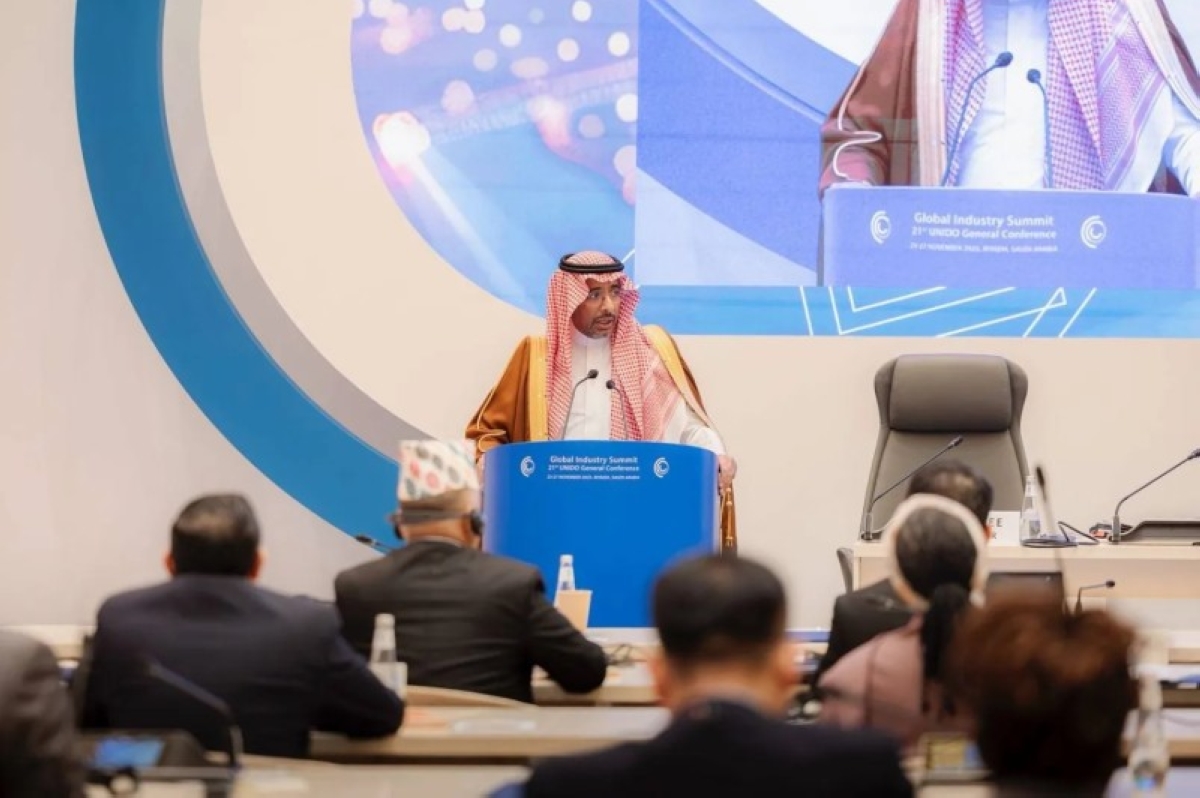

RIYADH — Saudi Arabia and Italy are exploring collaborative opportunities to bolster coffee supply chains in Africa, following a meeting between Saudi Minister of Industry and Mineral Resources Bandar Alkhorayef and Italian Deputy Prime Minister and Minister of Foreign Affairs Antonio Tajani. The discussions, which included representatives from the Saudi Coffee Company, centered on leveraging Italian expertise and Saudi investment to improve sustainability and productivity within the African coffee sector. The meeting took place on the sidelines of the 21st General Conference of the United Nations Industrial Development Organization (UNIDO) in Riyadh.
The initiative aims to address challenges facing African coffee producers, including climate change impacts and limited value-added processing. Italy presented its “ACT – Advancing Climate-Resilience and Transformation in African Coffee Program,” a UNIDO-implemented initiative, as a potential framework for collaboration. Saudi Arabia has recently assumed the presidency of UNIDO, signaling its increased commitment to global industrial development.
Strengthening African Coffee Supply Chains: A Saudi-Italian Partnership
The partnership represents a significant step towards enhancing the resilience of the global coffee supply chain, particularly in Africa, which accounts for a substantial portion of global production. According to the International Coffee Organization, Africa produces approximately 25% of the world’s coffee. However, many African coffee-growing regions face economic and environmental vulnerabilities.
Italy’s ACT Program and UNIDO’s Role
The Italian “ACT” program focuses on building climate resilience within African coffee farming communities. It provides technical assistance and financial support for sustainable agricultural practices, improved infrastructure, and access to markets. UNIDO plays a crucial role in facilitating the program’s implementation and monitoring its impact. The program currently operates in several key coffee-producing nations, including Ethiopia, Uganda, and Tanzania.
The Ministry of Industry and Mineral Resources, working with the Saudi Coffee Company, intends to evaluate how the ACT program’s methodologies can be adapted and expanded. This includes exploring opportunities to increase coffee yields, improve processing techniques, and develop value-added products within Africa. The ministry said it will coordinate with other relevant Saudi government entities to ensure a cohesive approach.
Saudi Coffee Company’s Contribution
The Saudi Coffee Company, established as the national champion for developing the Kingdom’s coffee industry, brings significant expertise in coffee value chain development. The company’s experience spans the entire process, from cultivation and harvesting to processing, manufacturing, and marketing. This expertise will be crucial in identifying specific areas where Saudi investment can have the greatest impact in Africa.
Additionally, the Saudi Coffee Company highlighted the strategic importance of Jazan Port. Located on the Red Sea, Jazan Port can serve as a vital logistics hub for facilitating coffee trade between Africa and global markets. Improving connectivity through Jazan Port could significantly reduce transportation costs and improve the efficiency of the coffee trade.
However, logistical challenges remain. Infrastructure limitations in some African coffee-producing countries and potential geopolitical instability could hinder the smooth flow of goods. Addressing these challenges will require coordinated efforts from multiple stakeholders, including governments, international organizations, and private sector companies.
Meanwhile, the transfer of UNIDO’s presidency from Italy to Saudi Arabia underscores a shift in global leadership regarding industrial development. This transition is expected to influence the organization’s priorities and strategies in the coming years. Saudi Arabia has expressed a commitment to promoting inclusive and sustainable industrialization, with a particular focus on supporting developing countries.
The Kingdom’s growing interest in the coffee sector is also driven by its own ambitions to become a significant coffee producer. Saudi Arabia is investing heavily in domestic coffee cultivation, particularly in the Jazan region, aiming to diversify its economy and reduce its reliance on oil. This domestic focus complements its international efforts to support coffee production in Africa.
In contrast to traditional aid models, this partnership emphasizes a collaborative approach, leveraging the strengths of both Italy and Saudi Arabia. Italy provides technical expertise and a proven program framework, while Saudi Arabia offers substantial financial resources and logistical capabilities. This combined approach is intended to create a more sustainable and impactful outcome.
The next steps involve a detailed assessment of the ACT program’s feasibility and potential for expansion in specific African countries. The Saudi Coffee Company and UNIDO are expected to conduct joint exploratory missions in the coming months to identify priority areas for investment and collaboration. A timeline for concrete project implementation has not yet been announced, and the success of the initiative will depend on securing the necessary funding and navigating potential logistical and political hurdles. Further developments regarding specific project locations and investment amounts are expected within the next quarter.