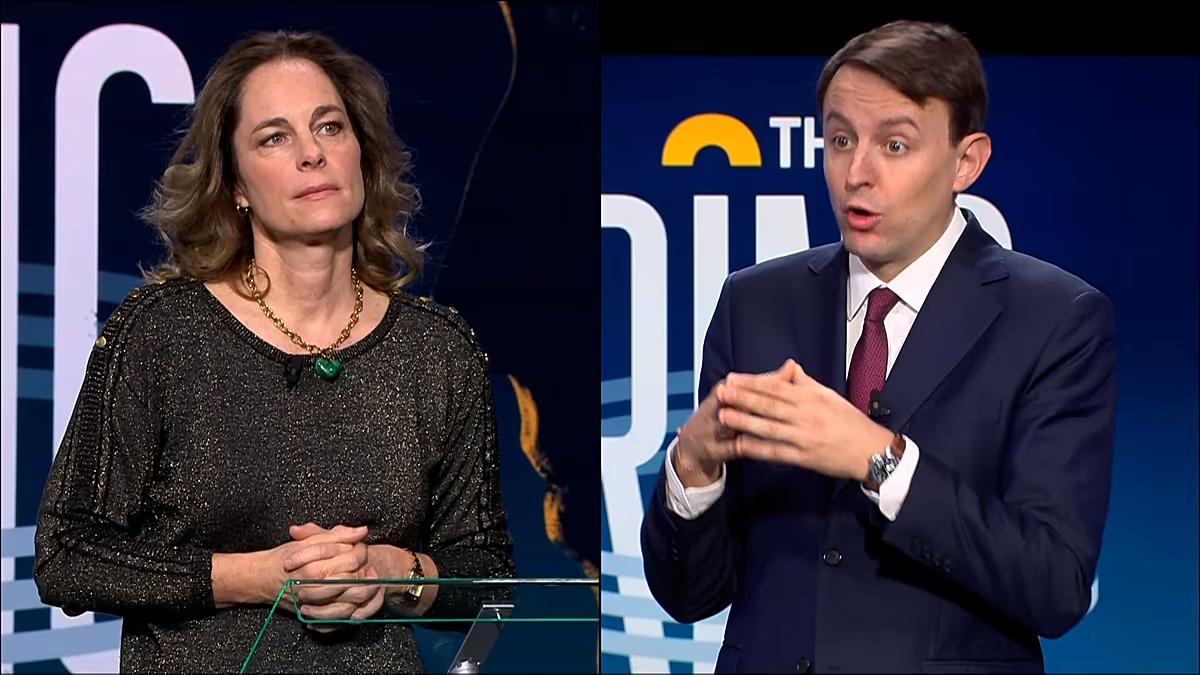

The European Union is currently navigating a critical juncture in its climate action policies, seeking to reconcile ambitious environmental goals with sustained economic growth. Discussions at the European Parliament in Strasbourg this week, featuring MEP Hildegard Bentele (EPP) and Vice President Javi López (S&D), highlighted the challenges of maintaining a unified front amongst 27 member states. This debate comes as the EU aims to implement significant changes to meet its 2030 and 2050 climate targets, impacting various sectors from energy to agriculture.
These conversations are taking place against a backdrop of increasing urgency regarding the global climate crisis. Recent reports from organizations like the Intergovernmental Panel on Climate Change (IPCC) underscore the speed and severity of climate change impacts. The EU’s ability to effectively address these challenges relies heavily on consensus amongst its member states, a cohesion that is increasingly being tested.
The Balancing Act of EU Climate Action
The core tension lies in finding a balance between environmental responsibility and economic competitiveness. Member states with economies heavily reliant on industries like manufacturing and agriculture have expressed concerns about the potential costs associated with rapid decarbonization. These worries center around maintaining jobs, ensuring affordable energy, and avoiding industrial relocation outside of the EU.
Bentele, representing the center-right EPP group, emphasized the need for a pragmatic approach. She argued that climate policies must be designed to support businesses and avoid placing undue burdens on European citizens. López, speaking for the Socialists & Democrats, countered that delaying ambitious action will ultimately be more costly, both economically and environmentally.
Diverging National Interests
Several factors contribute to the difficulty of achieving a unified climate policy. Each member state has its own unique energy mix, industrial structure, and national priorities. For example, countries like Poland and Czechia continue to rely heavily on coal for power generation, making a swift transition to renewable energy more challenging.
Additionally, differing interpretations of concepts like “green transition” and “environmental sustainability” fuel disagreement. Some nations prioritize innovation and technological solutions, while others advocate for more stringent regulations and behavioral changes. This nuanced disagreement affects implementation of the European Green Deal, a comprehensive package of policy initiatives.
Meanwhile, external geopolitical factors also play a role, particularly the ongoing energy crisis spurred by global events. The need for secure and affordable energy supplies has, at times, overshadowed long-term climate objectives.
The Future of EU Emissions Reduction
The EU has already made significant strides in reducing its greenhouse gas emissions. According to data from the European Environment Agency, the EU has reduced emissions by 34% since 1990. However, further reductions are required to achieve the EU’s legally binding target of a 55% reduction by 2030 and net-zero emissions by 2050.
The debate isn’t limited to just emissions targets. Discussions are also ongoing regarding the implementation of key policies like the Carbon Border Adjustment Mechanism (CBAM), designed to prevent “carbon leakage” by ensuring imported goods are subject to similar carbon pricing as those produced within the EU. Furthermore, the future of the EU’s Emissions Trading System (ETS), a cap-and-trade system for greenhouse gas emissions, is under review, with proposals for tightening the cap and expanding its scope.
In contrast to some national roadblocks, there is broad agreement on the importance of investing in renewable energy sources. The EU is actively promoting the development of wind, solar, and other clean energy technologies to reduce its reliance on fossil fuels. Support for innovation in areas such as green hydrogen and carbon capture and storage are also receiving increased attention.
The challenge for the European Union is to bridge the gap between its ambitious climate action targets and the practical realities of implementing these policies across its diverse member states. The success of the Green Deal, and the EU’s role as a global leader on climate change, hinges on finding common ground and presenting a unified face to the world. The ongoing negotiations will be crucial in determining the pace and scope of future climate action within the bloc, and the impact on European economies and citizens. The need for effective climate action is paramount, and the EU’s ability to deliver will be closely watched.
Looking ahead, the coming months will be critical as the EU continues to refine its climate policies and work towards securing agreement from all member states. Keep an eye on developments surrounding the CBAM and ETS reforms, as these will have significant implications for businesses and trade. For more information on the EU’s climate policies, visit the European Commission’s climate action website.