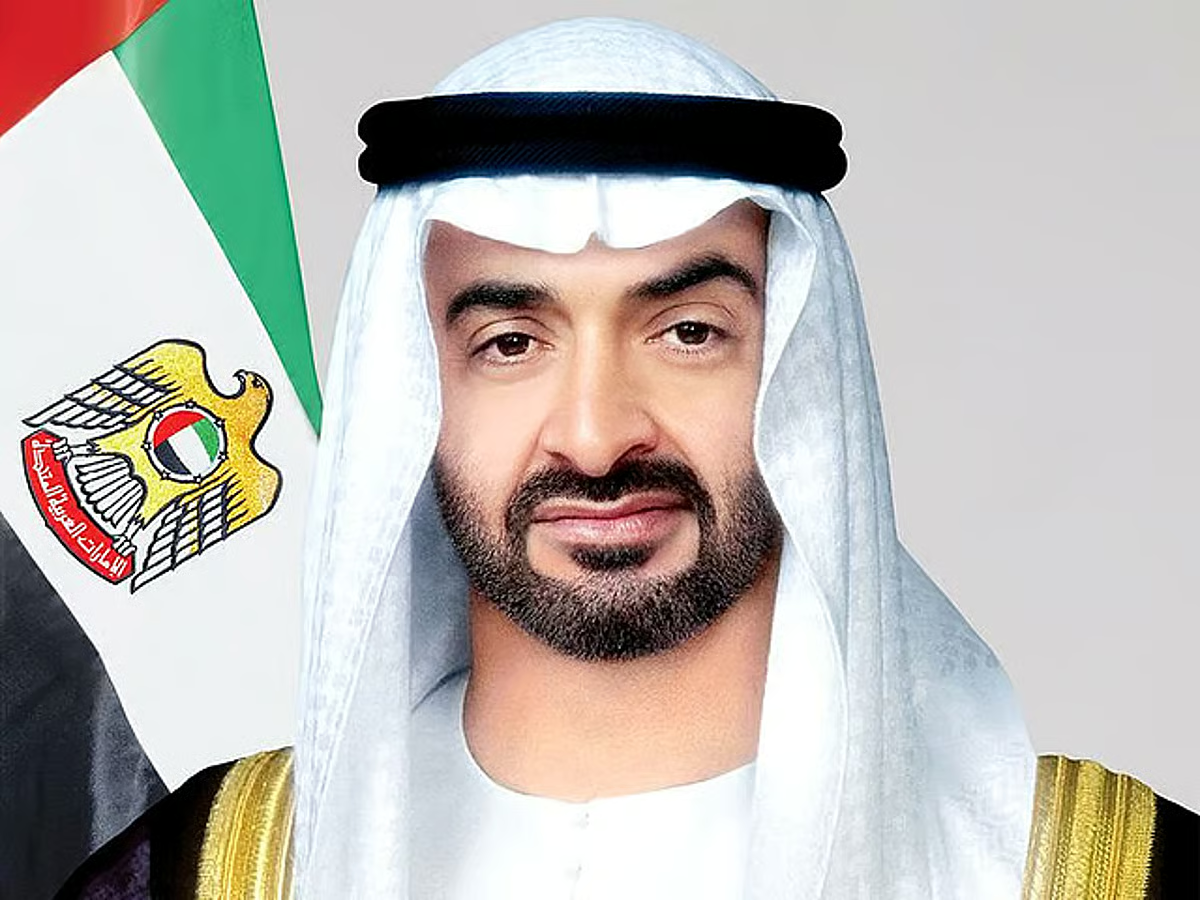

UAE President Sheikh Mohamed bin Zayed Al Nahyan has received a formal invitation to attend the upcoming 41st Gulf Cooperation Council (GCC) Summit, scheduled to be held in Bahrain in December. The invitation, delivered by Bahraini King Hamad bin Isa Al Khalifa’s personal representative, underscores the importance of the UAE’s role within the regional bloc and signals continued collaboration on key issues. This GCC Summit is anticipated to focus on strengthening regional security and economic integration.
The invitation was extended during a meeting between Sheikh Mohamed and Sheikh Nasser bin Hamad Al Khalifa, Advisor to the Bahraini King for Youth and Sports Affairs, at the Al Shatti Palace in Abu Dhabi on Tuesday. Discussions centered on bolstering the longstanding bilateral ties between the UAE and Bahrain, as well as preparations for the summit. The event is expected to draw leaders from all six GCC member states: Bahrain, Kuwait, Oman, Qatar, Saudi Arabia, and the United Arab Emirates.
Significance of the GCC Summit for Regional Stability
The GCC was established in 1981 to foster cooperation among Gulf Arab states in areas of security, economics, and culture. The upcoming summit takes place against a backdrop of ongoing geopolitical tensions in the Middle East, including the conflict in Yemen and concerns over Iran’s regional influence. According to analysts at the Middle East Institute, the GCC serves as a crucial platform for coordinating responses to these challenges.
Key Issues Expected to be Addressed
Several critical issues are expected to dominate the agenda at the GCC Summit. These include:
- Regional Security: Discussions will likely focus on maintaining stability in the face of external threats and addressing concerns related to maritime security in the Gulf.
- Economic Integration: Progress towards a common market and customs union is anticipated to be reviewed, with potential discussions on further economic diversification initiatives.
- Yemen Crisis: The GCC has historically played a role in mediating the conflict in Yemen, and the summit may see renewed efforts to find a political solution.
Additionally, the summit is expected to address the evolving energy landscape and the need for sustainable development within the region. The UAE, a leading advocate for renewable energy, is likely to contribute to these discussions. The potential for increased cooperation on climate change mitigation strategies is also a topic of interest.
However, internal divisions within the GCC, particularly stemming from the diplomatic fallout with Qatar beginning in 2017, have presented challenges to the bloc’s unity. While relations have improved recently, fully resolving these differences remains a key objective for the summit. The recent normalization of relations between Saudi Arabia and Iran may also influence the discussions and the overall tone of the meeting.
UAE’s Role in the GCC
The United Arab Emirates is a significant economic and political power within the GCC. Its strategic location, diversified economy, and active foreign policy make it a key player in regional affairs. The UAE has consistently advocated for greater GCC integration and has been a strong supporter of collective security initiatives.
The country’s commitment to economic diversification, as outlined in its “UAE Vision 2071,” aligns with the GCC’s broader goals of reducing reliance on oil revenues. Furthermore, the UAE’s growing role in mediation efforts and humanitarian aid demonstrates its commitment to regional stability. The UAE’s foreign direct investment also plays a crucial role in bolstering the economies of other GCC member states.
Meanwhile, the UAE has been actively working to strengthen its bilateral relationships with each GCC member state. These efforts include increased trade, joint military exercises, and cultural exchange programs. The Ministry of Foreign Affairs has consistently emphasized the importance of a unified GCC in addressing shared challenges and promoting regional prosperity.
Implications of the Upcoming GCC Summit
The outcome of the GCC Summit will have significant implications for the future of regional cooperation and stability. A successful summit could lead to renewed momentum for economic integration, enhanced security coordination, and a more unified approach to addressing regional challenges. Conversely, a failure to reach consensus on key issues could exacerbate existing tensions and undermine the GCC’s effectiveness.
In contrast to previous summits marked by internal disagreements, observers anticipate a more collaborative atmosphere this year, potentially influenced by recent diplomatic breakthroughs. The report indicates that the normalization of relations between Saudi Arabia and Iran has created a more conducive environment for dialogue within the GCC.
The summit’s discussions on economic issues are also expected to impact investment flows and trade patterns within the region. Any agreements reached on a common market or customs union could further stimulate economic growth and create new opportunities for businesses. The development of a unified digital economy is another area where progress could be made.
Looking ahead, the next step will be the formal commencement of the 41st GCC Summit in Bahrain in December. The specific agenda and outcomes remain uncertain, but the event is widely expected to be a pivotal moment for regional cooperation. Analysts will be closely watching for signs of progress on resolving outstanding disputes and strengthening the GCC’s collective response to emerging challenges. The final communique released after the summit will be a key indicator of the level of consensus achieved and the future direction of the bloc.
The success of the summit will also depend on the willingness of member states to compromise and prioritize collective interests over national concerns.