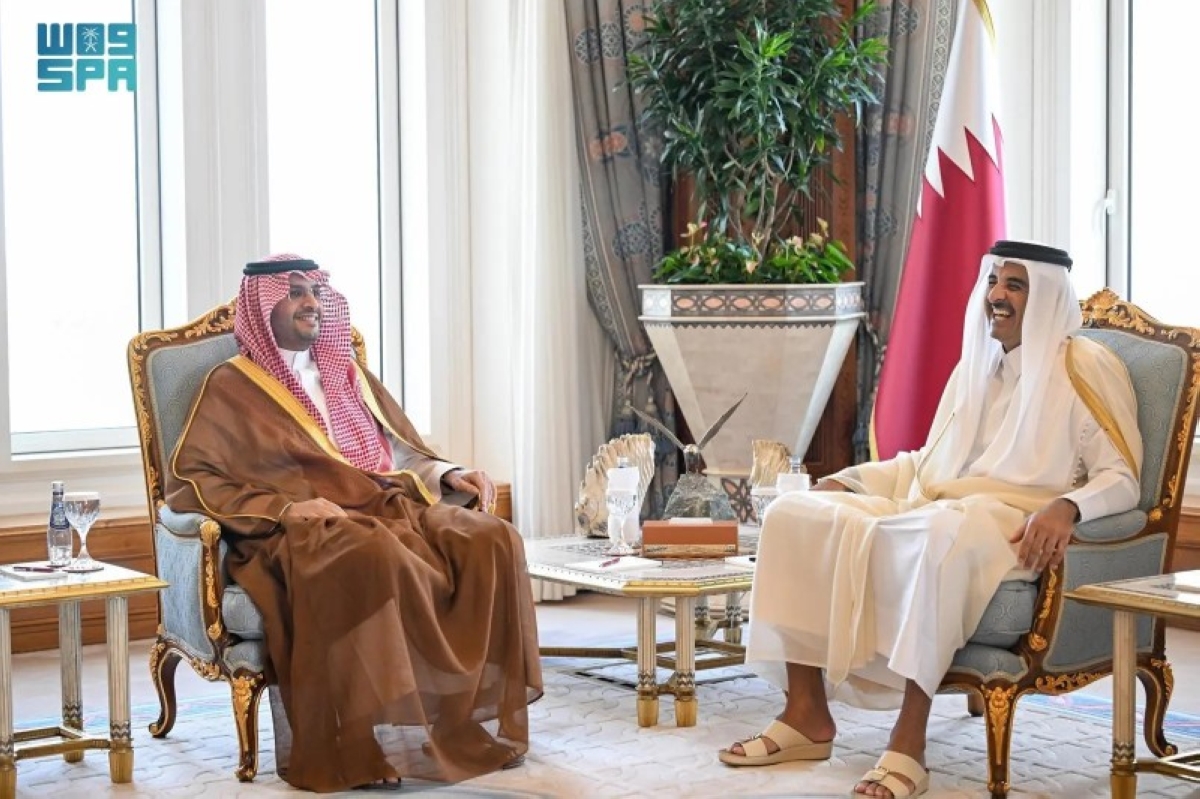

Doha hosted a significant diplomatic meeting on Wednesday as Emir of Qatar Sheikh Tamim bin Hamad Al-Thani received Saudi Minister of State and Cabinet Member Prince Turki bin Mohammed bin Fahd. The meeting focused on strengthening Qatar-Saudi relations and exchanging greetings between the leadership of both nations. This encounter signals continued efforts to solidify ties following a period of regional tension and diplomatic breakthroughs.
The meeting took place in Doha, Qatar, on November 29, 2023. Prince Turki delivered greetings from King Salman and Crown Prince Mohammed bin Salman to Sheikh Tamim, who reciprocated with greetings to the Saudi leaders. While details of the discussions were not extensively publicized, the exchange underscores a commitment to ongoing dialogue and cooperation between the two Gulf states.
Strengthening Qatar-Saudi Relations: A Recent History
The meeting between Sheikh Tamim and Prince Turki represents a continuation of warming relations between Qatar and Saudi Arabia. For several years, the two countries experienced a significant diplomatic rift, with Saudi Arabia, along with the United Arab Emirates, Bahrain, and Egypt, imposing a blockade on Qatar beginning in 2017. The blockade centered on accusations that Qatar supported terrorism and had close ties with Iran – allegations Qatar consistently denied.
The Path to Reconciliation
The blockade was lifted in January 2021, following mediation efforts, particularly from Kuwait and the United States. This marked a crucial turning point, paving the way for the restoration of diplomatic ties, resumption of air travel, and reopening of land and sea borders. However, rebuilding trust and addressing underlying concerns has been a gradual process.
Since the lifting of the blockade, both countries have taken steps to normalize relations. These include high-level visits, renewed economic cooperation, and joint initiatives in areas such as security and regional stability. The recent meeting in Doha is another indication of this positive trajectory. The focus on regional security is a key component of the improving dynamic.
Economic and Political Implications
The improved bilateral ties between Qatar and Saudi Arabia have significant implications for the broader Gulf region. Economically, closer cooperation could lead to increased trade, investment, and joint projects in sectors such as energy, infrastructure, and tourism. Qatar is a major player in the global LNG market, and Saudi Arabia’s Vision 2030 diversification plan could benefit from Qatari investment and expertise.
Politically, a stronger Gulf Cooperation Council (GCC), with Qatar and Saudi Arabia working in concert, could enhance regional stability and address shared challenges. These challenges include Iran’s regional influence, counterterrorism efforts, and the ongoing conflicts in Yemen and Syria. However, differences in approach to these issues remain, and continued dialogue is essential.
Additionally, the strengthening relationship could influence broader regional dynamics, potentially facilitating mediation efforts in other conflicts and promoting a more unified stance on international issues. The two nations have also been working to de-escalate tensions in Sudan, demonstrating a willingness to collaborate on humanitarian and political crises. This collaborative approach is a departure from the pre-2021 period.
Recent Developments and Regional Context
The meeting occurred amidst ongoing geopolitical complexities in the Middle East, including the conflict between Israel and Hamas. Both Qatar and Saudi Arabia have been involved in diplomatic efforts to address the crisis, though their approaches have differed. Qatar has maintained communication channels with Hamas, while Saudi Arabia has emphasized the need for a two-state solution. These differing approaches highlight the complexities of regional diplomacy.
Meanwhile, Saudi Arabia is actively pursuing economic diversification and infrastructure development under its Vision 2030 plan. Qatar’s sovereign wealth fund, the Qatar Investment Authority, has been a significant investor globally and could play a role in supporting Saudi Arabia’s economic transformation. This potential for increased investment is a key benefit of improved relations.
In contrast to the previous strained relationship, the current atmosphere is characterized by a willingness to engage in constructive dialogue and find common ground. This shift is partly attributed to the changing geopolitical landscape and a shared recognition of the need for regional cooperation. The role of mediation by Kuwait and the United States was also crucial in facilitating the reconciliation.
Looking ahead, further high-level meetings and continued economic cooperation are expected. The implementation of joint projects and the resolution of outstanding issues will be key indicators of the sustainability of the improved Qatar-Saudi Arabia relationship. The ongoing situation in the region, particularly the conflict in Gaza, will likely continue to shape the dynamics between the two countries. Monitoring future diplomatic engagements and economic partnerships will be crucial to assessing the long-term impact of this evolving alliance.