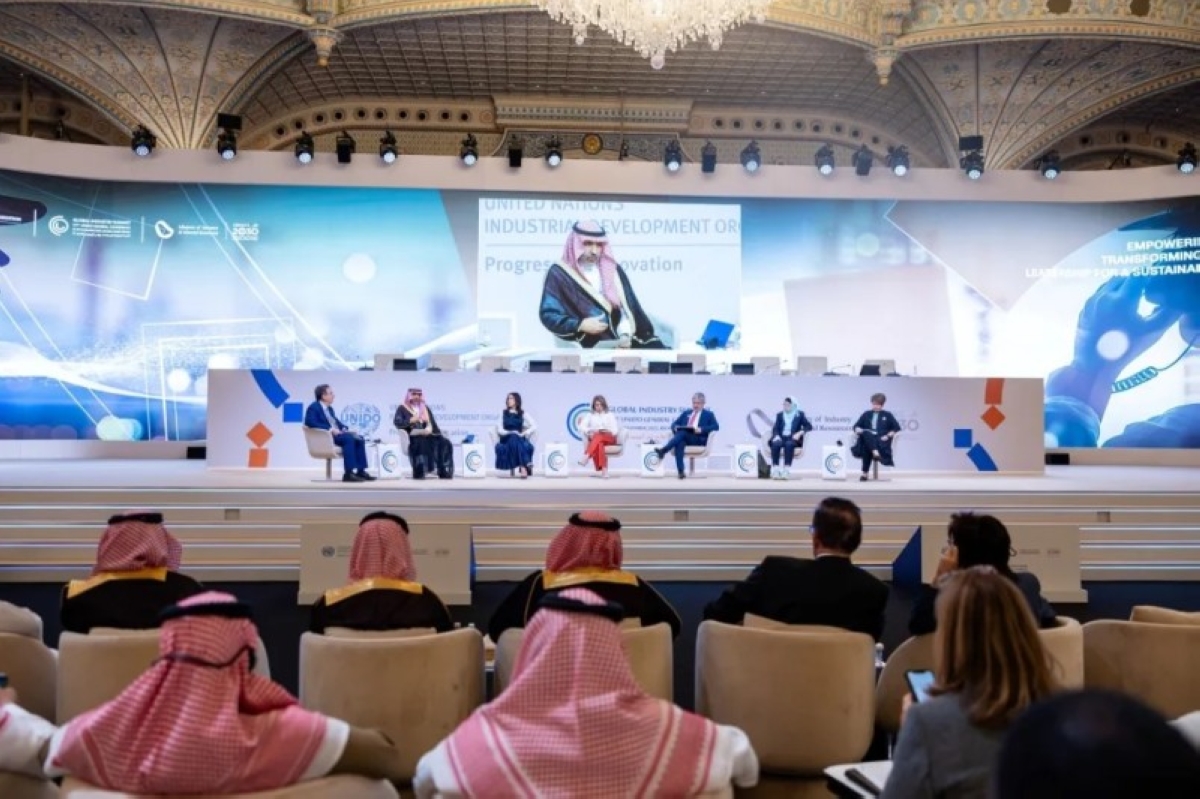

Saudi Arabia is witnessing a significant increase in women in industry, with over 100,000 women currently employed across more than 12,000 licensed factories, according to the Ministry of Industry and Mineral Resources. This development was highlighted during the 21st General Conference of the United Nations Industrial Development Organization (UNIDO) and the Global Manufacturing and Industrialization Summit held in Riyadh this week. The Kingdom is actively pursuing strategies to further integrate women into its rapidly diversifying industrial landscape and broaden their leadership roles.
The conference, attended by representatives from 170 countries, underscored the importance of gender equality in global industrial advancement. Discussions centered on removing barriers to entry for women, particularly in science, technology, engineering, and mathematics (STEM) fields, and fostering a safer, more inclusive work environment. The timing coincided with the International Day for the Elimination of Violence against Women, reinforcing this commitment.
Expanding Opportunities for Women in the Saudi Industrial Sector
Saudi Arabia’s focus on increasing women in industry is part of the broader economic diversification goals outlined in Vision 2030. This national strategy aims to reduce the Kingdom’s reliance on oil and cultivate new sectors, including manufacturing and technology. Attracting and retaining female talent is critical to achieving these ambitions, as it expands the available skill base and fosters innovation.
Assistant Minister of Industry and Mineral Resources for Planning and Development, Dr. Abdullah Al-Ahmari, emphasized the country’s progress in creating a more inclusive industrial environment. The ministry said the current efforts involve upgrading existing industrial facilities to accommodate greater numbers of female employees. This initiative is being undertaken in collaboration with both domestic and international organizations dedicated to skill development.
Policy Frameworks and Skill Development
The conference sessions addressing comprehensive industrial policies explored methods to embed gender considerations into national strategies. Topics included revising labor laws to address potential biases and ensuring equal access to training and development programs. Experts discussed the role of public-private partnerships in accelerating skill development for women.
A key focus was on improving participation in STEM fields. Several speakers noted the historical underrepresentation of women in these areas globally, and the need for targeted interventions. These include mentorship programs, scholarships specifically for women pursuing STEM degrees, and initiatives to promote STEM education at the primary and secondary levels.
Addressing Global Challenges and Regional Models
Beyond the Saudi experience, the summit addressed challenges facing women in industrial settings worldwide. Discussions included issues related to pay equity, workplace safety, and access to capital for female entrepreneurs. The need for data collection and analysis to inform policy was also a recurring theme.
The Gulf region’s efforts to enhance female participation in industry were also presented as a case study. Saudi Arabia’s initiatives are being viewed as a potential model for other countries in the region, particularly given the pace of economic and social reforms underway. The success of these efforts relies heavily on continued investment in education and infrastructure.
The summit highlighted the potential of creative sectors and supply chains to promote gender equality. Encouraging female ownership of businesses within these areas can create new economic opportunities and challenge traditional gender roles.
The “Orange Hour” event served as a solemn reminder of the importance of safeguarding women’s rights. Representatives from 170 countries reiterated their commitment to creating safe and empowering environments for women across all sectors of society. This includes strengthening legal frameworks to prevent and address violence against women in the workplace and beyond.
The outcomes of the conference underscore the growing consensus that integrating women into industrial leadership, production, and innovation is essential for future global economic growth. This requires not only policy commitments but also concrete action plans with measurable results. Proponents of gender equality argue that maximizing the talent pool through inclusive practices is vital for competitiveness in the evolving global market. The concept of gender equality is crucial for sustained development and economic resilience.
Looking ahead, the Ministry of Industry and Mineral Resources is expected to release a detailed roadmap outlining specific targets and timelines for increasing female representation within the industrial sector. Observers will be watching for the implementation of performance indicators to track progress and ensure accountability. The extent to which these plans are integrated with broader national economic strategies will also be a key factor in their success, alongside funding allocations and ongoing collaborative efforts with international organizations.