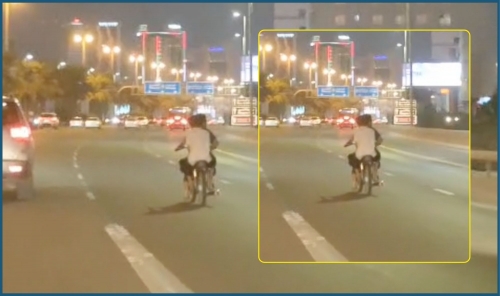

The alarming sight of two young individuals recklessly riding a two-wheeler on a major highway towards Manama, without helmets and weaving through traffic, has sparked renewed concern over road safety in the region. Footage of the incident, captured and shared by concerned citizen @harinder_singh_jyoti on Friday, November 21st, 2025, serves as a stark reminder of the potential for tragedy when traffic laws are disregarded. This incident highlights the urgent need for increased education and stricter enforcement regarding responsible driving, especially among younger generations.
The Dangerous Highway Incident: A Call for Increased Road Safety
The video quickly circulated online, prompting a wave of criticism and worry. The two riders, whose ages haven’t been officially confirmed, were observed engaging in extremely dangerous behavior – navigating heavy, high-speed traffic without the essential protection of helmets. This maneuver not only put their own lives at risk but also endangered the lives of other motorists.
Authorities are currently investigating the incident, and while identifying the individuals involved remains a priority, the focus is shifting towards preventing similar occurrences in the future. The footage isn’t just a record of a single reckless act; it’s a symptom of a broader issue regarding awareness of traffic regulations and the consequences of ignoring them.
The Risks of Unprotected Two-Wheeler Riding
Riding a motorcycle or scooter without a helmet significantly increases the risk of severe head injuries in the event of an accident. Even low-speed collisions can result in life-altering trauma, and at highway speeds, the outcome is often fatal. Helmets are, quite simply, lifesavers, and their use is mandated by law for this very reason.
Beyond helmets, factors such as inexperience, speeding, and distracted riding also contribute to the high rate of accidents involving two-wheelers. The vulnerability of riders means they require additional consideration and adherence to safe driving practices. This particular situation was compounded by the high-speed environment of the highway, leaving virtually no margin for error.
Parental Guidance and Teen Driver Education: A Vital Partnership
Local road safety experts have emphasized the critical role parents play in shaping their children’s attitudes and behaviors towards driving. “This is a clear violation of traffic regulations, and it’s crucial for parents to guide their children on responsible driving habits,” one expert stated. This guidance shouldn’t just involve telling children what to do, but explaining why these rules exist and the potential consequences of non-compliance.
Open communication between parents and teenagers regarding the dangers of reckless driving is paramount. Furthermore, providing access to formal driving education programs—beyond the minimum requirements for obtaining a license—can equip young drivers with the skills and knowledge they need to navigate roads safely. Access to quality driver training is not a luxury, but a necessity.
Beyond the Basics: Advanced Rider Safety
While foundational driving skills are essential, advanced training can address specific risks associated with two-wheeler riding. Courses focused on hazard perception, emergency braking, and maneuvering techniques can substantially improve a rider’s ability to avoid accidents. These types of programs are particularly beneficial for new riders who may lack the experience to handle challenging situations.
Moreover, encouraging responsible choices amongst peer groups is important. Teenagers are often influenced by their friends, so promoting a culture of safe riding within social circles can have a positive impact.
The Need for Stricter Enforcement and Continued Awareness Campaigns
While education and parental involvement are essential, the effectiveness of these measures is diminished without consistent and visible enforcement of traffic laws. Increased police presence on highways, combined with a zero-tolerance policy for violations like helmetless riding and reckless driving, can deter dangerous behavior.
However, enforcement alone isn’t enough. Continuous public awareness campaigns, utilizing various media platforms, are needed to reinforce safe driving practices and highlight the risks associated with irresponsible behavior. These campaigns should target not only young drivers but also the wider community, emphasizing the collective responsibility we all share in ensuring road safety.
The incident serves as a stark wake-up call. It demonstrates the fragility of life and the devastating consequences that can result from a moment of poor judgment. It’s also critical to remember that relying solely on reactive measures like investigating accidents is insufficient. A proactive approach, focusing on prevention through education, guidance, and consistent enforcement, is the only way to effectively address the ongoing issue of road safety and protect all road users.
Ultimately, fostering a culture of responsibility and respect for traffic laws requires a concerted effort from individuals, families, educators, and law enforcement agencies—all working together to prioritize safety on our roads. Let this incident be a catalyst for change, prompting a reevaluation of our current strategies and a commitment to building a safer future for everyone.