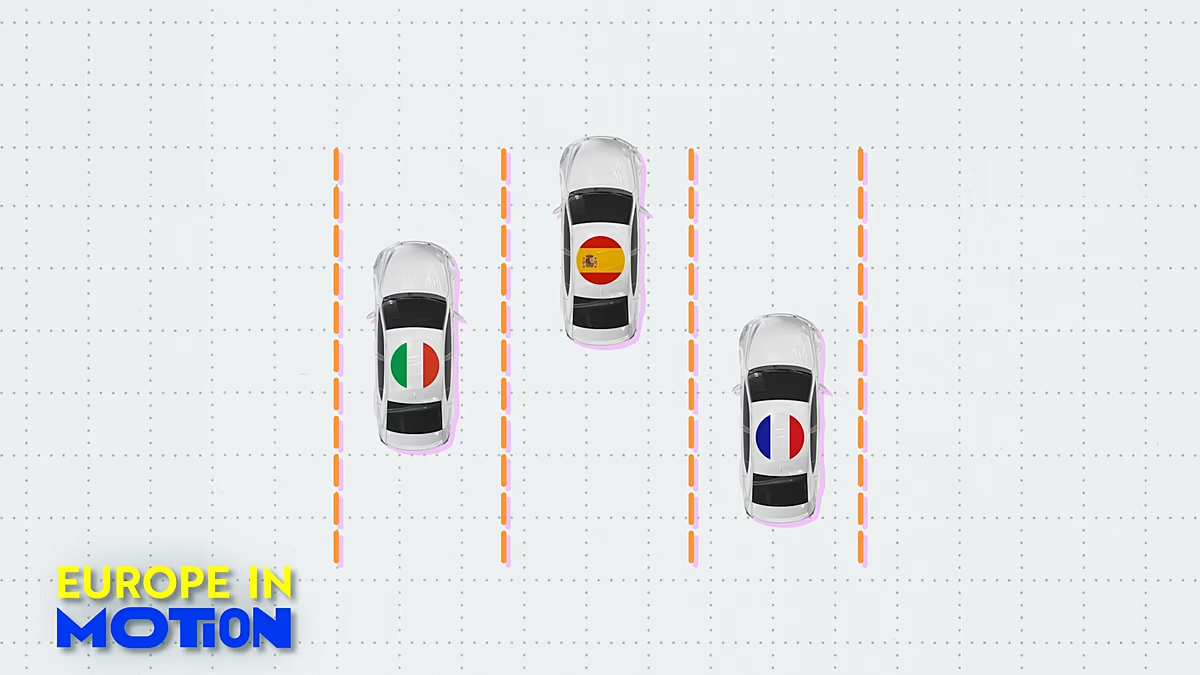

Spain is currently leading the European car market in growth during 2025, bucking a trend of stagnation across much of the continent. New passenger car registrations in the country rose by a significant 15% between January and September, according to data released by the International Council on Clean Transportation (ICCT). This surge is largely attributed to continued government incentives promoting electric vehicle (EV) adoption, but experts caution the growth may not be sustainable.
The positive performance in Spain contrasts sharply with the overall European picture. The ICCT reports that new passenger car registrations across Europe grew by only 1% during the same period, reaching just over 8.2 million vehicles sold. This modest increase highlights challenges facing the automotive industry as it transitions towards electric mobility.
Spain’s Electric Vehicle Boom Drives Car Market Growth
A key factor behind Spain’s success is the €400 million extension of the Moves III incentive scheme. This program, which has already invested over €1.3 billion in the past four years, provides financial support for both the purchase of electric vehicles and the installation of charging infrastructure. Over 100,000 charging points have been installed nationwide thanks to the scheme.
However, the ICCT data indicates that much of the increase in EV sales in Spain – approximately 70% – is driven by corporate fleets. This reliance on business purchases introduces a degree of volatility, as demand can fluctuate based on company investment cycles and tax benefits.
Austria Also Shows Strong Growth
Austria also demonstrated robust growth, with a 12% increase in new car registrations during the first nine months of 2025. Like Spain, Austria has implemented incentives to encourage EV adoption. However, a recent decision to eliminate incentives for individual buyers of battery electric vehicles (BEVs) may dampen future demand, according to reports from Euronews Business.
In several other major European economies, the car market experienced declines. Belgium saw a 9% drop in sales, while France and Italy registered decreases of 6% and 3% respectively. Germany, traditionally a powerhouse in the automotive sector, experienced stagnation with no growth in registrations.
Challenges to a Pan-European Automotive Recovery
Analysts at the Jacques Delors Centre suggest that the European automotive industry isn’t necessarily facing a terminal decline, but requires a more coordinated approach. They emphasize that national initiatives, like those in Spain and Austria, can be effective in attracting investment and fostering the development of electric vehicle supply chains.
The core issue, according to the Centre, is the lack of a unified European strategy. This hinders the ability to maximize the impact of individual national efforts and build a truly competitive European EV industry.
Furthermore, the analysts argue that attributing the slow adoption of EVs solely to consumer reluctance is an oversimplification. Persistent price differences between electric and internal combustion engine (ICE) vehicles, coupled with inconsistent government policies, represent significant barriers to wider adoption of electric cars. Addressing these issues is crucial for accelerating the transition.
The future of the European automotive industry hinges on overcoming these challenges. Policymakers will need to focus on creating a stable and predictable regulatory environment, while simultaneously working to reduce the cost of EVs and expand charging infrastructure. Monitoring Spain’s continued performance, and the impact of Austria’s incentive changes, will be key indicators of the broader market trend. Keep an eye on upcoming ICCT reports for further insights into the evolving European car market.
The shift towards sustainable transportation is undeniable, and Europe’s ability to compete in this new landscape will depend on its capacity to innovate and collaborate.