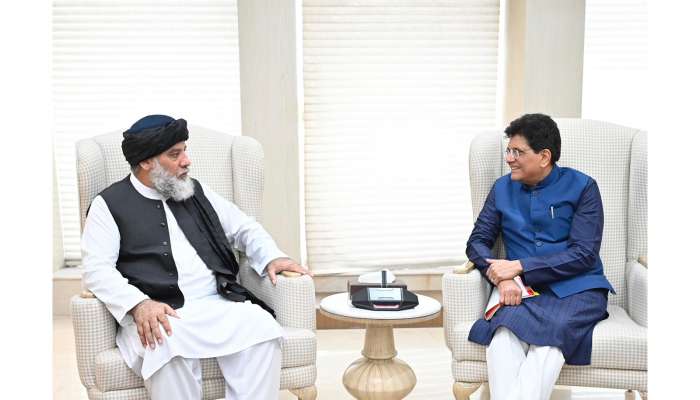

New Delhi witnessed a significant diplomatic and economic development this week as Union Minister Piyush Goyal met with Alhaj Nooruddin Azizi, Afghanistan’s Minister of Industry and Commerce. This meeting signals a renewed push for India-Afghanistan trade and economic cooperation, aiming to revitalize a historically strong relationship. The discussions focused on removing trade barriers and fostering increased investment between the two nations, marking a positive step in regional economic stability.
Strengthening Economic Ties: India and Afghanistan Forge Ahead
The meeting between Minister Goyal and Azizi, confirmed via a post on X (formerly Twitter), underscored a mutual desire to enhance economic collaboration. Goyal stated that their conversation “reflected a shared commitment to advancing economic cooperation and expanding bilateral trade by facilitating smoother movement of goods and investment.” This commitment is particularly noteworthy given the evolving geopolitical landscape in Afghanistan.
The Afghan Minister’s five-day visit to India was specifically geared towards bolstering economic ties. He engaged with key stakeholders, including officials from the Associated Chambers of Commerce and Industry of India (ASSOCHAM), emphasizing the importance of strengthening the “historical relations with India.” This proactive approach demonstrates Kabul’s eagerness to re-establish and expand its economic footprint with India.
Focus on Key Sectors for Investment
Azizi highlighted several key sectors where Afghanistan is actively seeking Indian investment and collaboration. These include mining, agriculture, health, and general investments. He expressed optimism about the potential for growth, stating that both countries possess the necessary resources and, crucially, the intention to work together.
This focus on diverse sectors is a strategic move, aiming to diversify Afghanistan’s economy and reduce its reliance on external aid. India, with its robust economic growth and expertise in these areas, is a natural partner for Afghanistan in this endeavor. The potential for bilateral trade is substantial, with both sides aiming to reach nearly one billion dollars in trade volume.
Addressing Trade Barriers and Facilitating Growth
A crucial aspect of the discussions revolved around addressing existing challenges hindering trade between India and Afghanistan. Azizi revealed that issues such as visa difficulties and high air corridor costs had been discussed and “resolved.” These resolutions are expected to significantly ease the flow of goods, investment, and transit, paving the way for increased economic activity.
Furthermore, the development of new trade routes is a key priority. Exploring alternative routes is vital for ensuring efficient and cost-effective trade, particularly given the logistical challenges associated with landlocked Afghanistan. This initiative aligns with India’s broader strategy of enhancing regional connectivity and promoting economic integration.
Private Sector Involvement: A Catalyst for Growth
Both ministers emphasized the critical role of the private sector in driving this economic partnership. Azizi noted the strong interest from Afghan businesses in collaborating with their Indian counterparts, stating, “Our private sector wants to work effectively with this program and this agreement.”
This bottom-up approach, leveraging the dynamism of the private sector, is essential for sustainable economic growth. It fosters innovation, creates employment opportunities, and strengthens economic resilience. The Indian private sector, known for its entrepreneurial spirit and global reach, is well-positioned to contribute significantly to Afghanistan’s economic development.
A Renewed Partnership Rooted in History
Azizi expressed his pleasure at witnessing the renewed collaboration between India and Afghanistan, emphasizing the long-standing historical relationship between the two nations. He highlighted the strong political ties alongside the potential for increased trade and investment, noting that both foreign ministries had facilitated his visit.
This sentiment underscores the importance of a holistic approach to the relationship, encompassing political, economic, and people-to-people ties. The historical connection provides a strong foundation for building a mutually beneficial partnership. The focus on strengthening India-Afghanistan relations is a positive sign for regional stability and economic prosperity.
In conclusion, the recent meetings between Indian and Afghan officials represent a significant step forward in revitalizing economic cooperation. By addressing trade barriers, fostering private sector involvement, and focusing on key investment sectors, both nations are laying the groundwork for a stronger and more prosperous future. The commitment to reaching a one-billion-dollar trade volume demonstrates a shared ambition and a clear path towards deeper economic integration. This renewed partnership promises to be a catalyst for growth and stability in the region, and continued dialogue and collaboration will be crucial to realizing its full potential.