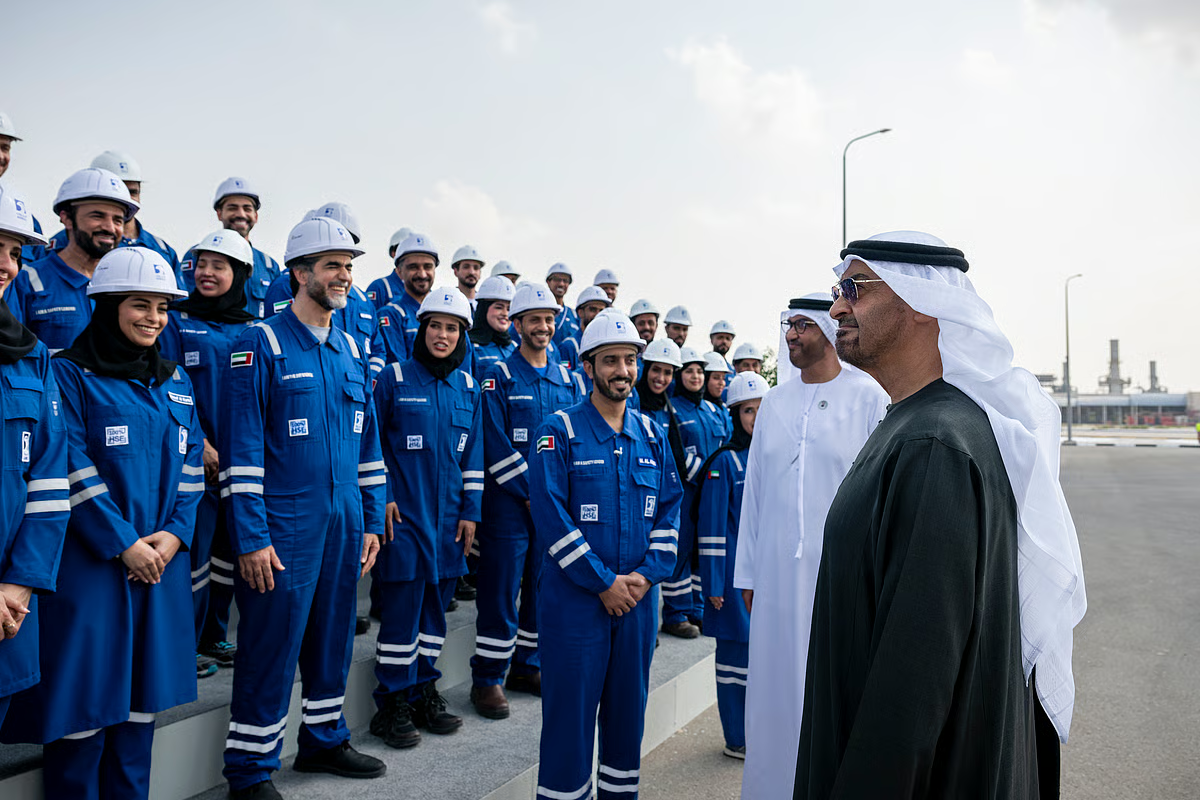

The Habshan processing facility in Abu Dhabi remains a critical component of the United Arab Emirates’ (UAE) economic strategy, providing the natural gas and essential feedstock required for the nation’s expanding industrial base. Located onshore in the Al Dhafra region, Habshan’s output is directly linked to the success of key sectors like aluminium, steel, cement, and petrochemicals. The facility’s ongoing operations under ADNOC Gas Services are vital for maintaining the UAE’s status as a global manufacturing hub.
Operated by ADNOC Gas Services, Habshan’s role has evolved alongside the UAE’s diversification efforts, moving beyond simply exporting raw hydrocarbons to maximizing value through domestic processing and industrialization. The complex processes gas from the Bab and Bu Hasa fields, and processes condensates from offshore fields. Increased production capacity and efficiency improvements are continually sought to meet growing domestic demand and support new industrial projects.
The Importance of Habshan for UAE Industrial Growth
The Habshan facility is not merely a processing plant; it’s a foundational element of the UAE’s long-term economic vision. The provision of consistently available, competitively priced natural gas is paramount to the functioning of numerous industries within the country. Without a reliable source of natural gas and associated products, the UAE’s ambitions for a diversified, knowledge-based economy would be significantly hampered.
Historically, the UAE’s economy has heavily relied upon crude oil revenues. However, the nation has actively pursued strategies to develop downstream industries that utilize natural gas as a primary input. This shift towards value-added manufacturing aims to reduce dependence on volatile oil prices and generate sustainable economic opportunities. The facility directly furthers this goal.
Supporting Key Sectors
Several core industries benefit directly from Habshan’s capacity. Aluminium production, a significant contributor to the UAE’s non-oil GDP, requires substantial amounts of electricity, often generated using natural gas. Steel plants also utilize natural gas in their manufacturing processes, creating a demand chain reliant on Habshan’s output.
The cement industry, crucial for the UAE’s ongoing infrastructure development, similarly depends on natural gas for energy. Petrochemical facilities, increasingly complex and numerous, represent one of the most significant consumers of natural gas and its byproducts. According to reports from the Ministry of Industry and Advanced Technology, these sectors have witnessed substantial growth in recent years, mirroring the increasing availability of feedstock from Habshan.
Furthermore, the availability of ethane, propane, butane and pentane+ from Habshan fuels the burgeoning petrochemical industry. These hydrocarbons serve as building blocks for plastics, fertilizers, and a wide range of other chemical products, enhancing the UAE’s role in global supply chains. These downstream operations contribute significantly to employment and overall economic diversification.
Beyond these major sectors, Habshan indirectly supports various smaller businesses and related services. The “halo effect” of the industrial base creates a ripple of economic activity throughout the country, benefiting transportation, logistics, and maintenance providers. This interconnectedness underscores the importance of continuous investment in Habshan’s infrastructure.
Operational Enhancements and Capacity Expansion
ADNOC has consistently invested in upgrading Habshan to improve its efficiency and increase its gas processing capacity. These enhancements deploy advanced technologies for gas separation, sulfur recovery, and overall plant optimization. They aim to reduce environmental impact and maximize the value extracted from each unit of gas processed.
Recent developments include projects focused on decarbonization and flaring reduction. The UAE is committed to achieving net-zero emissions by 2050, and upgrades at Habshan are aligned with this ambitious target. The adoption of carbon capture, utilization, and storage (CCUS) technologies is currently being explored as a method to further mitigate the facility’s environmental footprint.
Investment in pipeline infrastructure is also a key component of these efforts. Efficiently transporting processed feedstock to industrial centers across the UAE is essential for maintaining a reliable supply chain. ADNOC continues to expand and modernize its pipeline network to ensure seamless delivery to customers.
However, these expansions are not without challenges. The increasing complexity of gas processing requires a highly skilled workforce, and ADNOC is actively investing in training and development programs to meet this need. Additionally, maintaining the integrity of aging infrastructure and ensuring operational safety remain ongoing priorities.
The Role of Sustainability
The UAE recognizes the growing importance of sustainability in the energy sector. The development of low-carbon natural gas solutions is a key focus for ADNOC and its partners. This includes exploring opportunities to produce hydrogen from natural gas with carbon capture, offering a cleaner energy source for both domestic consumption and export.
The company promotes responsible resource management and aims to minimize water usage and waste generation at Habshan. These efforts align with the UAE’s broader commitment to environmental stewardship and responsible industrial development. Moreover, investments in technologies aimed at reducing methane emissions are expected to yield significant benefits.
Sustained investment in infrastructure and technology at Habshan is essential for maintaining long-term competitiveness. The global energy landscape is rapidly evolving, and the UAE must continue to adapt and innovate to secure its position as a leading energy producer and industrial hub. Competitiveness in the energy market relies on innovation in these areas.
Looking ahead, ADNOC has announced further plans to expand gas production and processing capacity. The company aims to achieve gas self-sufficiency and potentially become a major gas exporter. These plans are contingent on successful project execution, regulatory approvals, and evolving market conditions. The next major decision will likely be regarding the final investment decision for a planned capacity expansion slated for review by late 2024, subject to ongoing feasibility studies and economic forecasts.